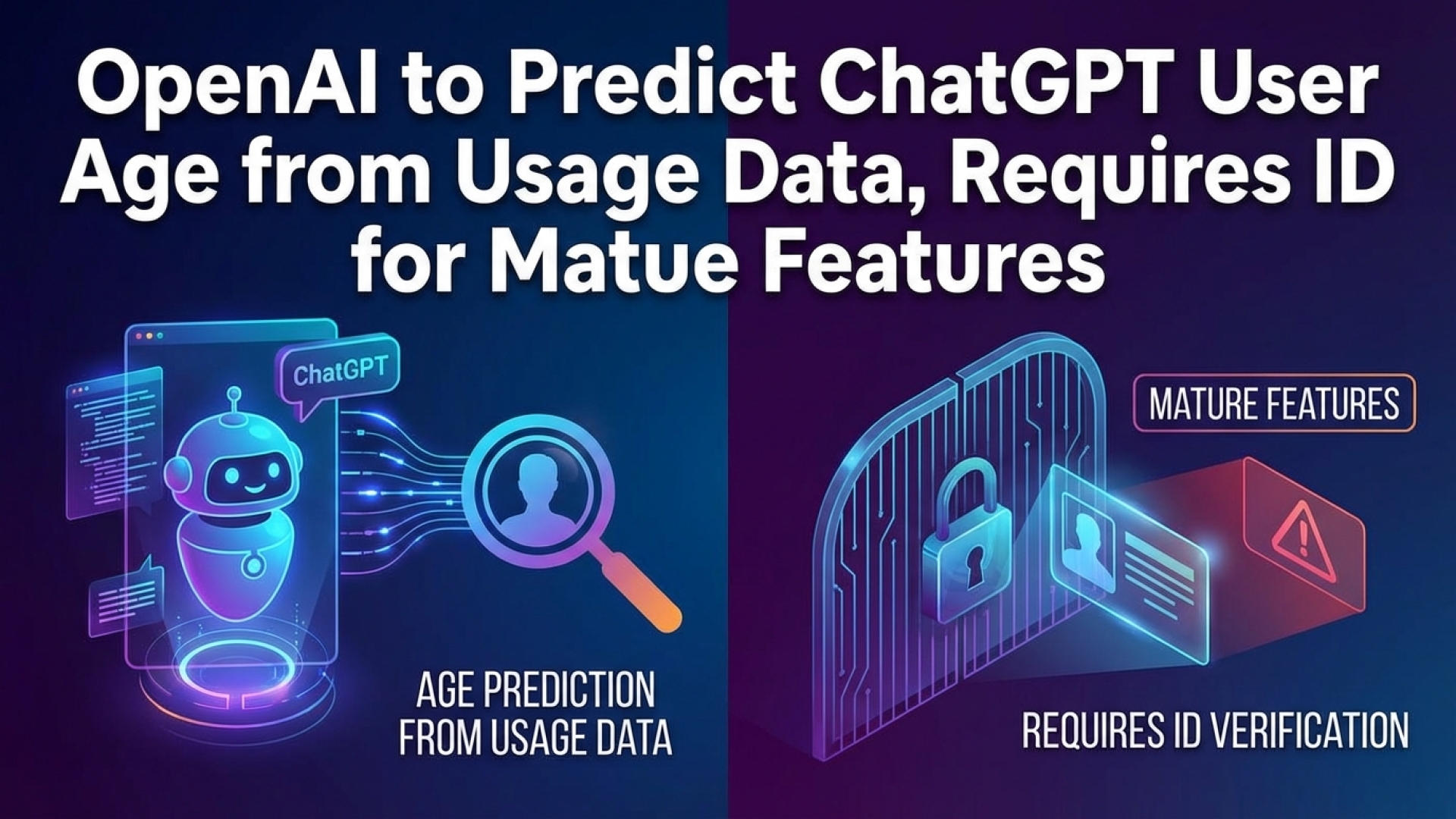
The landscape of artificial intelligence is shifting toward a more mature audience. OpenAI is officially rolling out a new age verification program for ChatGPT, a move that signals a significant transition for the platform. Here at Digital Tech Explorer, we’ve been tracking these developments closely, as they hint at the arrival of long-rumored “adult mode” features and more robust safety controls designed to balance creative freedom with user protection.
OpenAI is refining how it identifies its diverse user base to prepare for new features.
Algorithmic Intuition: How ChatGPT Predicts Your Age
In a fascinating display of machine learning application, OpenAI isn’t just relying on manual input. According to the company’s latest documentation, the system analyzes various signals linked to your account to “predict” your age. This includes the nature of the topics you discuss and the specific times of day you interact with the AI.
However, OpenAI admits that this digital intuition isn’t infallible, stating, “No system is perfect. Sometimes we may get it wrong.” For tech enthusiasts, this highlights a growing trend where behavioral patterns are used to define user identity—a topic we often explore in our deep dives into digital innovation.
What Happens to Unverified Accounts?
Choosing to remain “unverified” won’t lock you out of the platform entirely, but it will significantly alter the user experience. For accounts that cannot be confirmed as 18+, ChatGPT will trigger enhanced safety protocols. These filters are strictly programmed to block content related to:
Graphic violence and extreme gore.
Risky behavior or viral challenges that promote harm.
Sexualized or violent roleplay scenarios.
Content promoting unhealthy dieting or extreme beauty standards.
For users in Italy, the stakes are slightly higher; verification must be completed within 60 days of the prompt, or specific features will be automatically disabled. Successfully completing the process allows users to bypass these safety barriers, granting access to the upcoming “adult-themed” updates expected later this year.
The Verification Workflow: Enter Persona
If ChatGPT’s internal signals can’t confidently determine your age, you’ll be asked to provide proof via Persona, a third-party identity verification specialist. This step is required even if you provided a birth date during your initial sign-up.
Age verification is becoming a standard across major AI and social platforms.
To verify, you may need to submit a government-issued ID and a live selfie. Addressing privacy concerns, OpenAI emphasizes that they do not store the raw sensitive data. Persona handles the verification and deletes the documents afterward. OpenAI only receives a confirmation that you are over 18 and your date of birth, keeping the actual ID document out of their databases.
Broader Trends in Digital Identity
This shift isn’t exclusive to OpenAI. We recently saw Discord implement a similar behavior-based verification system. As a storyteller in the tech space, I find it compelling to see how platforms are navigating the fine line between user privacy and regulatory safety. The ability of a website to infer personal details like age through usage patterns is a double-edged sword—offering a seamless experience for some while raising valid questions about the depth of data collection in our modern digital era.
At Digital Tech Explorer, we recommend staying informed about how your data is used. While these measures aim to create safer environments, they also remind us of the vast amount of information we share with the tools we use every day.