
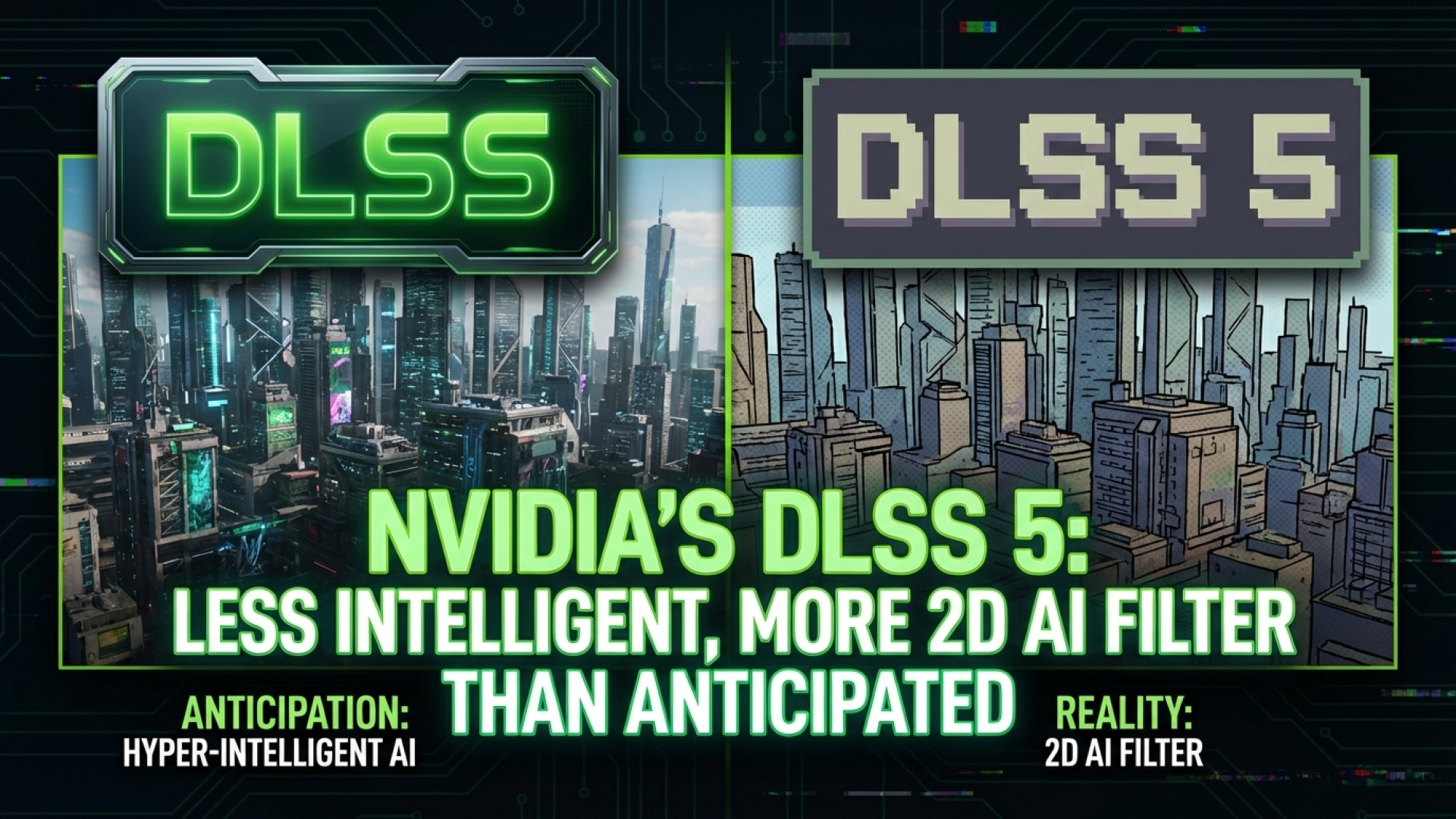
At Digital Tech Explorer, we thrive on peeling back the layers of marketing hype to find the technical reality beneath. Recently, the tech world has been buzzing with Nvidia’s upcoming DLSS 5 technology. Initially presented as a revolutionary leap in AI-driven graphics, new details emerging from discussions between GeForce evangelist Jacob Freeman and techtuber Daniel Owen suggest a different story. As TechTalesLeo, I’ve tracked the evolution of AI acceleration in gaming, and the current trajectory of DLSS 5 reveals a shift from precise rendering toward a more probabilistic “AI filter” approach.
Decoding the DLSS 5 Infrastructure
The initial demonstrations at the GPU Technology Conference (GTC) were designed to impress, utilizing a heavy-duty setup featuring dual Nvidia RTX 5090 graphics cards. While one card managed standard game rendering, the second high-end hardware was dedicated solely to the DLSS 5 compute path. This led many enthusiasts to believe we were looking at a deep, architectural fusion of game engines and AI. However, the reality of the implementation appears significantly more localized to screen-space processing.
The Shift to 2D Frame and Motion Vector Analysis
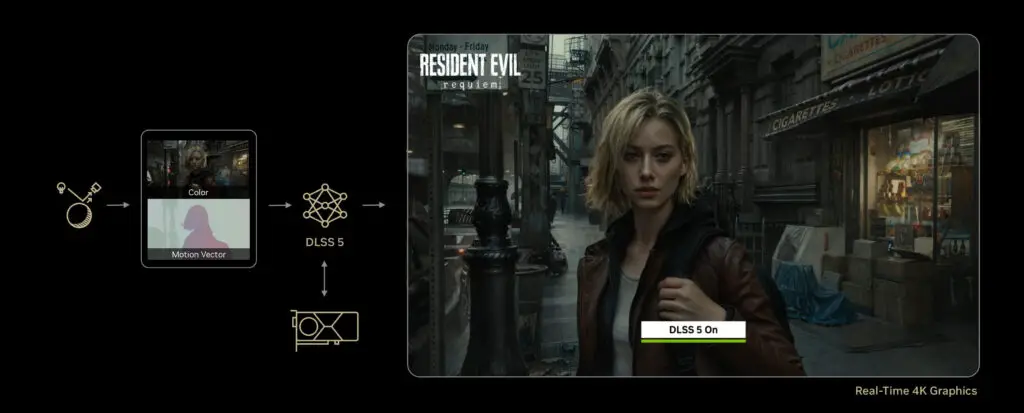
Nvidia’s recent clarifications indicate that DLSS 5 operates primarily on a static, 2D image rather than a deep 3D data set. Freeman noted that the technology takes a “2D frame plus motion vectors as input.” Essentially, the model analyzes a high-resolution “screenshot” and applies a sophisticated AI filter. While achieving this in real-time is a feat of engineering, it lacks a fundamental understanding of 3D geometry, scene depth, or specific lighting conditions that exist outside the current frame’s visible pixels.
Inference vs. Ground Truth: A Technical Comparison
For developers and PC gamers, the distinction between “inference” and “ground truth” is vital. DLSS 5 is trained to infer complex semantics—like hair, fabric, and skin translucency—simply by looking at a single frame. It doesn’t “know” what a character looks like; it guesses based on its training data.
| Feature | DLSS 3 / 3.5 (Previous) | DLSS 5 (Current Iteration) |
|---|---|---|
| Primary Focus | Upscaling and Frame Generation | Generative AI Image Enhancement |
| Data Source | Engine Data & Motion Vectors | 2D Frames & Motion Vectors |
| Scene Knowledge | High (Integrated with Game Engine) | Low (Probabilistic Inference) |
| Visual Impact | Temporal Stability & Clarity | Stylistic “Painting” & Detail Injection |
The Challenge of Artistic Integrity
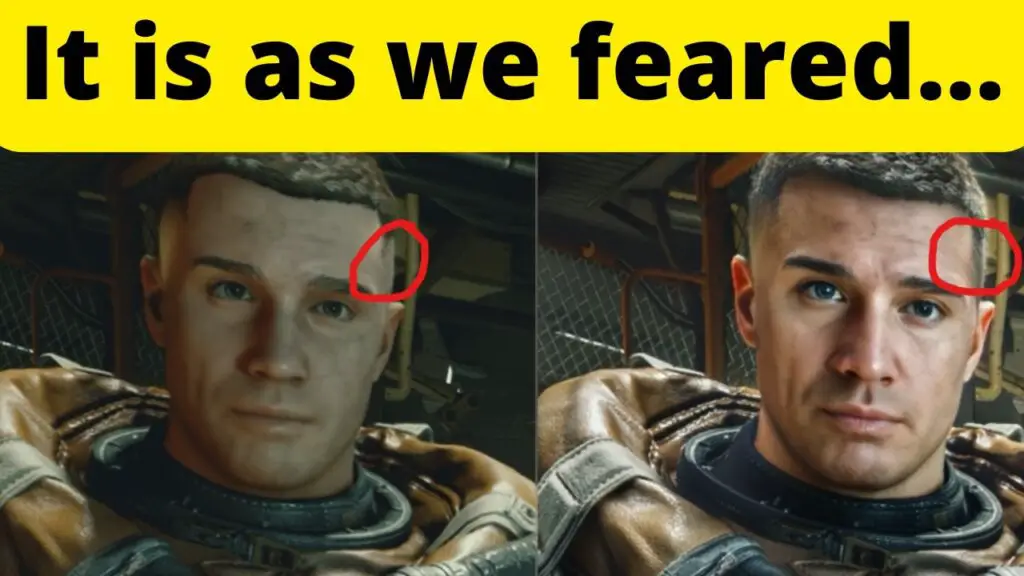
One of the most debated aspects of this technology is the loss of developer control. Since DLSS 5 effectively “paints” over the underlying geometry, it can inadvertently alter the original artistic vision. The “yassified Grace” character model in Starfield has become a primary example of this, where AI-driven enhancements significantly changed a character’s facial aesthetics. On the Physically Based Rendering (PBR) front, the model guesses material properties like roughness and realism without direct hooks into the engine’s material data.

Limited Tools for Developers
Our research at Digital Tech Explorer suggests that developers currently have a narrow set of tools to manage these AI “creative impulses.” Rather than fine-tuning the model through prompts, they are limited to:
- Intensity Sliders: Controlling how much the AI influences the final image.
- Alpha Blending: Weighing the original render against the AI output.
- Color Grading Adjustments: Correcting stylistic shifts after the fact.
- Object Masking: Disabling the AI effect on specific models or UI elements.
This raises a significant concern regarding homogeneity in gaming. If multiple titles utilize the same DLSS 5 model, we may see a unified “AI aesthetic” that overrides the unique stylistic choices of different studios.
Final Thoughts: A Vision in Flux
During the GTC keynote, Nvidia CEO Jen-Hsun Huang spoke of a seamless fusion between the “ground truth” of virtual worlds and generative AI. However, the current reality of DLSS 5 feels more like a superficial—though impressive—overlay. While titles like Assassin’s Creed Shadows and FC 26 demonstrate visually appealing results in environments, the technical disconnect between structured game data and unstructured AI output remains a hurdle.
As we continue to explore the boundaries of machine learning in the digital space, Digital Tech Explorer will remain your source for transparent, in-depth analysis. DLSS 5 is undoubtedly a milestone, but perhaps not the one many were led to expect.
Disclaimer: All content on Digital Tech Explorer is for informational and entertainment purposes only. We do not provide financial or legal advice.
Affiliate Disclaimer: Some of the links on Digital Tech Explorer are affiliate links. This means we may earn a commission if you click through and make a purchase, at no additional cost to you. Our recommendations are based on thorough research and personal experience.