At Digital Tech Explorer, we keep a close eye on the software that powers your hardware, but even the industry giants occasionally stumble. In a startling turn of events, Nvidia recently released and then abruptly retracted its GeForce 595.59 drivers. What was meant to be a performance-boosting update quickly transformed into a cautionary tale for PC enthusiasts as reports of critical hardware failures began to surface across tech forums.
Nvidia Pulls GeForce 595.59 Drivers Over Critical Issues
The retraction was swift. Nvidia confirmed the rollback, stating they have “removed the downloads temporarily while our team investigates.” This decision followed a wave of user complaints immediately after the release of the software. These drivers were originally designed to provide day-one optimizations for highly anticipated titles such as Resident Evil Requiem and the Marathon Server Slam open test.
Hardware stability is a top priority for developers and gamers alike.
Beyond new releases, the update was intended to address lingering bugs in established games. Titles such as The Ascent, Total War: Three Kingdoms, Final Fantasy XII: The Zodiac Age, Call of Duty: Modern Warfare (2019), and Quantum Break were on the list for fixes. Unfortunately, the “remedy” proved more damaging than the original bugs.
Widespread Fan Outages and Performance Throttle
The most alarming report involves graphics card fan outages. Users discovered that their GPUs were effectively silent because the fans had stopped spinning entirely. For any GPU enthusiast, this is a nightmare scenario that leads to immediate overheating and potential permanent hardware damage. Social media was quickly flooded with panicked queries, with users asking if Nvidia was “trying to kill our GPUs” after observing only one (or zero) fans functioning under load.
Furthermore, owners of the latest Nvidia 50 series graphics cards reported that their hardware was being locked to a meager 0.95 volts. This artificial ceiling severely crippled GPU clock speeds and power consumption, rendering high-end cards no more effective than entry-level models. Visual bugs were also prevalent, with many gamers reporting that HDR functionality was completely broken.
Issue Reported
Impact on User
Severity
Fan Failure
Thermal throttling and potential hardware damage
Critical
Voltage Lock (0.95V)
Massive reduction in clock speeds and FPS
High
HDR Corruption
Washed out colors and broken visual fidelity
Medium
Optimization Failure
Crashes in Marathon Server Slam and Resident Evil
High
Summary of reported bugs in the GeForce 595.59 release.
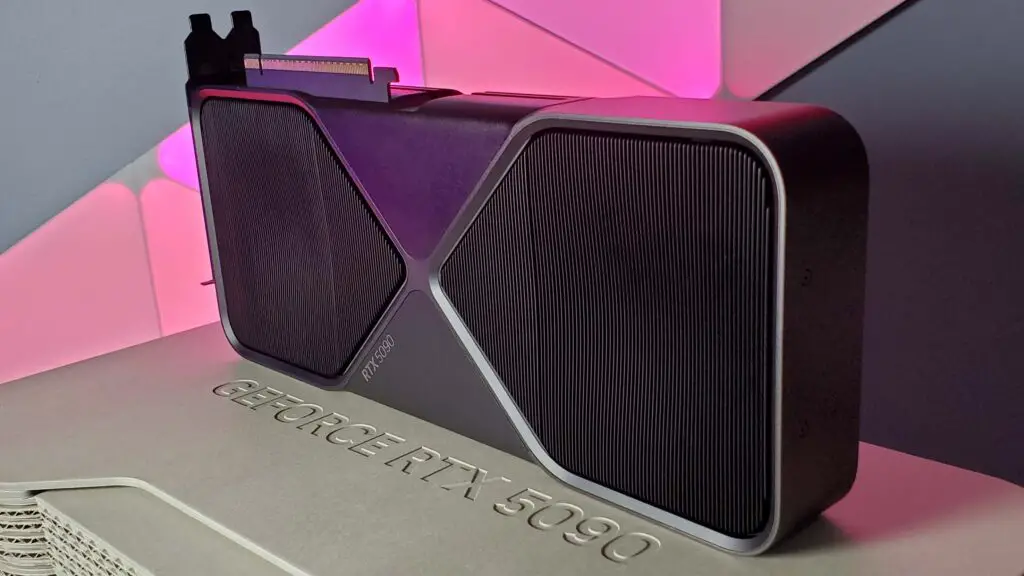
The flagship RTX 50 series was among the hardest hit by the voltage limitation bug.
How to Rollback Your Nvidia Drivers Safely
If you were one of the early adopters who installed the 595.59 update, TechTalesLeo recommends an immediate driver rollback to preserve your hardware’s lifespan. Reverting to the stable release from last month is the most reliable fix while Nvidia works on a patched version.
You can perform this easily via the Nvidia App. Navigate to the “Drivers” tab, select the three dots (context menu) next to the current version, and choose the option to install a previous stable build. For those who prefer a clean slate, using Display Driver Uninstaller (DDU) before a fresh install of the older driver is often the safest bet.
Quality Assurance in the Age of AI
This incident raises serious questions about Nvidia’s current quality assurance protocols. The company recently boasted about tripling its code output through heavy AI integration. While AI can accelerate development, this retraction highlights the necessity of rigorous human oversight—especially when software has the potential to impact physical hardware safety.
At Digital Tech Explorer, we believe in bridging the gap between high-speed innovation and everyday reliability. While we wait for a stable release, we advise all our readers to stay on previous driver versions until Nvidia provides a verified fix. Stay tuned for further updates as we continue to track this developing story.