
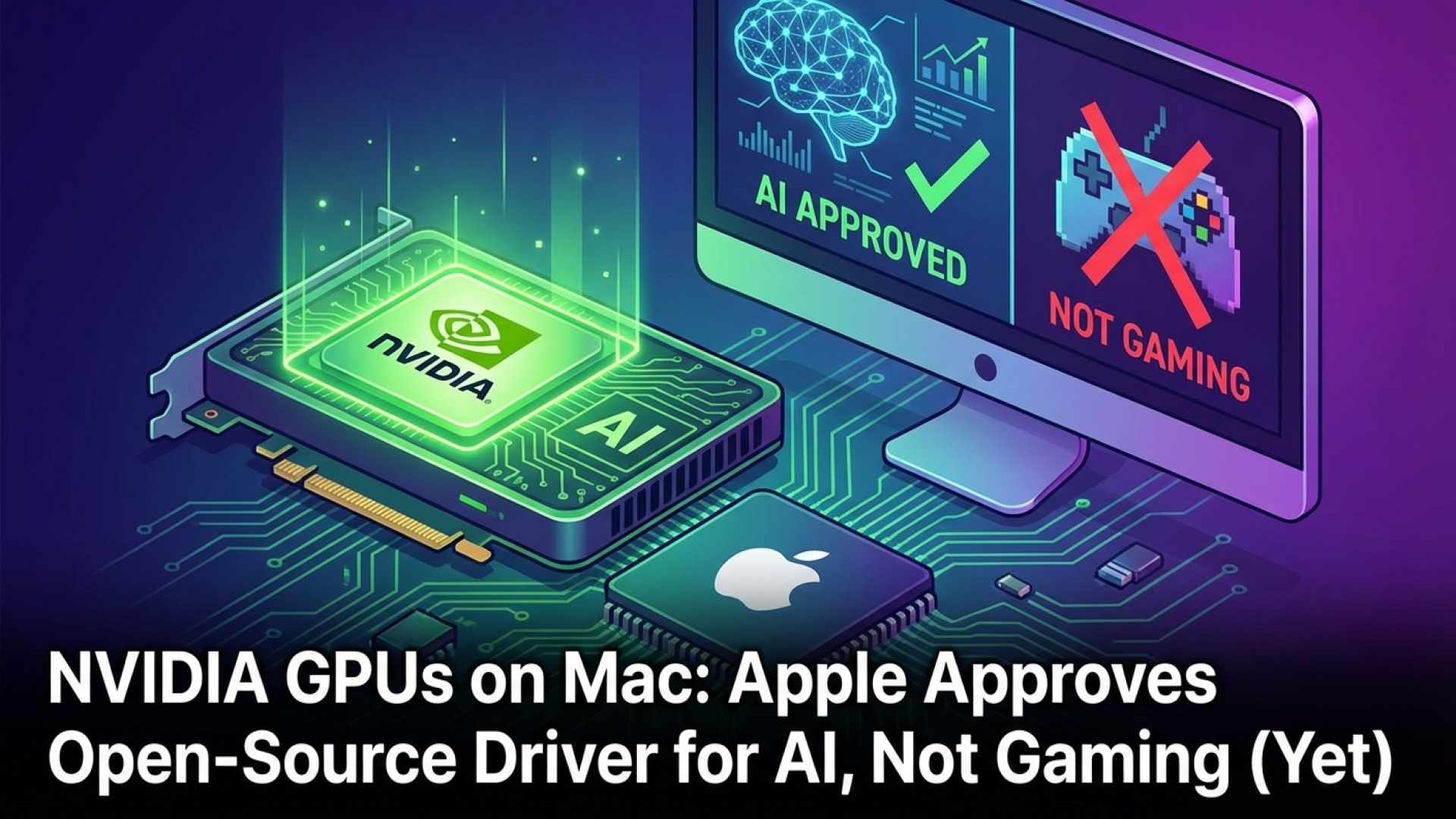
For a significant period, the wall between Apple and Nvidia seemed impenetrable. Integrating an Nvidia graphics card into a Mac was once a standard move for gaming enthusiasts and developers relying on Team Green’s CUDA ecosystem. However, that synergy vanished when Apple transitioned to its proprietary Metal API and Silicon architecture. Here at Digital Tech Explorer, we are always hunting for breakthroughs that bridge these technical divides, and a new open-source driver is doing exactly that—reintroducing the possibility of “AppleCUDA.”
Unlocking Nvidia Power with TinyGPU on Mac
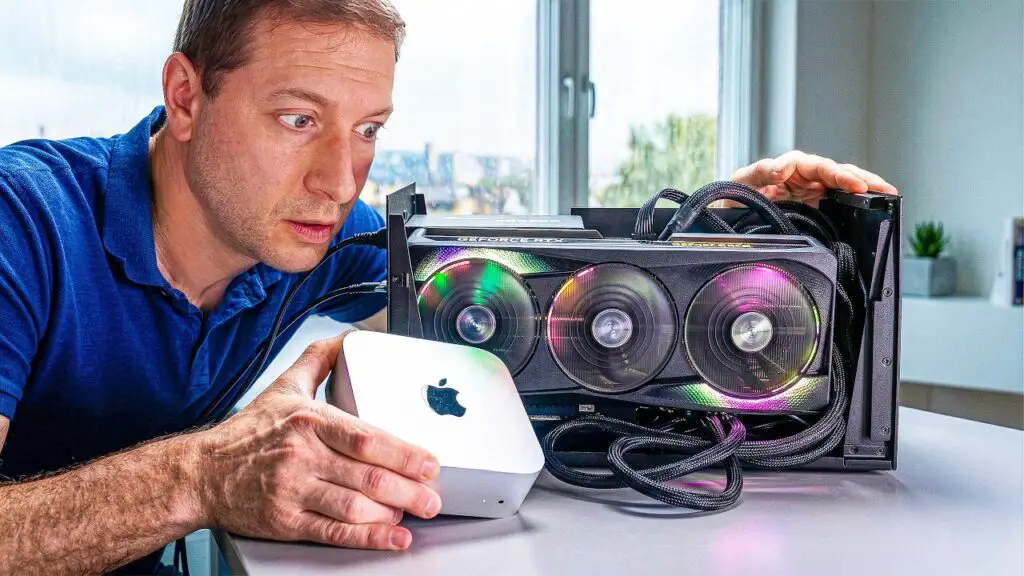
This narrative-shifting innovation comes via tech storyteller and developer Alex Ziskind, who recently showcased a Mac mini achieving the unthinkable. By utilizing an eGPU dock connected via a USB4 cable, Ziskind successfully interfaced a GeForce RTX 50-series GPU with Apple’s latest hardware. The catalyst for this revival is TinyGPU, a specialized application and driver stack developed by the team at tiny corp.
Official Support and Seamless Integration
What makes this development particularly intriguing for the Digital Tech Explorer community is the lack of “hacky” workarounds. Apple has officially approved the driver for both AMD and Nvidia hardware, streamlining the installation process. For developers looking to enhance their AI acceleration, the setup is remarkably straightforward: plug in the hardware, ensure the graphics card has adequate external power, and install the TinyGPU suite. This marks a significant step in making high-end hardware more accessible across platforms.
Current Focus: AI Over Gaming
While the hardware connection is established, it is vital to manage expectations regarding PC games. At this stage, tiny corp is focusing its efforts exclusively on AI and computational tasks. In real-world testing, an RTX 50-series card decimated the M4 Pro in raw token-processing speed. However, because the software stack is tailored for machine learning, the Blackwell GPU architecture isn’t yet being leveraged for traditional rendering or 3D gaming environments.
| Feature | Apple Silicon (Internal) | Nvidia RTX 50-Series (via TinyGPU) |
|---|---|---|
| Primary Use Case | General Compute / Metal Gaming | AI Training / LLM Inference |
| Connection Method | Integrated | USB4 / eGPU |
| Driver Status | Native | Open-Source (Apple Approved) |
| Gaming Support | High (Native) | Not Currently Supported |
The Future is Open-Source
As a storyteller in the tech space, I find the open-source nature of this project the most compelling chapter. Because tiny corp’s runtimes are available on GitHub, the developer community now has the foundation to build something even greater. Whether you are rocking an AMD RDNA 3 or a modern Nvidia Ampere card, the door to AI experimentation on Mac is officially open. While gaming remains a distant peak to climb, the democratization of GPU power on macOS is a trend we will continue to watch closely here at Digital Tech Explorer.
Stay tuned to Digital Tech Explorer for more in-depth analyses and guides on how to maximize your coding and hardware setups.