
‘I Don’t Love AI Slop Myself’ – Jensen Huang Addresses DLSS 5 Visual Concerns
By TechTalesLeo
Following a wave of debate surrounding Nvidia’s DLSS 5 announcement—a reveal that sparked both technical fascination and a vocal pushback against aesthetic shifts in modern titles—CEO Jensen Huang has stepped into the fray. While initial responses from the company dismissed criticisms as “completely wrong,” Huang adopted a more nuanced, narrative-driven tone during a recent deep dive on the Lex Fridman Podcast.
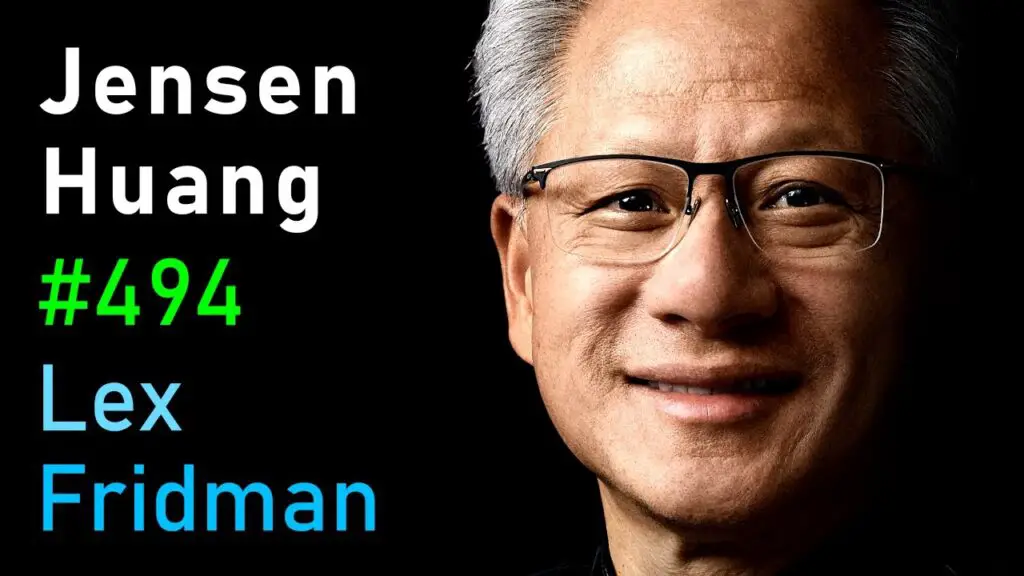
At Digital Tech Explorer, we’ve been tracking the evolution of neural rendering closely. The friction here isn’t just about frame rates; it’s about the soul of digital artistry. Acknowledging the “AI slop” phenomenon—a term used by critics to describe the generic, overly smoothed look of AI-generated imagery—Huang displayed a surprising level of empathy toward the gaming community.
“I think their [gamers’] perspective makes sense, and I can see where they’re coming from, because I don’t love AI slop myself,” Huang stated. “All of the AI generated content increasingly looks similar, and they’re all beautiful… so I’m empathetic towards what they’re thinking.”
DLSS 5: Enhancement or Transformation?
Despite his personal distaste for generic AI aesthetics, Huang was quick to differentiate DLSS 5 from standard generative models. For hardware enthusiasts and developers, the distinction lies in the data pipeline. Huang argues that DLSS 5 isn’t just “hallucinating” pixels; it is anchored by “ground truth” data provided by the game engine.
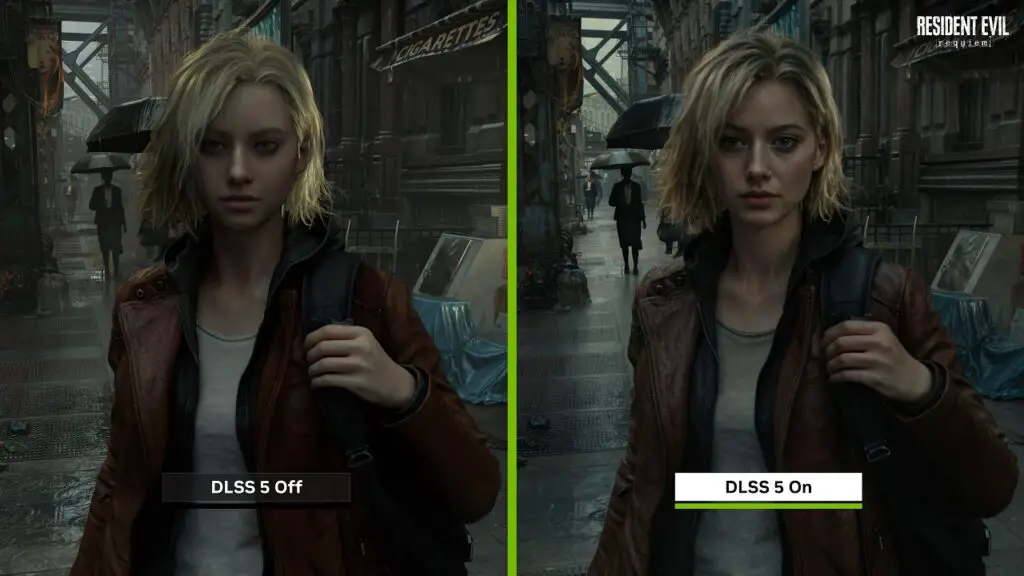
“That’s just not what DLSS 5 is trying to do,” he explained. “DLSS 5 is 3D conditioned, 3D guided… so the artists determine the geometry. We are completely truthful to the geometry… in every single frame.”
The core promise is that the system is conditioned by original textures and developer intent. According to Nvidia, while the system “enhances” the frame, it technically “doesn’t change anything.” However, this remains a significant point of contention for PC gamers who noted that early demos featured character models that appeared fundamentally altered rather than simply upscaled.
DLSS Evolution Comparison
| Feature | DLSS 2 (Super Resolution) | DLSS 3 (Frame Generation) | DLSS 5 (Neural Reconstruction) |
|---|---|---|---|
| Primary Goal | Upscaling resolution | Inserting AI-generated frames | Full neural scene reconstruction |
| Guidance Data | Motion vectors & depth buffers | Optical flow & motion vectors | 3D conditioned & ground truth guided |
| Potential Risk | Ghosting/Blurring | Latency/Artifacting | Aesthetic “AI Slop” or drift |
A New Toolkit for Developers
From a software engineering perspective, the most intriguing aspect of Huang’s comments involves the democratization of the model itself. Huang highlighted that the system is designed to be open for customization. “Because the system is open, you could train your own models to determine and you could even, in the future, prompt it,” he said.

He envisions DLSS 5 as a generative AI acceleration tool that artists can weave into their specific workflows to maintain a unique stylistic identity. However, technical Q&A sessions have clouded this vision, suggesting that current implementations might still function as highly advanced, adjustable AI filters applied to 2D frames after rendering. This potential “post-process” reality sits in tension with the promise of being “perfectly subservient” to 3D geometry.
As we continue to explore the intersection of machine learning and interactive entertainment, the community remains cautious. Whether DLSS 5 becomes a transparent tool for fidelity or a filter that washes out artistic intent will depend on how developers implement these tools in the coming 2024 releases and beyond.
Disclaimer: All content on Digital Tech Explorer is for informational and entertainment purposes only. We do not provide financial or legal advice.
Affiliate Disclaimer: Some of the links on Digital Tech Explorer are affiliate links. This means we may earn a commission if you click through and make a purchase, at no additional cost to you. Our recommendations are based on thorough research and personal experience.
For more deep dives into the future of GPU technology and digital innovation, stay tuned to Digital Tech Explorer.