
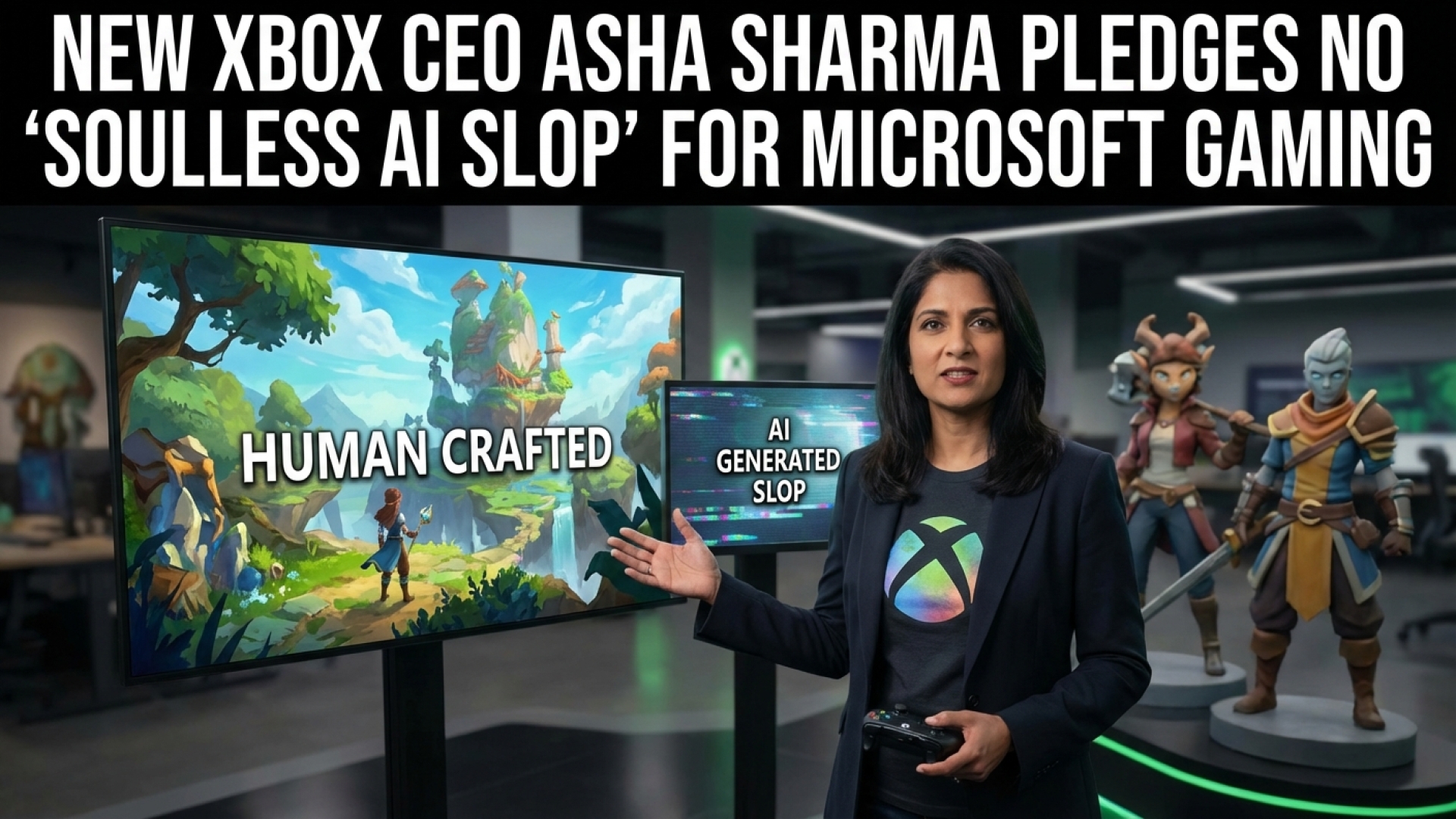
The landscape of interactive entertainment is undergoing a seismic shift. At Microsoft Gaming, a new era has dawned with a significant leadership transition that promises to reshape the future of the Xbox ecosystem. Long-time visionary Phil Spencer has officially retired, and Sarah Bond has moved on from her role as President. Taking the helm is Asha Sharma, the new CEO of Microsoft Gaming, supported by Matt Booty, who elevates to Chief Content Officer. This transition isn’t just a change in personnel; it’s a narrative pivot for one of the world’s largest gaming entities.

The New Guard: Microsoft Gaming Leadership Overview
To understand where Microsoft is headed, we must look at the architects of this new chapter. Below is a breakdown of the recent executive reshuffle:
| Executive | New Role | Previous Focus |
|---|---|---|
| Asha Sharma | CEO, Microsoft Gaming | CoreAI Products (Azure AI) |
| Matt Booty | Chief Content Officer | Head of Xbox Game Studios |
| Phil Spencer | Retired | CEO, Microsoft Gaming |
| Sarah Bond | Resigned | President, Xbox |
From CoreAI to Creative Storytelling
Asha Sharma’s appointment has sparked intense dialogue across the tech community. Her pedigree lies in Microsoft’s “CoreAI” division, where she oversaw high-level services like Azure AI. For many enthusiasts at Digital Tech Explorer, this background raised an immediate question: Will Microsoft’s storied franchises become testing grounds for Artificial Intelligence at the expense of human creativity?
Sharma, however, is leading with a clear narrative. In her inaugural address to employees, she addressed the “AI slop” stigma head-on. She emphasized that while technology serves as a tool, the soul of the medium remains human. “Games are and always will be art, crafted by humans,” Sharma noted, signaling a commitment to creative excellence over automated efficiency.
The Role of AI in Modern Game Development
While Sharma pledges to protect artistic integrity, the integration of machine learning and generative tools is already a reality. Studios under the Microsoft umbrella, such as Activision Blizzard, have previously explored generative AI for specific PC games assets, such as 2D calling cards in Call of Duty.
The challenge for the new leadership will be balancing Microsoft’s broader corporate AI vision—which includes tools like the Muse AI model for gameplay ideation—with the expectations of a player base that values authentic, handcrafted experiences. For developers, this means leveraging AI acceleration to handle mundane tasks while leaving the storytelling and world-building to the human imagination.
Empowering a Powerhouse Portfolio
As TechTalesLeo often explores, the true strength of a platform lies in its stories. Sharma’s vision involves deep investment in iconic franchises and backing the bold ideas of its diverse studio lineup. The current roster includes some of the most influential names in the industry:
- Bethesda & id Software: Pushing the boundaries of RPGs and shooters.
- Obsidian & inXile: Masters of choice-driven narratives.
- Ninja Theory & Double Fine: Pioneers in artistic and experimental gameplay.
- Mojang: Continuing the global phenomenon of Minecraft.
The goal is clear: provide these creators with the resources to take risks and enter new markets without being tethered to a single piece of hardware. Sharma acknowledged that the “return of Xbox” involves a multi-device strategy, where the platform lives wherever the player chooses to engage.
Strategic Tensions and the Path Forward
The transition comes at a pivotal time. Despite the acquisition of giants like Activision Blizzard, the division has faced hurdles, including studio closures and shifting console sales. Sharma’s strategy appears to be a pivot toward a more inclusive, “platform-agnostic” ecosystem. By building shared tools that empower both professional developers and the player community to share their own stories, Microsoft is moving toward a future that mirrors the collaborative nature of modern web development.
At Digital Tech Explorer, we believe this balance of cutting-edge technology and human-centric design will define the next decade of gaming. As Sharma and Booty settle into their roles, the industry will be watching closely to see if Microsoft can turn its massive technological advantages into “unforgettable stories that make us feel.”
Stay Ahead of the Curve
- 2024-2026 Releases: Every major title on the horizon.
- Top PC Games: The definitive list of must-play titles.
- AI in Tech: How generative models are changing software.
- Hardware Reviews: The best gear for high-performance gaming.
For more in-depth analyses on digital innovation and emerging tech trends, follow TechTalesLeo here on Digital Tech Explorer.