
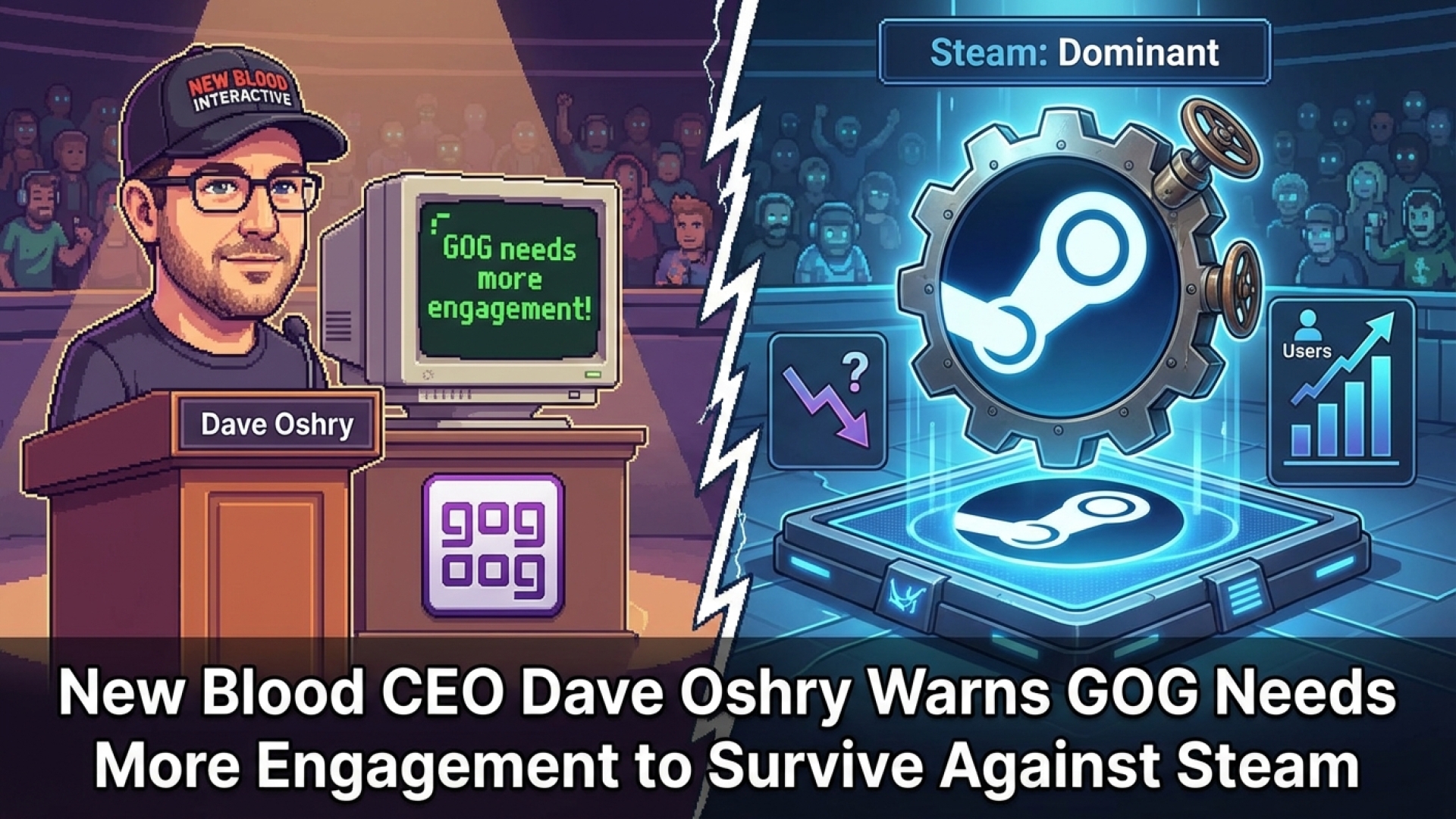
In the rapidly evolving world of PC gaming, enthusiasts often find themselves navigating a fragmented landscape of digital storefronts and launchers. At Digital Tech Explorer, we prioritize the user experience and technical efficiency, and while many platforms struggle to find their footing, Steam remains the gold standard for design and functionality. However, GOG (formerly Good Old Games) has long served as a specialized alternative, championing DRM-free content and the GOG Galaxy launcher. Despite these unique selling points, GOG faces an increasingly steep climb to maintain its market share against industry giants.
The “Floodgates” Theory: Dave Oshry on GOG’s Struggles
Dave Oshry, the visionary CEO of New Blood Interactive—the studio responsible for hits like Dusk and Ultrakill—recently shared a compelling narrative regarding the platform’s stagnation. In a deep dive with RPG Site, Oshry noted that GOG’s challenges began when Steam “opened the floodgates.” Originally, a clear line existed: Steam was for modern blockbusters, while GOG was the sanctuary for classic titles. Once Steam expanded its catalog to include legacy games, the necessity for a secondary storefront diminished for the average user.
Our analysis at Digital Tech Explorer shows that while GOG offers excellent technical features—such as one-click mod installers and support for massive projects like Fallout London—the sales data tells a different story. Oshry revealed that GOG sales, which once accounted for 5% to 10% of a game’s total revenue, have now dipped to a mere 1% to 5% compared to Steam. While the community “roots for GOG,” the lack of a “killer feature” makes it difficult for GOG Galaxy to compete with the sheer momentum of Valve’s ecosystem.
Comparing Digital Storefronts: Steam vs. GOG
To help our readers make informed decisions, we have broken down the primary differences between these two industry leaders:
| Feature | Steam | GOG |
|---|---|---|
| Licensing | Standard DRM / Online Check-ins | 100% DRM-Free |
| Game Library | Massive (Modern + Classic) | Curated (Focus on Preservation) |
| Modding Support | Steam Workshop (Integrated) | One-Click Installers / Manual |
| Offline Play | Requires Offline Mode Setting | Full Offline Installers Available |
Preservation and the DRM-Free Advantage

Despite the competitive pressure, GOG’s mission remains vital for the preservation of PC games. Their commitment to DRM-free software allows users to download and store their titles locally, bypassing the need for a launcher entirely—a significant win for digital ownership. Furthermore, GOG hosts legendary titles that are notoriously absent from Steam, including Diablo 1, Ultima Underworld, and the original Resident Evil trilogy.
However, preservation comes with technical hurdles. Oshry noted that even with GOG’s efforts, running legacy titles like The Journeyman Project on modern systems can be a taxing experience. For many gamers, the “nostalgia fix” is often short-lived when the technical friction of older software becomes apparent, leading to a high uninstallation rate.
The Broader Market: Epic Games Store and Beyond
Oshry’s critique wasn’t limited to GOG; he also addressed the Epic Games Store. He argues that high developer percentages and free giveaways are insufficient if player engagement remains stagnant. Drawing on his experience as a developer, Oshry suggested that while Epic serves as a great marketing tool, it has yet to prove itself as a sustainable sales powerhouse compared to Steam’s massive user base.
The Future of Digital Distribution
As we look toward the future of gaming at Digital Tech Explorer, the survival of platforms like GOG depends on more than just goodwill. While the platform’s new ownership has teased ambitious “rescue missions” for classic games starting in 2025, the ultimate test will be whether they can convert “supporters” into active “customers.” As Oshry poignantly concluded, the platform needs a critical mass of engaged users to remain viable in an industry that moves at lightning speed.
Stay tuned to Digital Tech Explorer for further updates on software trends and in-depth product reviews. Whether you are a seasoned developer or a casual gamer, we are here to help you navigate the complex world of digital innovation.