

Beyond Gaming: How the PS5 Slim Was Modded to Run Ubuntu Linux and Ray-Traced GTA 5
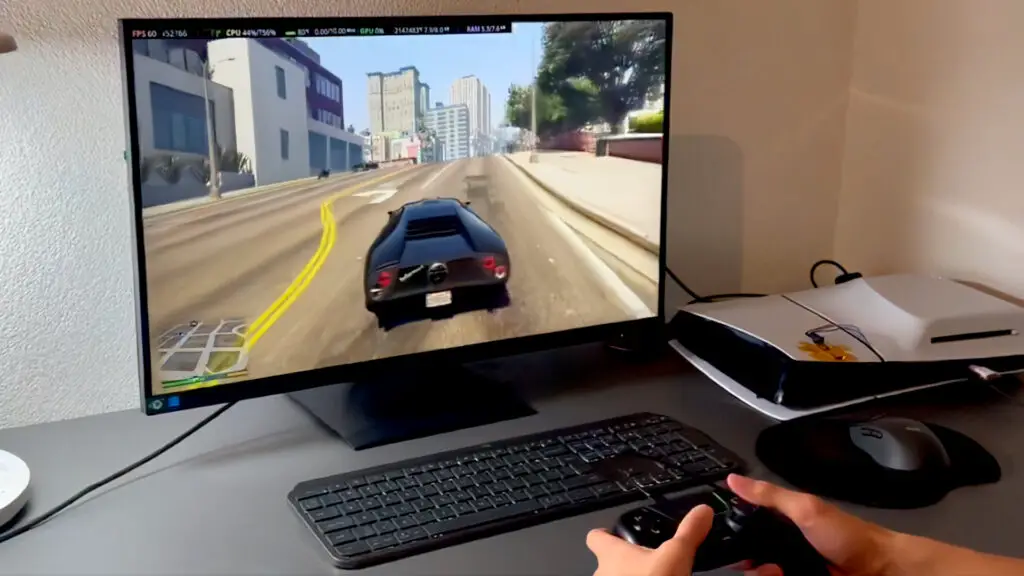
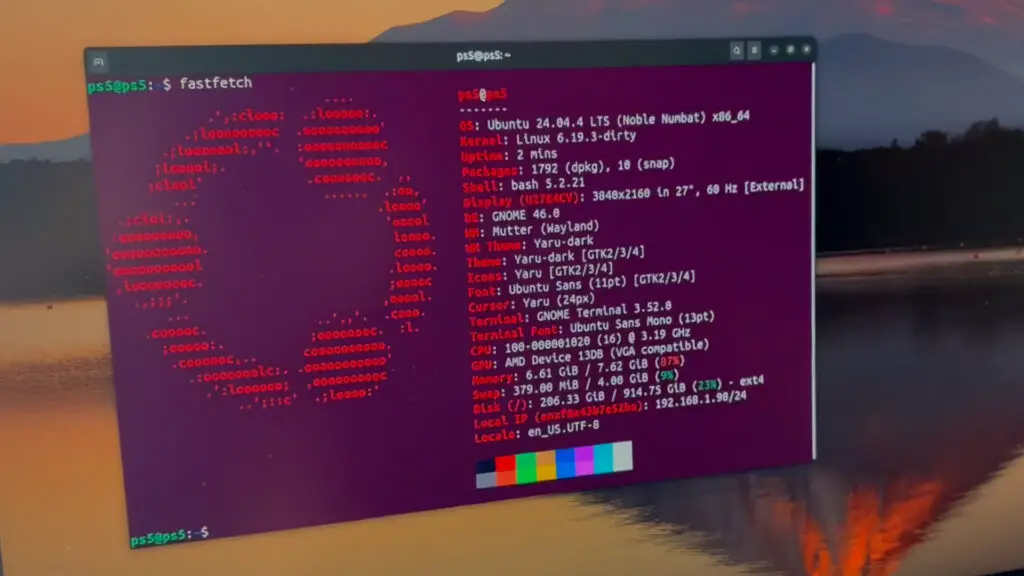
In the world of hardware modding, few challenges are as daunting as cracking the latest gaming consoles. However, software engineer Andy Nguyen has recently achieved a technical milestone that bridges the gap between closed-system consoles and open-source flexibility. By successfully porting Ubuntu Linux to a PS5 Slim, Nguyen has demonstrated that the hardware under the hood is capable of far more than Sony intended—including running GTA 5 Enhanced with ray tracing enabled.
At Digital Tech Explorer, we love seeing the boundaries of hardware pushed to their limits. While the PlayStation’s native OS is a customized fork of FreeBSD, seeing a full-fledged Linux distribution running on this machine highlights the incredible untapped potential of modern console architecture.
Bypassing Sony’s Security Barriers
The journey to a Linux-powered PS5 was not easy. TechTalesLeo notes that Sony’s security layers are among the most robust in the industry, designed to prevent exactly this kind of unauthorized software execution. The breakthrough relied on a kernel exploit known as ‘Byepervisor’.
However, this isn’t a “one-size-fits-all” solution for every gamer. The exploit is strictly limited to specific older firmware versions. Because Sony consistently releases patches to shore up vulnerabilities, users who keep their consoles updated are currently locked out of this particular modding path. This highlights the ongoing “cat-and-mouse” game between manufacturers and the security research community.
Cracking the GPU Driver Code
Perhaps the most impressive feat of this project was overcoming the lack of official GPU drivers. The PS5 utilizes a heavily customized AMD RDNA GPU, a hybrid of RDNA 1 and RDNA 2 architectures that does not have publicly available drivers for Linux.
The solution came through the open-source Mesa driver framework. By implementing specific Mesa driver tweaks, the team allowed the Linux kernel to communicate directly with the console’s custom silicon. This technical “handshake” is what allows high-demand features like ray tracing to function outside the native PlayStation environment.
Current Performance and Technical Hurdles
While the demonstration is a proof-of-concept success, it is not yet a replacement for a dedicated gaming PC. Testing showed that while audio, controllers, and USB ports are functional, the system faces significant thermal throttling. The PS5 Slim’s compact form factor makes heat management difficult when running an unoptimized desktop OS, often leading to reduced performance during extended play sessions.
Below is a summary of the current state of the PS5 Linux port:
| Feature | Status | Notes |
|---|---|---|
| Operating System | Ubuntu Linux | Fully functional desktop environment. |
| GPU Acceleration | Supported | Enabled via custom Mesa drivers; supports Ray Tracing. |
| Peripherals | Functional | USB ports and controllers are recognized. |
| Audio | Working | Output is stable through standard channels. |
| Thermal Stability | Issue | Significant throttling observed under high load. |
Reporting Errors and Future Outlook
As with any experimental AI or software project, glitches remain. The Steam performance overlay, for instance, struggled to interpret the PS5’s unique hardware data. This resulted in “reporting errors,” such as impossible negative temperature readings and incorrect GPU clock speeds. These bugs serve as a reminder that while the OS is running, the bridge between Linux and Sony’s custom silicon still needs refinement.
Looking ahead, the successful porting of Linux to the PS5 carries fascinating implications. It brings us closer to a DIY version of the Steam Machine—a high-powered, compact console running a flexible OS. This project could eventually lead to the PS5 appearing in the Steam Hardware Survey, representing a new era where console hardware and PC software finally converge.
About the Author: TechTalesLeo is a dynamic storyteller and tech enthusiast dedicated to making complex digital innovations accessible and intriguing for everyone from novices to pros.
Disclaimer: All content on Digital Tech Explorer is for informational and entertainment purposes only. We do not provide financial or legal advice. Modifying your console hardware or software may void your warranty.
Affiliate Disclaimer: Some of the links on Digital Tech Explorer are affiliate links. This means we may earn a commission if you click through and make a purchase, at no additional cost to you. Our recommendations are based on thorough research and personal experience.