
Minecraft creator Notch, known for his unfiltered takes on the industry, recently took to X to voice his frustrations with Nvidia’s upscaling and Frame Generation technology, better known as DLSS. While the tech world has been buzzing about its latest AI-driven iterations, the fundamental concept of DLSS seems to be the sticking point for the developer of the world’s best-selling game.
“DLSS fundamentally makes no sense,” Notch opined to his followers. “Because the graphics card is too slow to run the game at reasonable speeds, you use THE SAME HARDWARE to run a neural network to generate frames in between the existing ones.”
“DLSS fundamentally makes no sense. Because the graphics card is too slow to run the game at reasonable speeds, you use THE SAME HARDWARE to run a neural network to generate frames in between the existing ones.”
April 2, 2026
At Digital Tech Explorer, we believe in digging deeper into the “how” of technology. While Notch is technically correct that the silicon lives on the same board, lumping modern graphics card architecture into a single category is a bit reductionist. In modern Nvidia GPUs, specific ML-optimized Tensor Cores handle the heavy lifting for AI tasks, separating that workload from the primary CUDA cores used for standard rendering.
The tech community on X was quick to offer more nuanced explanations of how this pipeline actually functions:
“It’s not the same hardware, it’s hardware specialized and optimized to run neural networks.”
“You’re putting the load on another section of the pipeline, which leads to better relative performance.”
To help our readers understand this evolution, we’ve broken down the differences between traditional rendering and AI-accelerated methods:
| Feature | Traditional Rasterization | NVIDIA DLSS / Frame Gen |
|---|---|---|
| Core Method | Brute-force pixel rendering | AI-driven upscaling & interpolation |
| Hardware Utilized | Standard CUDA Cores | Specialized Tensor Cores |
| Performance Focus | Raw hardware power | Efficiency and higher frame rates |
| Best For | Native resolution clarity | Ray tracing & high-refresh gaming |
An argument can certainly be made that GPU development should focus more on raw raster performance rather than relying on machine learning as a crutch. However, with the rise of ray tracing and complex 4K resolution environments, the industry has largely moved away from resource-heavy brute force techniques.
Bryan Catanzaro, Nvidia’s VP of Applied Deep Learning Research, addressed this shift previously, stating: “Moore’s Law is dead. We have to be smarter. Brute force—re-rendering every frame 120 times a second at 2160p—is wasteful because there are so many correlations in the rendering process we can reuse.”
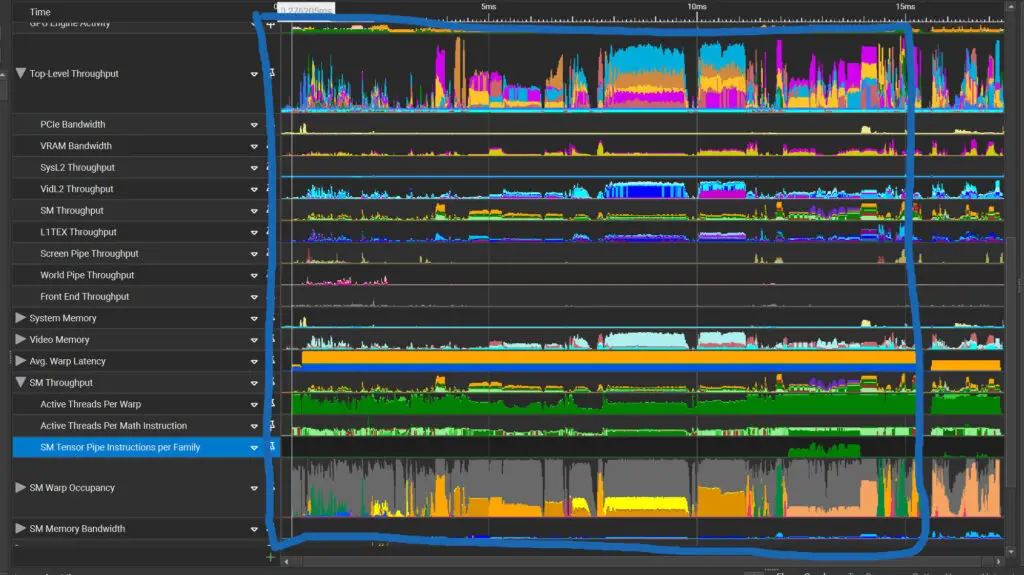
Our team at Digital Tech Explorer has been conducting real-world testing on these claims. Our lead hardware analyst, Nick, provided the data visualization above to clarify the workload distribution. “Everything in the blue box is the GPU’s requirement to render a single frame,” Nick notes. “Everything following that is the GPU using AI to interpolate an additional frame.”
Is DLSS perfect? Certainly not. There are valid concerns regarding Multi Frame Generation on lower-spec cards and developers potentially using AI as a substitute for proper optimization. However, the narrative that it “makes no sense” ignores the specialized hardware that makes these modern gaming breakthroughs possible.
At Digital Tech Explorer, we’ll continue to monitor how these technologies evolve. Whether you’re a Minecraft purist or a Cyberpunk enthusiast, understanding the silicon in your rig is the first step to mastering your setup.
For more insights into digital innovation and hardware trends, visit our author page for TechTalesLeo.