
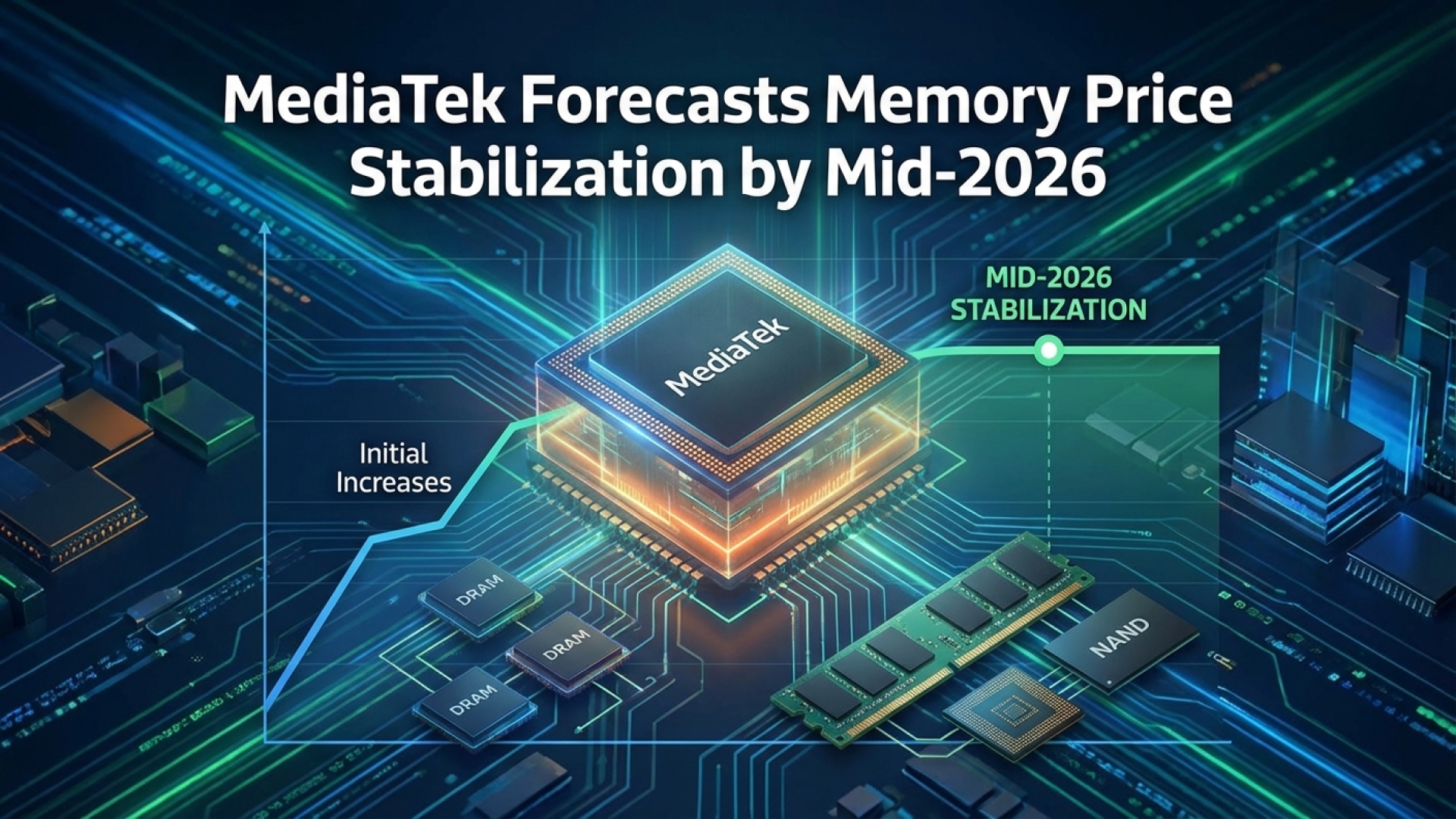
The global tech landscape is currently grappling with a significant memory supply crisis. Driven by the AI industry’s relentless hunger for DRAM and SSDs, consumers have felt the sting of rising costs across the board. However, according to recent insights from MediaTek, there may finally be a glimmer of “cautious optimism” on the horizon. The fabless semiconductor giant suggests that the pricing landscape for discrete memory could begin to stabilize or improve by the second half of 2026.
MediaTek’s Resilience Amid Market Volatility
Despite the broader market pressures, MediaTek has demonstrated remarkable resilience, posting a 15% year-on-year growth in 2025. This success was largely anchored by its flagship 5G SoCs, which propelled the company to a record-breaking revenue of $19.1 billion. However, navigating this success isn’t without its hurdles.
Eric Fischer, MediaTek’s Corporate SVP and Head of Global Sales, recently shared with Counterpoint Research that while the company has secured the necessary manufacturing capacity to meet demand, the financial aspect remains volatile. “Pricing is a little bit more challenging,” Fischer noted, explaining that costs are often recalibrated on a quarterly basis. In the current climate, securing capacity is the primary objective, as failing to do so would halt shipments entirely.
The Discrete Memory Outlook: A Shift in 2026?
The complexity of the current market is most evident in discrete memory—the standalone chips dedicated to storage and temporary data, separate from integrated system-on-a-chip (SoC) solutions. As original equipment manufacturers (OEMs) pass increased costs onto consumers, prices for smartphones, laptops, and consumer electronics have surged.
Fischer anticipates that these price hikes will persist through the first half of 2026. However, he predicts a “tipping point” in the second half of that year. As prices climb, consumer spending power is expected to wane, eventually forcing a reduction in demand that will incentivize a downward price adjustment. In the world of tech storytelling, it’s a classic case of the market getting worse before it gets better.
Timeline of Expected Market Shifts
| Period | Market Forecast | Key Drivers |
|---|---|---|
| H1 2026 | Continued Price Increases | High AI demand and robust PC shipments. |
| H2 2026 | “Cautious Optimism” | Consumer demand reaches a tipping point; prices stabilize. |
| 2027 | Capacity Challenges | Manufacturing constraints at TSMC and other major fabs. |
| 2028+ | Potential Alleviation | New fabs from Micron, SK Hynix, and Samsung reach full production. |
Long-Term Manufacturing and Global Constraints
While MediaTek was proactive in “locking up capacity agreements” with partners like TSMC, the long-term forecast remains tight. The industry is facing a bottleneck that extends well into the late 2020s. For instance, TSMC is reportedly fully booked until 2028, and its highly anticipated Arizona facility is already reserved.

Similarly, memory leaders like Micron, SK Hynix, and Samsung are expanding their facilities, but these investments won’t translate into “meaningful product shipments” until at least late 2027. For developers and tech enthusiasts, this means that while the 2026 price correction is a positive sign, the hardware landscape will remain competitive and supply-constrained for the foreseeable future.
At Digital Tech Explorer, we remain committed to tracking these shifts in digital innovation. As we navigate these emerging trends, our goal is to provide the insights you need to make informed decisions in an ever-evolving tech ecosystem. Stay tuned as we continue to monitor how these supply chain narratives unfold for professionals and hobbyists alike.