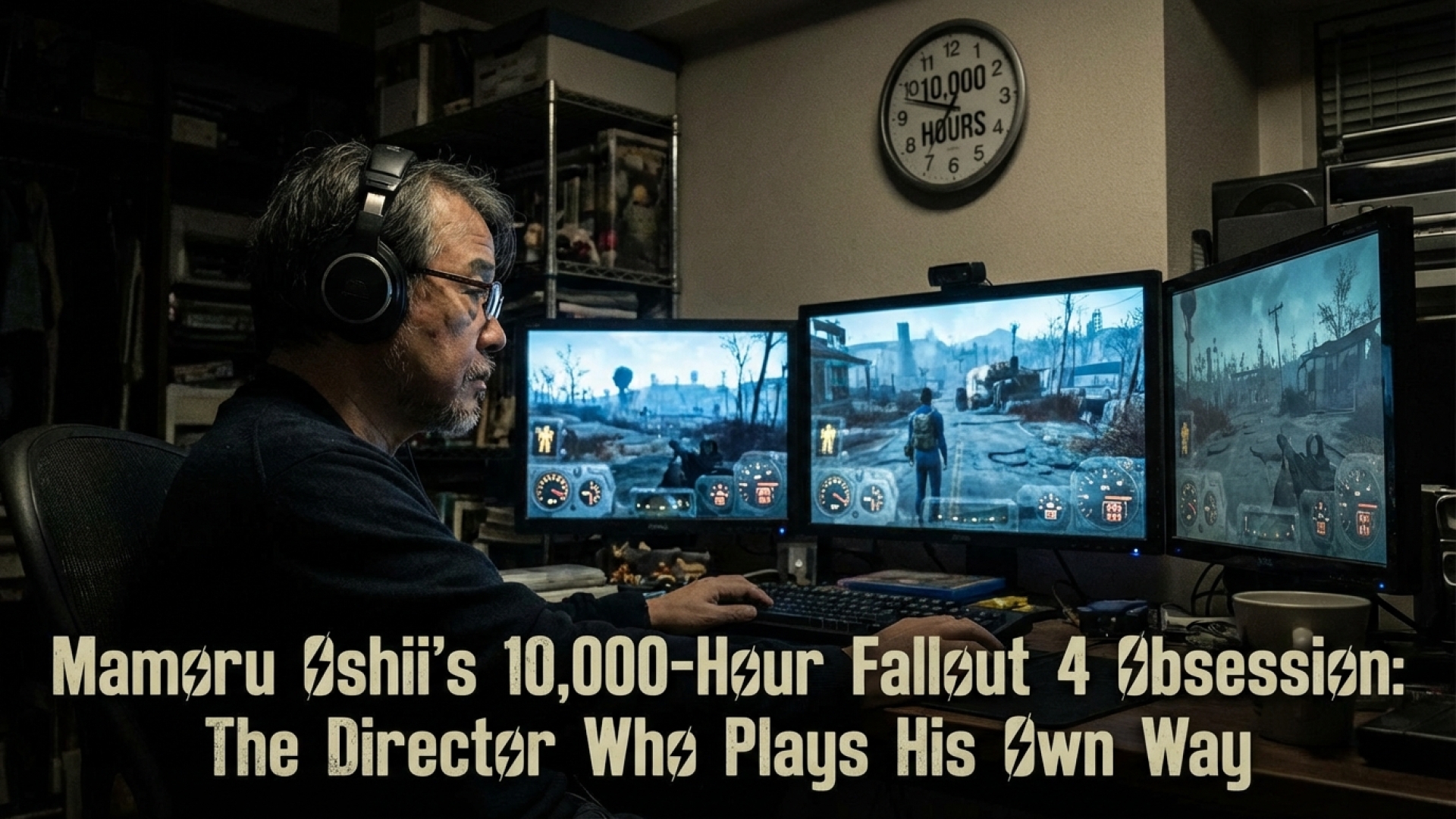
At Digital Tech Explorer, we often dive into the technical intricacies of software and hardware, but occasionally, a story emerges that highlights the sheer power of digital immersion. Mamoru Oshii, the visionary director behind the cyberpunk masterpiece Ghost in the Shell, has proven that his obsession with futuristic dystopias isn’t limited to the silver screen. In a revelation that has stunned both the film and gaming communities, Oshii shared that he has clocked an incredible 10,000 hours in Bethesda’s Fallout 4.

As a storyteller who has spent a career navigating complex digital landscapes, I find Oshii’s commitment to this specific title fascinating. His journey began with 2,000 hours on PlayStation before migrating to PC, where he logged another 8,000 hours via Steam. This level of dedication speaks volumes about the game’s longevity and its ability to serve as a canvas for personal narrative.
The Mechanics of Obsession: Why Fallout 4?
When analyzing PC games, we often look at frame rates or textures, but Oshii looks at philosophy. He describes Fallout 4 as a game “made for my own desires,” specifically praising the VATS (Vault-Tec Assisted Targeting System). For a director used to framing shots, the tactical, paused nature of VATS appealed more than the frantic, twitch-based combat found in modern shooters.
Oshii also offered a sophisticated take on the game’s “ultra-violence.” He noted that the harshness of the wasteland makes the violence feel earned and contextually appropriate. Interestingly, he contrasted this with Cyberpunk 2077, suggesting that the violence in Night City sometimes feels at odds with its civilian-heavy environment, whereas the wasteland’s brutality is a core component of its survivalist identity.
A Singular Path: Oshii’s Custom Gameplay Philosophy
What makes Oshii’s 10,000-hour milestone even more remarkable is how he chooses to play. He ignores the traditional RPG “to-do list,” opting instead for a self-imposed survivalist manifesto. He avoids factions, ignores the main quest after the initial chapters, and refuses help from any companion other than the iconic Dogmeat.
| Feature | Standard Player Approach | Mamoru Oshii’s Approach |
|---|---|---|
| Factions | Join Brotherhood, Railroad, or Institute | Total Rejection (Hunting the BoS) |
| Companions | Rotating squad for perks/story | Dogmeat only |
| Main Quest | Primary focus or completionist goal | Largely ignored for “living day-to-day” |
| Settlements | Building expansive networks | Minimalist (Red Rocket base only) |
| Combat Style | Mixed FPS and Tactical | Heavy reliance on VATS and looting |
Defying the Engine: The Red Rocket Hoard
Oshii’s disdain for the Brotherhood of Steel—whom he compares to historical authoritarian regimes—has led to a unique “trophy” system. He actively hunts Brotherhood members and hoards their Power Armor suits at his home base, the Red Rocket gas station. In a classic example of pushing hardware to its limits, he admits that the sheer number of collected suits causes the game’s performance to “chug.”

A Legacy in the Wasteland
At Digital Tech Explorer, we believe that technology is at its best when it allows for this level of personal expression. Oshii has reached well past level 100, yet he remains humble—and perhaps a bit self-deprecating—about his obsession. “I can only marvel at my own passion… But well, you could also call me an idiot,” he joked.
Whether you view it as a waste of time or a masterclass in digital roleplaying, Oshii’s 10,000-hour journey is a testament to the enduring appeal of Fallout 4. It reminds us that in the world of AI and complex algorithms, the most compelling stories are often those we write for ourselves within the sandbox.