
After a tumultuous period defined by internal restructuring, workforce reductions, and the highly publicized stability challenges of its desktop processors, Intel is finally witnessing a narrative shift. For those of us at Digital Tech Explorer who have tracked the “Blue Team’s” journey through billions of dollars in foundry investments, the current momentum is a fascinating chapter in silicon history. Investors are signaling newfound confidence, pushing Intel’s market capitalization to heights not seen in over two decades.
Intel Breaks the $300 Billion Barrier
As recently highlighted by industry trackers, Intel’s market capitalization has surged past the $300 billion milestone—a feat the company hasn’t achieved since October 2000. This valuation places Intel as the 47th most valuable company globally. While this is a significant recovery, the landscape of the GPU and hardware sector remains highly competitive.
To put this into perspective, here is how Intel currently stands against its primary rivals in the semiconductor space:
| Company | Approx. Market Cap | Primary Focus |
|---|---|---|
| Intel | $300B+ | Integrated Design & Manufacturing (IDM) |
| AMD | $385B | Fabless Design (CPUs & GPUs) |
| Nvidia | $4.5T | AI Acceleration & Graphics |
While AMD and Nvidia maintain higher valuations, Intel occupies a unique niche as a manufacturer. Unlike its fabless competitors, Intel owns and operates its own foundries, a capital-intensive strategy that is finally beginning to yield strategic dividends.
Strategic Foundry Partnerships: From Musk to Google
Historically, Intel’s massive fabrication plants (fabs) primarily served its own chip production. However, under recent leadership, these facilities have transformed into a revenue-generating arm. A pivotal moment for this “Foundry 2.0” strategy is the involvement in Elon Musk’s Terafab project. This collaboration suggests that Intel’s foundries will play a critical role in packaging AI chips for entities like SpaceX and Tesla.
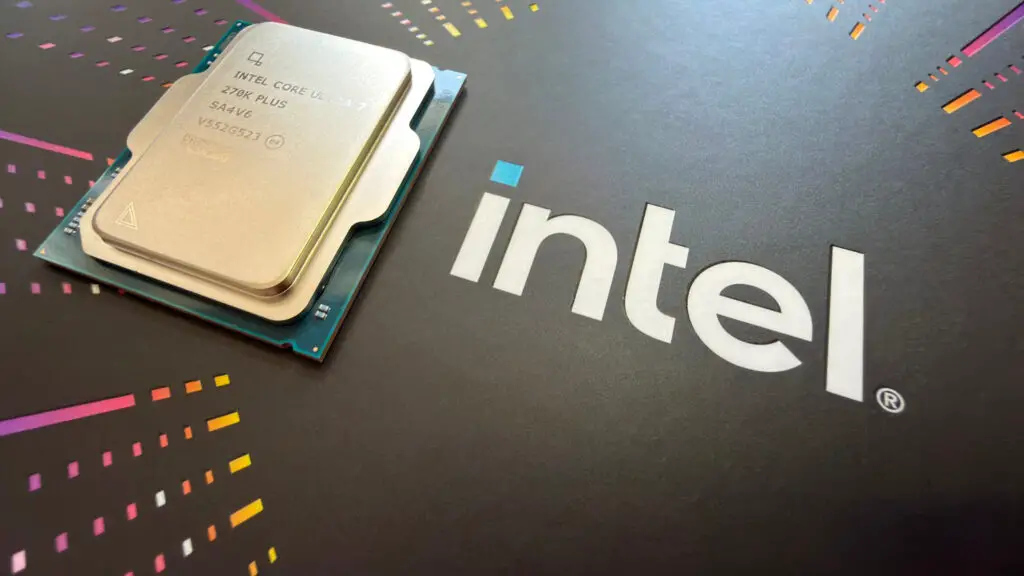
Furthermore, Intel recently secured a multi-year deal with Google. This partnership involves the deployment of Intel Xeon processors equipped with custom IPUs, designed specifically to power next-generation AI and cloud infrastructure. These enterprise-level wins, combined with the positive reception of 2024 releases like Panther Lake and the Arrow Lake 200S Plus, suggest a company successfully pivoting toward a more sustainable and diverse business model.
The Competitive Horizon
Intel’s resurgence stands in contrast to other US chipmakers like Texas Instruments and Qualcomm, which have seen more stagnant market cap growth recently. By aggressively chasing external manufacturing orders, Intel is leveraging its most significant asset—its physical production capacity—to offset fluctuations in the consumer desktop market.
While Team Red continues to dominate in PC gaming handhelds and server efficiency, Intel’s overall processor market share remains the industry benchmark. For the tech enthusiasts and developers we serve at Digital Tech Explorer, a healthy rivalry between Intel and AMD is the best possible outcome. Competition drives the innovation we see in 4K resolution gaming and complex AI acceleration tasks. After a long wait, it seems the silicon giant is truly back in the race.