
Intel has officially released its latest driver package for Arc graphics cards, and here at Digital Tech Explorer, we’ve spotted a significant development for workstation users. The update features a notable addition for the new Intel Arc Pro B70 and Intel Arc Pro B65 GPUs: explicit “Gaming Support” for these professional-grade processors. This move bridges the gap between high-end productivity and leisure, a trend our lead storyteller TechTalesLeo has been tracking closely within the hardware landscape.
The G31 GPU, which powers the Intel Arc Pro B70, was initially designed with high-performance gaming in mind. For months, the tech community buzzed with rumors of an Intel Arc B770 card—a dedicated gaming powerhouse leveraging the G31. However, by the time Intel was ready for a wide release, the industry had shifted. Driven by the recent AI-fuelled memory crisis and shifting market demands, Intel pivoted the G31’s potential toward professional and creative sectors.
From Gaming Dream to AI Powerhouse
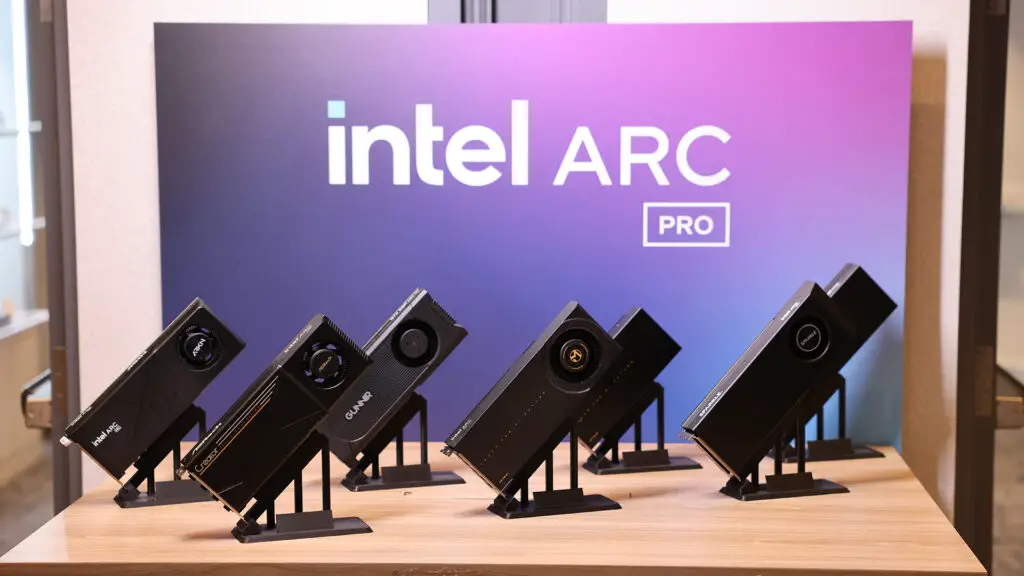
Intel eventually positioned the Intel Arc Pro B70 with a massive 32 GB of VRAM. While this capacity is overkill for most PC games, it is a goldmine for professionals running local AI models. At a price point near $1,000, it serves as a formidable competitor to Nvidia’s professional lineup. For comparison, the Nvidia RTX Pro 4000 Blackwell retails for approximately $1,800 but offers only 24 GB of memory.
While the exact depth of Intel’s investment in B70 gaming performance is unspecified, it is likely that many driver optimizations are shared with the consumer-focused Intel Arc B580. Both utilize the Intel Xe2 graphics architecture, meaning gaming improvements for the consumer “Battlemage” cards naturally trickle up to the Pro series.
Technical Comparison: G21 vs. G31
To understand the potential of the Pro B70, we need to look at the silicon. The G31 is a significant step up from the G21 found in mid-range gaming cards.
| Feature | Intel Arc B580 (G21) | Intel Arc Pro B70 (G31) |
|---|---|---|
| Xe2 GPU Cores | 20 Cores | 32 Cores |
| Memory Bus | 192-bit | 256-bit |
| Standard VRAM | 12 GB | 32 GB |
| Target Market | Gaming | Workstation / AI |
Performance Outlook and Market Reality
On paper, the G31 GPU offers over 50% more raw power than the G21. However, TechTalesLeo notes that even this boost likely wouldn’t have been enough to crown a theoretical “B770” as a “Nvidia killer” in the gaming space. Current benchmarks suggest that the RTX 5070 performs roughly 85% faster than the B580 in various scenarios. Even with perfect scaling of those extra 12 Xe2 cores, the G31 would still struggle to match the flagship efficiency of the 50-series cards.
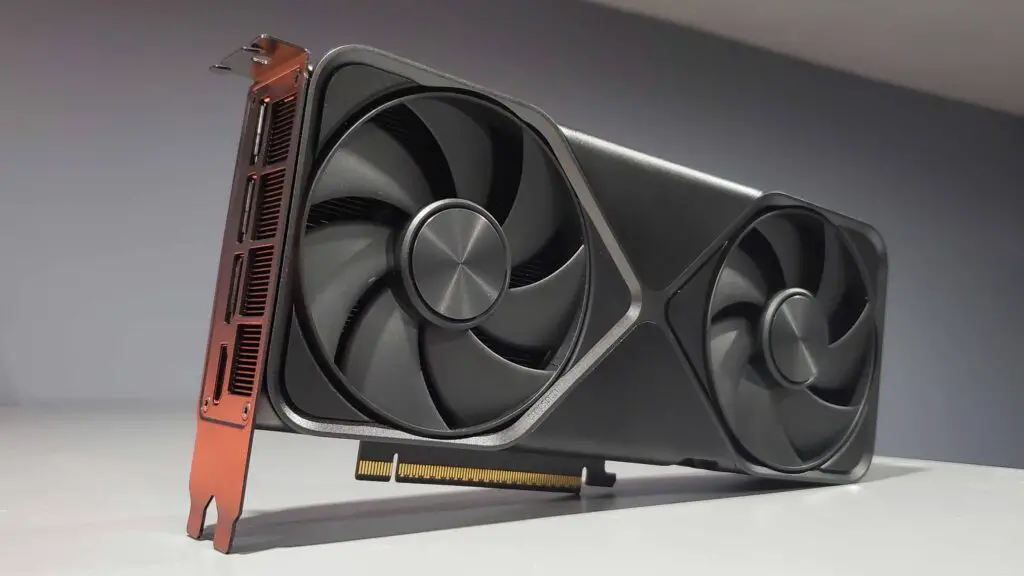
There is also the matter of manufacturing economics. The G31 is a large GPU, measuring 378 mm². In contrast, Nvidia’s GB205 GPU (found in the RTX 5070) is a much leaner 263 mm². A larger die generally means higher production costs. For Intel, selling the G31 as a gaming card would have meant lower margins and stiffer competition. By rebranding it as a Pro/AI card, they can leverage the high VRAM to command a premium from developers and data scientists.
While the dream of an “Arc B770” gaming enthusiast board may be dead, the inclusion of gaming support in these Pro drivers ensures that professionals can still enjoy high-fidelity 3D gaming after their workday is done. It’s a strategic pivot that reflects the current reality of the tech industry: AI is the current priority, but gaming remains a vital part of the ecosystem.
Disclaimer: All content on Digital Tech Explorer is for informational and entertainment purposes only. We do not provide financial or legal advice. Some of the links on Digital Tech Explorer are affiliate links. This means we may earn a commission if you click through and make a purchase, at no additional cost to you. Our recommendations are based on thorough research and personal experience.