

Intel’s recent history with desktop processors has been a rollercoaster of efficiency and excess. While the current Arrow Lake series successfully pivoted toward better thermal management and lower energy draw, recent whispers regarding the next-generation Nova Lake architecture have sent shockwaves through the community. A top industry leaker claims these chips could hit a staggering 700W power consumption mark, leading some to fear that Intel is returning to its “power at any cost” roots. However, here at Digital Tech Explorer, we believe that for the average PC gaming enthusiast, this figure is more of a technical curiosity than a cause for alarm.
The 700-watt rumor stems from the well-known hardware insider kopite7kimi, who recently shared insights regarding the “full-load NVL-K” energy requirements. While that number is eye-watering, the context is vital. Kopite7kimi later clarified that this specific measurement refers to a rumored “dual compute tile” variant of Nova Lake. This high-end beast reportedly features 52 cores—comprising two sets of eight P-cores and 16 E-cores, plus four low-power efficiency cores. If Intel is indeed scaling to this level of multi-threaded density, a 700W peak draw is a logical, if extreme, evolution.
Understanding the Power Limit Hierarchy
To grasp why these numbers appear so inflated, we must look at how modern AI-accelerated hardware handles energy. For comparison, the Core Ultra 9 285K from the Arrow Lake line consumes roughly 243W under a full synthetic load like Cinebench. Similarly, AMD’s flagship Ryzen 9 9950X can pull over 200W in similar scenarios. When you double the core count to reach a 52-core configuration, the power draw naturally scales upward, often exceeding the 500W threshold even before accounting for architectural bursts.
Technical analysts suggest that the 700W figure likely represents a PL4 (Power Limit 4) value. To help our readers understand these specifications, we’ve broken down Intel’s power limit classifications below:
| Power Limit | Definition | Duration/Impact |
|---|---|---|
| PL1 | Base Power / TDP | The sustained power draw during normal operation. |
| PL2 | Short-term Turbo | A higher burst used during demanding tasks for a set time limit. |
| PL4 | Peak Instantaneous | An absolute maximum peak lasting milliseconds to prevent PSU trips. |
In most real-world scenarios, motherboards are configured to prevent a processor from consistently hitting or maintaining PL4 levels, making that 700W figure a theoretical ceiling rather than a constant reality.
Why Gaming Performance Remains Unaffected
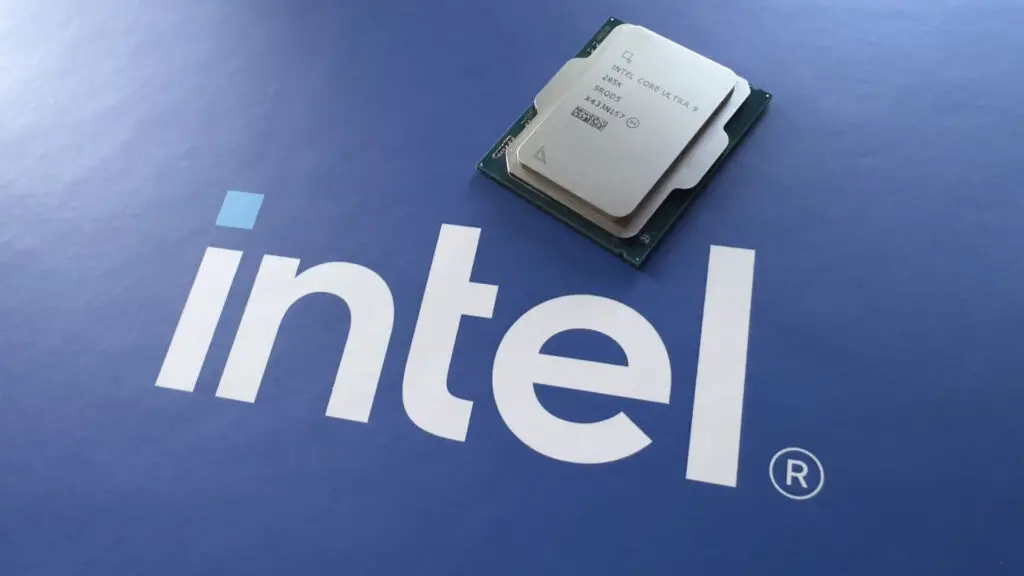
For the gaming community, these massive wattage numbers are largely irrelevant. No modern title is optimized to saturate 16 P-cores and 32 E-cores simultaneously. Most games prioritize single-core clock speeds and low latency over massive core counts. During our testing at Digital Tech Explorer, we consistently see high-end chips like the Core Ultra 9 285K pulling only 80W to 100W during intensive 4K resolution gaming.
We see a similar trend in AMD hardware. The difference in power draw between a specialized gaming chip like the Ryzen 7 9800X3D and a productivity giant like the Ryzen 9 9950X3D is significant when rendering video, but negligible when running a game. Because the extra cores in a 52-core Nova Lake chip would sit idle during gameplay, the 700W draw simply won’t happen in a gaming environment.
Targeting the HEDT Market
Intel is likely positioning these high-core-count Core Ultra 400 processors for the HEDT (High-End Desktop) and workstation markets. These chips are designed to compete with AMD’s Threadripper series, where professional developers and researchers value raw multi-threaded performance-per-watt over absolute power savings.
The vast majority of gaming rigs built in 2025 and 2026 will feature single-compute-tile variants of Nova Lake. These will be more affordable, easier to cool, and perfectly tailored for the latest PC games. As TechTalesLeo, I’ve seen many “power scares” over the years, and they rarely impact the everyday user. Instead of worrying about peak wattage, gamers should keep an eye on the fluctuating prices of DDR5 memory and high-speed NVMe SSDs, which will have a far greater impact on your next build’s budget.
Stay tuned to Digital Tech Explorer for further deep dives and real-world testing as we get closer to the official Nova Lake launch.