
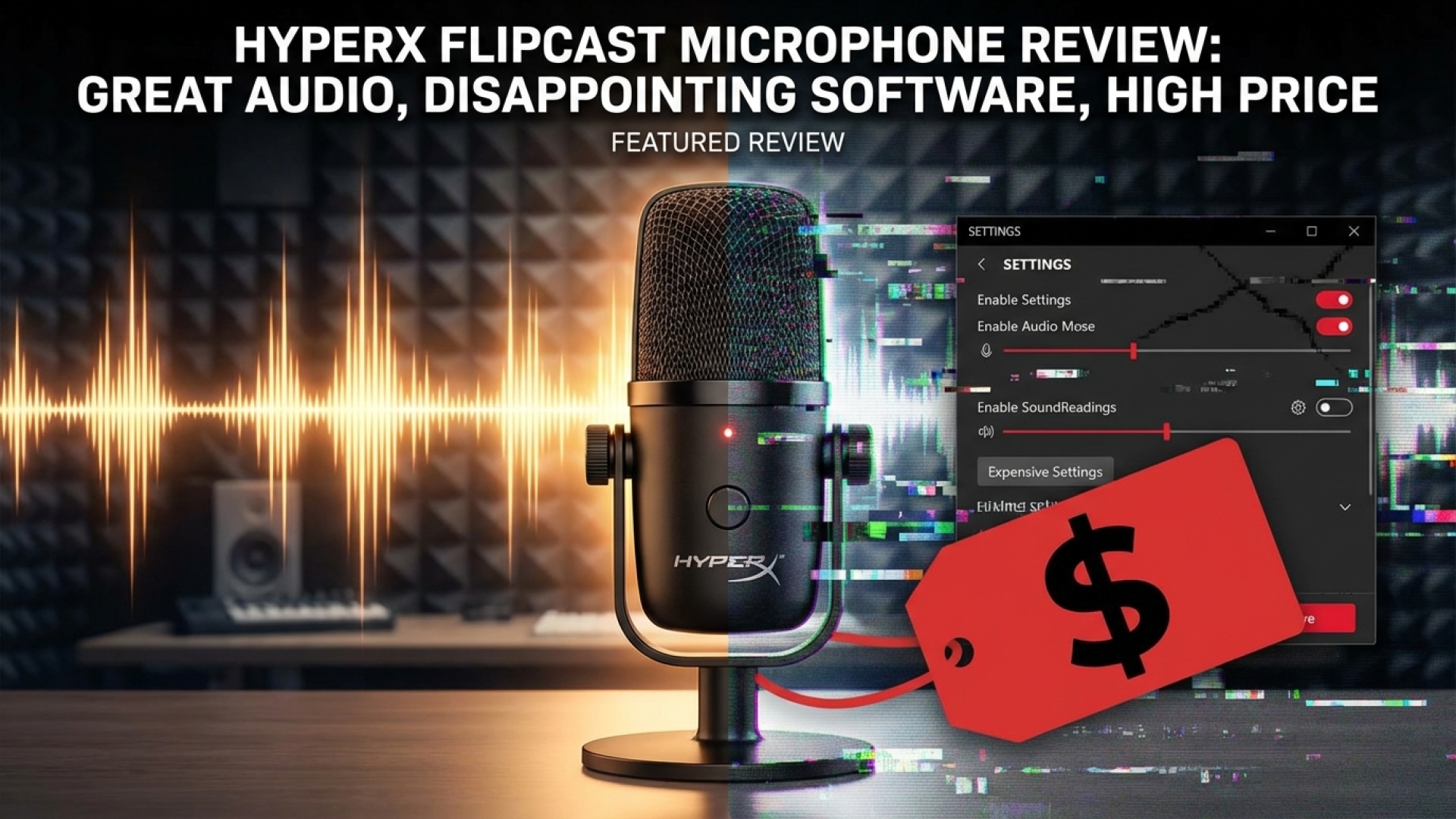
Choosing between the convenience of a USB microphone and the professional fidelity of an XLR setup used to feel like a binary choice for creators. HyperX is looking to bridge that gap with the HyperX FlipCast, a dynamic microphone that integrates both connections into a single, sleek package. As a tech storyteller at Digital Tech Explorer, I’ve seen many attempts to master this hybrid design, and while the hardware here is undeniably premium, its price point and software limitations present an interesting narrative for potential buyers.
Our Verdict: 3.5/5
The HyperX FlipCast is a versatile, high-fidelity microphone that successfully merges the USB and XLR ecosystems. However, in a competitive landscape, its premium MSRP and basic software suite prevent it from completely overshadowing industry veterans.
Design and Build Quality
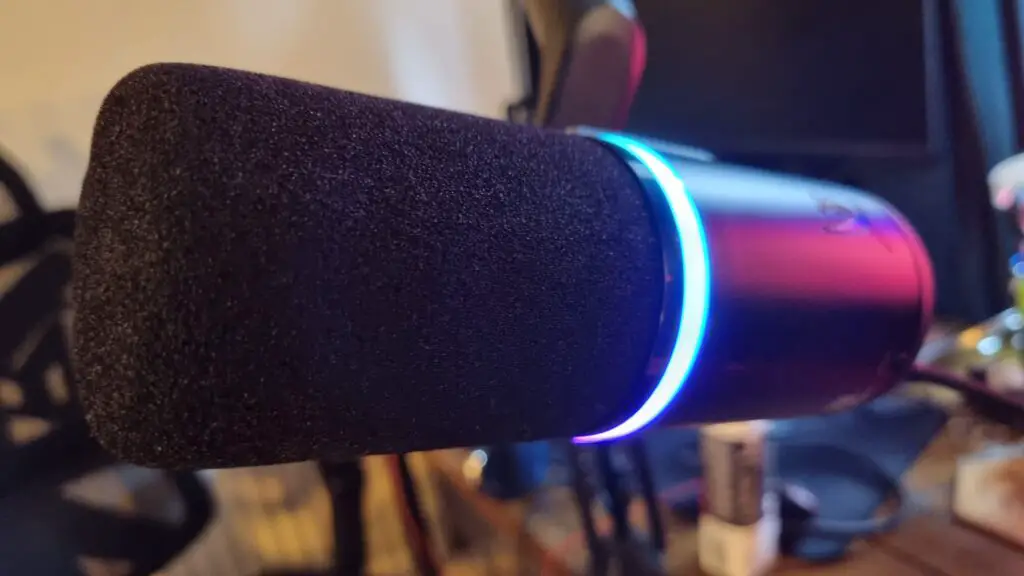
The FlipCast is a substantial dynamic unit that leans heavily into the professional podcast aesthetic. It arrives with a thick foam pop filter and a robust curved stand. It is important to note that this microphone is optimized for boom arm mounting—supporting both 3/8-inch and 5/8-inch threads—rather than traditional desktop placement, as a standard desktop base is absent from the box.
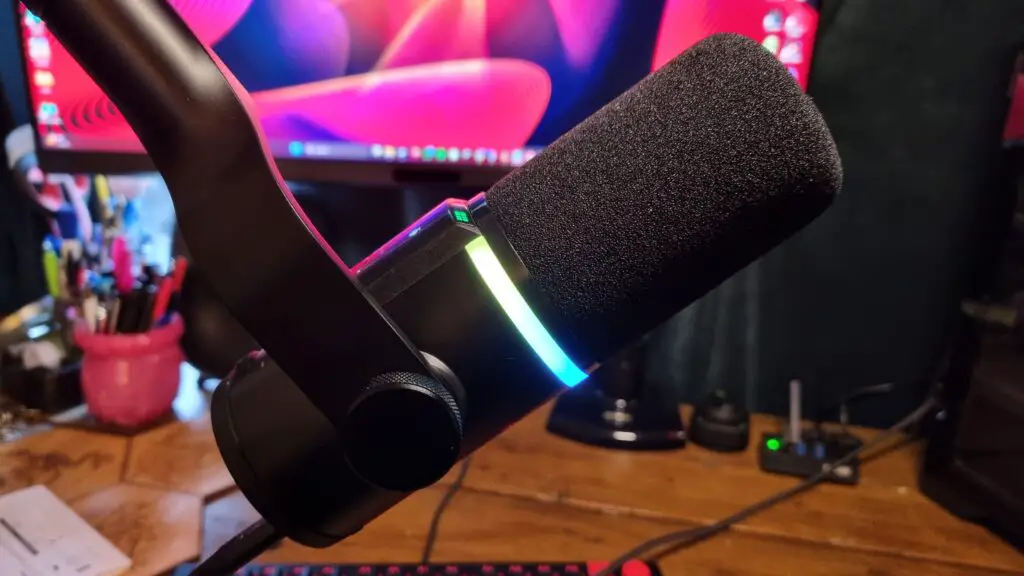
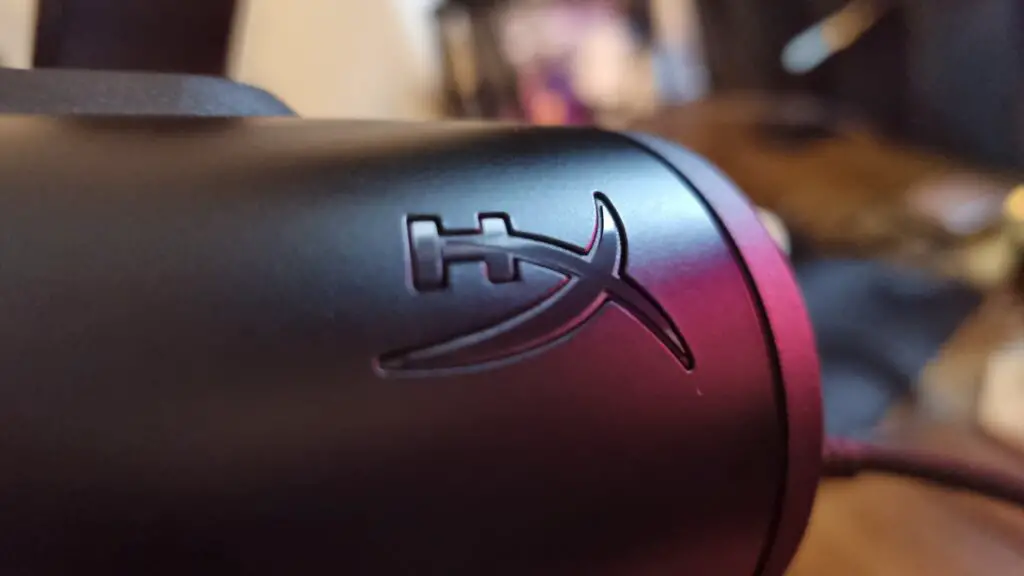
Functionality is at the forefront of this hardware. The top of the chassis features a large capacitive mute button complemented by an LED display that functions as a real-time gain indicator. On the rear, you’ll find the USB Type-C and XLR ports, alongside a 3.5mm headphone jack for zero-latency monitoring. The signature RGB ring provides that essential “streamer” aesthetic, though we recommend diving into the settings to slow down the default transition speed.
HyperX FlipCast Technical Specifications
| Feature | Specification |
|---|---|
| Microphone Type | Dynamic |
| Polar Pattern | Cardioid |
| Connectivity | USB Type-C, XLR |
| Sample Rate | Up to 32-bit / 192 kHz |
| Frequency Response | 20 – 20,000 Hz |
| Special Features | Physical High-pass & Presence Boost filters, RGB |
| MSRP | $261 / £195 |
Audio Performance and Field Testing
HyperX engineered the FlipCast for extreme vocal clarity. The rear of the unit houses two physical toggles: a high-pass filter and a presence boost. The high-pass filter effectively eliminates low-end environmental rumble, while the presence boost emphasizes upper-mid and treble frequencies. When both are active, the audio is exceptionally crisp, though some users might find the profile a bit thin. Disengaging these switches reveals a richer, more natural dynamic tone that competes well with other high-end gaming and podcasting peripherals.
One notable characteristic is the microphone’s high sensitivity. Despite being a dynamic mic, it is remarkably “hot,” picking up ambient noise more readily than some of its peers. While this gives you more flexibility in terms of distance from the mic, it also requires a relatively controlled environment to avoid unwanted background sounds.
The Software Hurdle
While the hardware shines, the digital experience through HyperX’s Ngenuity software is where the FlipCast faces its toughest challenge. The software provides basic toggles for noise-canceling, compression, and a limiter, but it lacks the granular sliders required for professional fine-tuning. The noise-canceling algorithm can feel aggressive, occasionally cutting audio abruptly during softer speech.
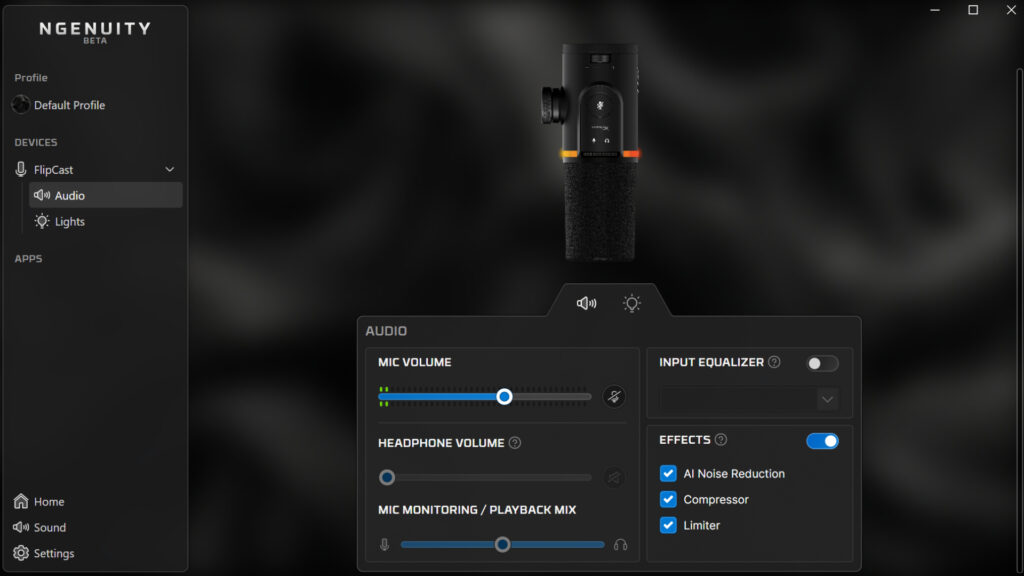
At a $261 price point, the FlipCast finds itself competing directly with the Shure MV7+ ($300). While HyperX offers a slight cost saving, competitors often provide more robust software ecosystems with advanced presets and natural-sounding digital signal processing. However, for our readers in the UK, the £195 price point makes this a significantly more attractive value proposition.
Final Verdict
The HyperX FlipCast is a beautifully constructed microphone that delivers impressive vocal capture and versatile connectivity. It is an excellent choice for PC gamers and streamers who want a plug-and-play USB experience today with the option to upgrade to a full XLR interface tomorrow. At Digital Tech Explorer, we believe that if HyperX can refine its software suite, this microphone could easily become the gold standard for hybrid setups. For now, it is a high-quality piece of hardware that just needs a bit more digital polish.
Pros
- Exceptional vocal clarity and detail
- True hybrid USB/XLR versatility
- Intuitive physical switches for audio profiles
- Premium build and aesthetic
Cons
- Aggressive pricing compared to established rivals
- Simplified software lacks depth
- Highly sensitive to environmental noise
Disclaimer: All content on Digital Tech Explorer is for informational and entertainment purposes only. We do not provide financial or legal advice.
Affiliate Disclaimer: Some of the links on Digital Tech Explorer are affiliate links. This means we may earn a commission if you click through and make a purchase, at no additional cost to you. Our recommendations are based on thorough research and personal experience.