
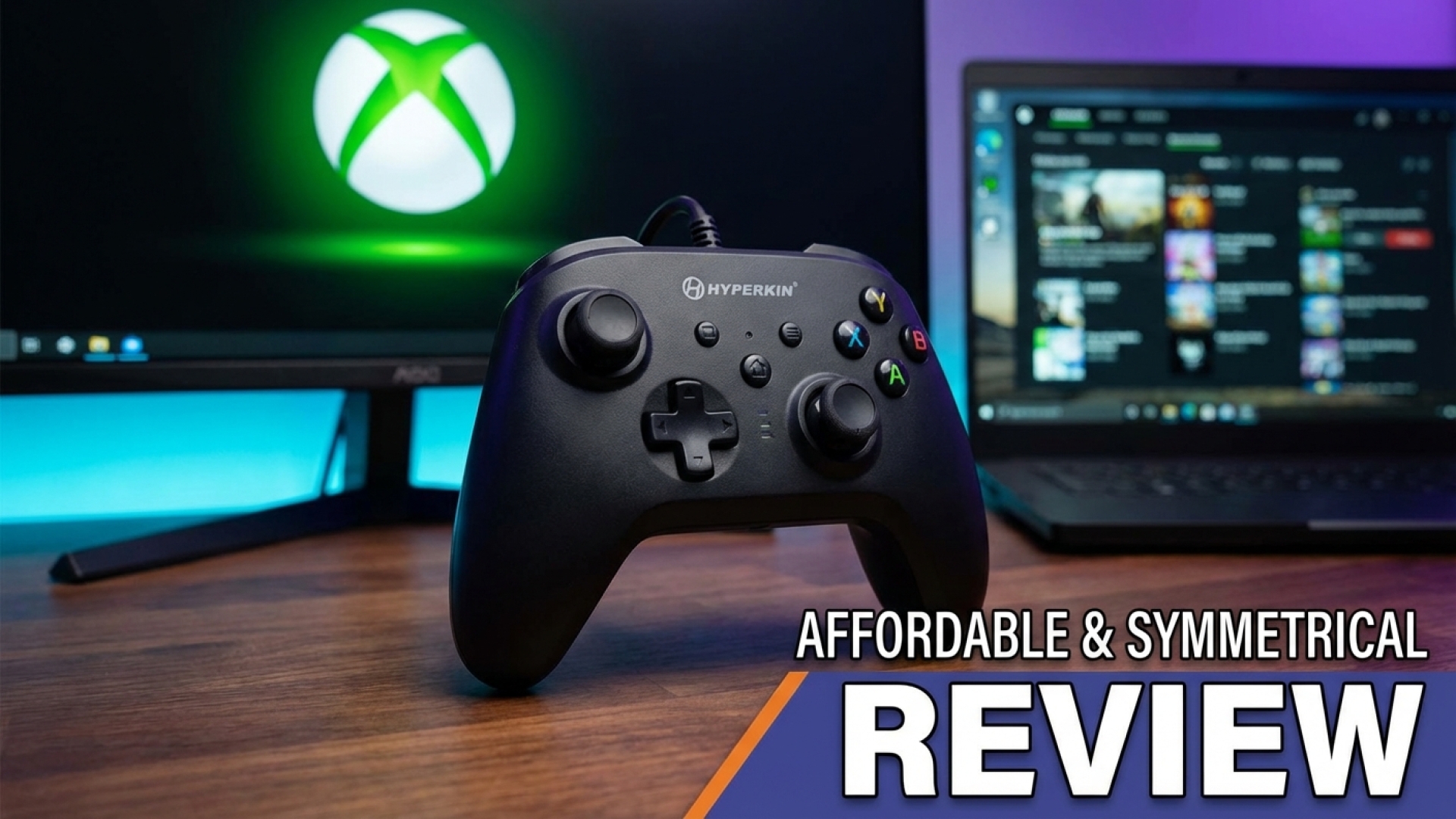
The history of gaming is marked by several great schisms, but few are as persistent as the “Offset vs. Symmetrical” stick debate. Since the late 90s, players have been divided: do you prefer the staggered layout of the Xbox controller or the balanced, symmetrical design perfected by PlayStation’s DualSense? Historically, your preference didn’t just dictate your comfort—it often dictated your console choice, unless you were willing to invest in expensive custom hardware. At Digital Tech Explorer, we’re always looking for tools that bridge these gaps without breaking the bank.
The Hyperkin Competitor aims to end this civil war by offering a high-quality, symmetrical stick layout for Xbox and PC gaming. As a storyteller who has watched these hardware trends evolve for decades, I was eager to see if this budget-friendly alternative could truly challenge the status quo, especially following the success of Hyperkin’s “Duke” reboot.
Design and Value: The “Super-Suit” Aesthetic
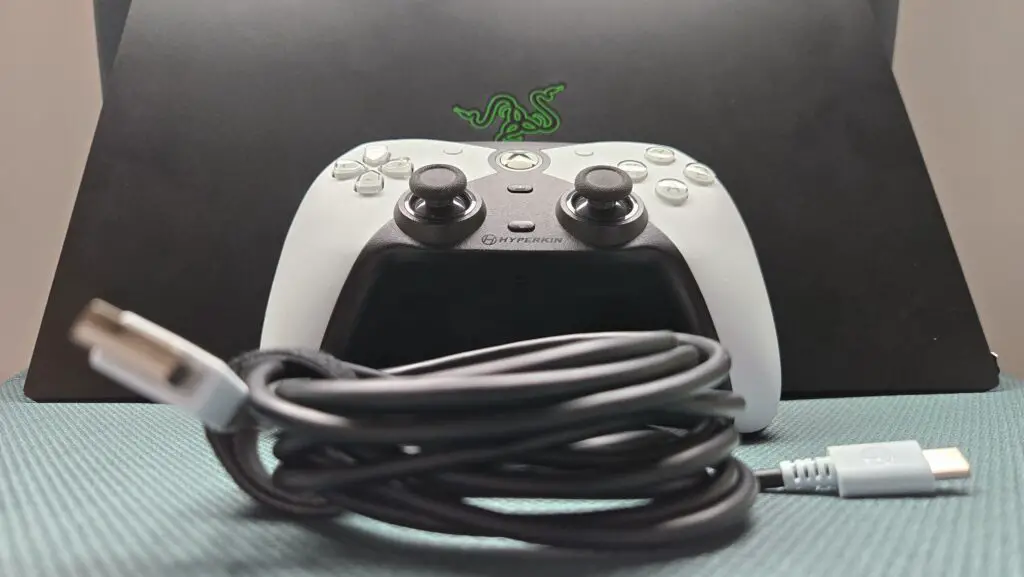
The Competitor is available in two colorways: a classic flat black and a striking black-and-white variant that clearly draws inspiration from the PS5 DualSense. The unit I’ve been testing features a design where the colors frame the logo in a way that looks remarkably like a superhero costume. It’s a playful, almost parodic aesthetic that manages to remain stylish on a modern desk setup.
Retailing at approximately $57 USD, the price point suggests some feature compromises, yet Hyperkin has managed to include several premium components. However, transparency is a core value here at Digital Tech Explorer, and it’s important to note the regional price disparity. In Australia, the controller retails between $85 and $120 AUD. At that price, it faces stiff competition from the likes of the PowerA Wireless Dragon controller, which offers additional programmable features and wireless connectivity for a similar investment.
Hyperkin Competitor Technical Specifications
| Feature | Specification |
|---|---|
| Triggers | Hall Effect (HE) Technology |
| Face Buttons | Standard Xbox Layout |
| Back Buttons | Two programmable/lockable (On-device mapping) |
| Sticks | Symmetrical Hall Effect Sensors |
| Connectivity | Wired USB Type-C (A to C cable included) |
| Audio | 3.5 mm headphone jack |
| MSRP | $57 USD | $85 AUD | £30 |
Connectivity and Ergonomics
This is a strictly wired device. While you won’t find Bluetooth or 2.4GHz wireless support, Hyperkin provides a generously long USB Type-C to Type-A cable that offers plenty of slack for living room play. The cable even features color-matched accents to maintain the “super-suit” look.
The absence of an internal battery makes the Competitor incredibly light. While the official specs list it at 234 grams, my own scales clocked it at roughly 250 grams. This lightweight profile reduces fatigue during long sessions, though those accustomed to the heft of a standard Xbox Wireless controller might find it feels a bit “hollow” initially.
Key Features and Performance
It is vital to manage expectations: this is not a budget DualSense. It lacks the advanced haptic motors and adaptive triggers of Sony’s flagship. The haptics here are functional but could benefit from more “oomph” to provide better feedback during intense combat. However, where it truly shines is in the inclusion of Hall Effect sticks. At under $60 USD, having sensors that use magnets instead of physical contact—meaning no stick drift—is a massive win for durability.
The programmable back buttons are another highlight. Located on the inner grips, these can be mapped directly on the controller without the need for external software—a feature I appreciate as someone who prefers a clean PC environment. During my tests in Doom Eternal and Baldur’s Gate 3, the back buttons were responsive and, more importantly, positioned well enough to avoid accidental presses.
D-Pad and Face Button Experience
While the sticks are excellent, the other inputs are more of a mixed bag. The D-pad features a transparent coating and looks great, but it feels somewhat small. The edges are raised, creating an inward slope that can feel a bit “harsh” during fast-paced movements. If you’re a player who likes to “roll” your thumb across directions, you might find the texture less than ideal.
The face buttons and bumpers also have a “soft” actuation. There is a slight “smoosh” factor rather than a crisp click. While playing Hades 2, I noticed my dash timings felt slightly off compared to a standard controller. It’s not a dealbreaker for casual play, but competitive gamers or speedrunners might notice the marginal difference in actuation speed.
Final Verdict
The Hyperkin Competitor is a specialized tool for a specific audience. It successfully brings symmetrical sticks and Hall Effect reliability to the Xbox and PC ecosystem at an affordable price point. If you are a US-based gamer looking for PlayStation ergonomics on an Xbox budget, this is a very solid contender.
Pros
- Symmetrical Stick Layout: Perfect for those who find offset sticks uncomfortable.
- Hall Effect Sensors: Superior longevity and resistance to stick drift.
- On-Board Mapping: Program back buttons without installing bloatware.
- Affordable: Excellent value in the US and UK markets.
Cons
- Regional Pricing: Significantly less competitive in Australia.
- Button Feel: Face buttons and D-pad lack a premium, tactile “click.”
- Wired Only: No wireless freedom may be a drawback for some setups.
At Digital Tech Explorer, we believe in using the right tool for the job. While the Competitor may not replace a high-end pro controller for every user, its inclusion of premium sensor tech in a budget-friendly shell makes it an intriguing option for the symmetrical-stick loyalists among us.