
In the Europa Universalis community, the last few months have been dominated by discussions surrounding the (admittedly hilarious) glitches that have plagued EU5 since its release. However, at Digital Tech Explorer, we believe the real issue with this highly anticipated 2024 release runs far deeper than mere technical bugs. As a software-driven platform, we look at the underlying systems, and EU5 presents a fascinating, if frustrating, architectural shift.
I am an EU4 veteran with 1,700 hours of playtime and a world conquest under my belt. I approached EU5 with the excitement of a storyteller and the scrutiny of a long-time fan. My first 93-hour campaign as Castile left me in a state of confusion. Halfway through, I was convinced I loved this new entry. By the end, I realized it had ruined its predecessor for me forever, yet left me with no desire to play the new installment again.
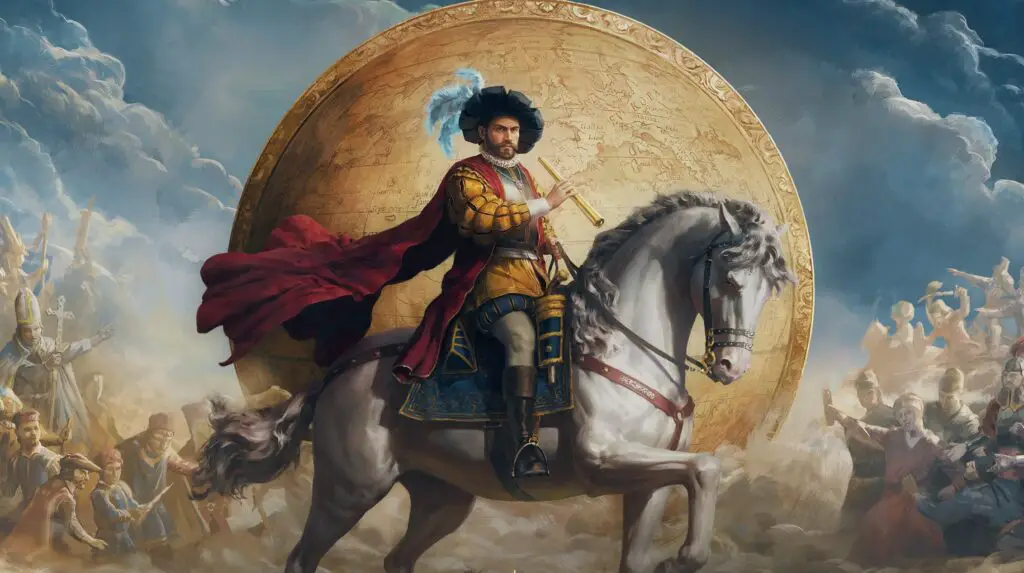
Each game possesses something the other lacks. Paradox Interactive has yet to provide the perfect synthesis of historical depth and engaging gameplay. This isn’t a light critique; Europa Universalis 4 was a cornerstone of my digital life, even influencing my academic career in grad school. But EU5, despite its incredible groundwork for gaming immersion, currently suffers from a lack of faction differentiation. Whether you play as Spain, Hungary, or the Ottomans, the mechanical “symphony” feels identical.
Breaking the Map-Painting Curse
Europa Universalis 5 is genuinely complex. I’ve often argued that EU4—as much as I love it—is a relatively simple “map painter” disguised with layers of artificial complexity. In EU5, the focus shifts from conquest to the grueling reality of state management.
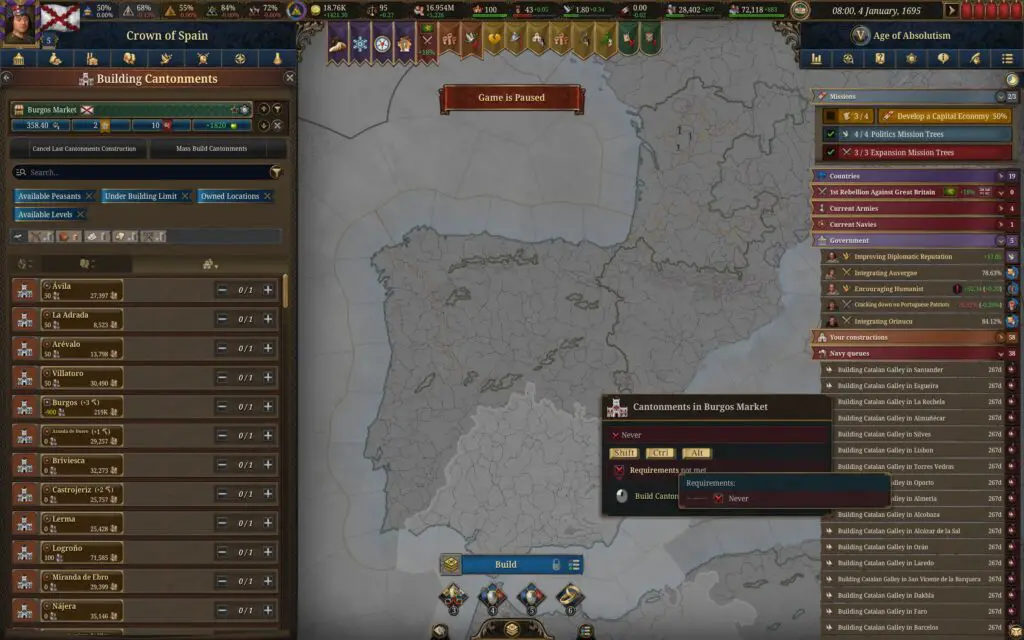
In my Castile run, I ended with an empire that barely extended beyond the Iberian Peninsula. In the EU4 ecosystem, this would be considered a failure. But in EU5, the systems are so dense that every buggy moment of those 500 years of statecraft felt heavy. Even when the AI faltered—like my colonial revolts triggering and immediately peacing out repeatedly—the underlying simulation kept me hooked. I found myself watching virtual months roll by just to see my centralizing control grow or trade ships navigate the Strait of Gibraltar.
The problem is that this beautiful groundwork lacks “flavor.” EU4 benefited from a decade of post-launch development that made every nation feel unique. Currently, EU5 feels like a vast, beautiful sandbox with too much sand. As one Steam reviewer noted, it becomes “coarse and gets everywhere.”
A Comparison of Grand Strategy Eras
To understand why EU5 feels so different from its predecessor, we need to look at the core mechanical shifts in the engine and design philosophy.
| Feature | Europa Universalis 4 | Europa Universalis 5 |
|---|---|---|
| Primary Focus | Imperial expansion & Map Painting | Economic simulation & Administration |
| Internal Management | Abstracted (Mana points) | Granular (Population & Goods) |
| National Identity | Unique Missions & Ideas | Generic Systems (At launch) |
| Geography | Highly strategic bottlenecks | Administrative burden based |
Depth Without Flavor
In EU5, imperial expansion isn’t the primary goal; the game functions more like a Victoria-style economy simulator. This inward turn means rebellions are frequent, your budget requires constant micromanagement, and exploration missions demand constant attention. The strategic delights of EU4—planning a 50-year campaign to dominate the Mediterranean—are replaced by the slow, excruciating crawl of numbers on a ledger.
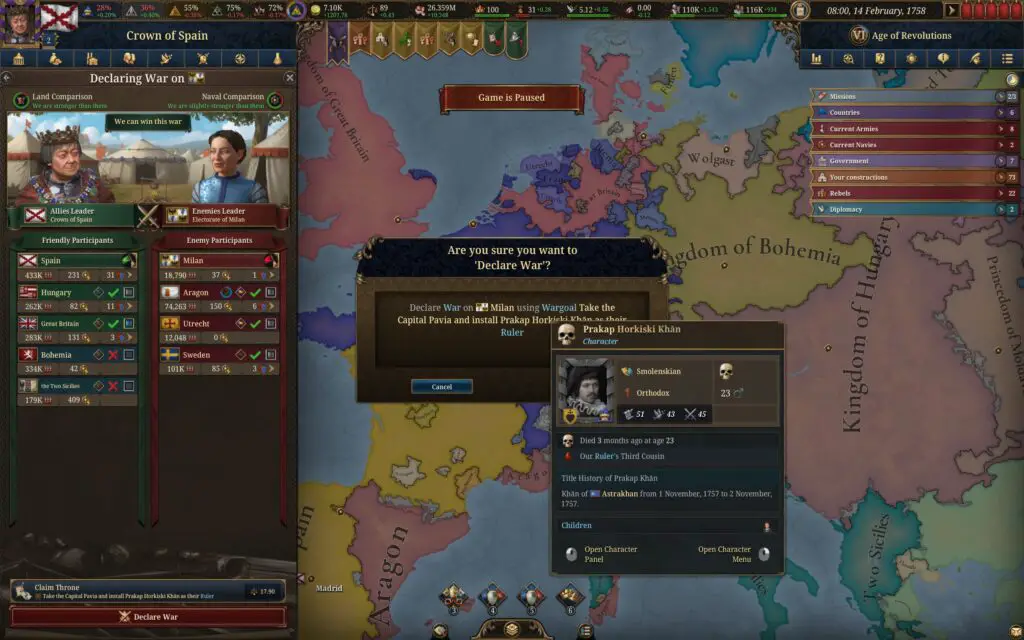
Crucially, EU5 is currently missing national ideas and mission trees. These were the “brain chemicals” of EU4, allowing players to create “Prussian Space Marines” or dominate Europe through diplomacy alone. Without generic idea groups to choose from, every campaign feels like the same administrative grind regardless of where you are on the map. Even the Holy Roman Empire feels two-dimensional in its current state.
At Digital Tech Explorer, we value transparency and real-world testing. My 93-hour deep dive proves that while Paradox has built a tactically superior engine, they have yet to fill it with the soul of history. I fell in love with EU4 because of its tapestry of national colors and the feeling of high purpose. EU5 has the framework for an infinitely better simulation, but it lacks that je ne sais quoi—a fundamental design flaw that light polish or overpriced DLC cannot easily fix.
I haven’t touched the game since finishing that campaign in February. Until Paradox introduces a way to make playing Delhi feel fundamentally different from playing Spain, the series remains in a difficult transition period. For more deep dives into PC games and tech trends, stay tuned to TechTalesLeo and the rest of the team here at Digital Tech Explorer.