
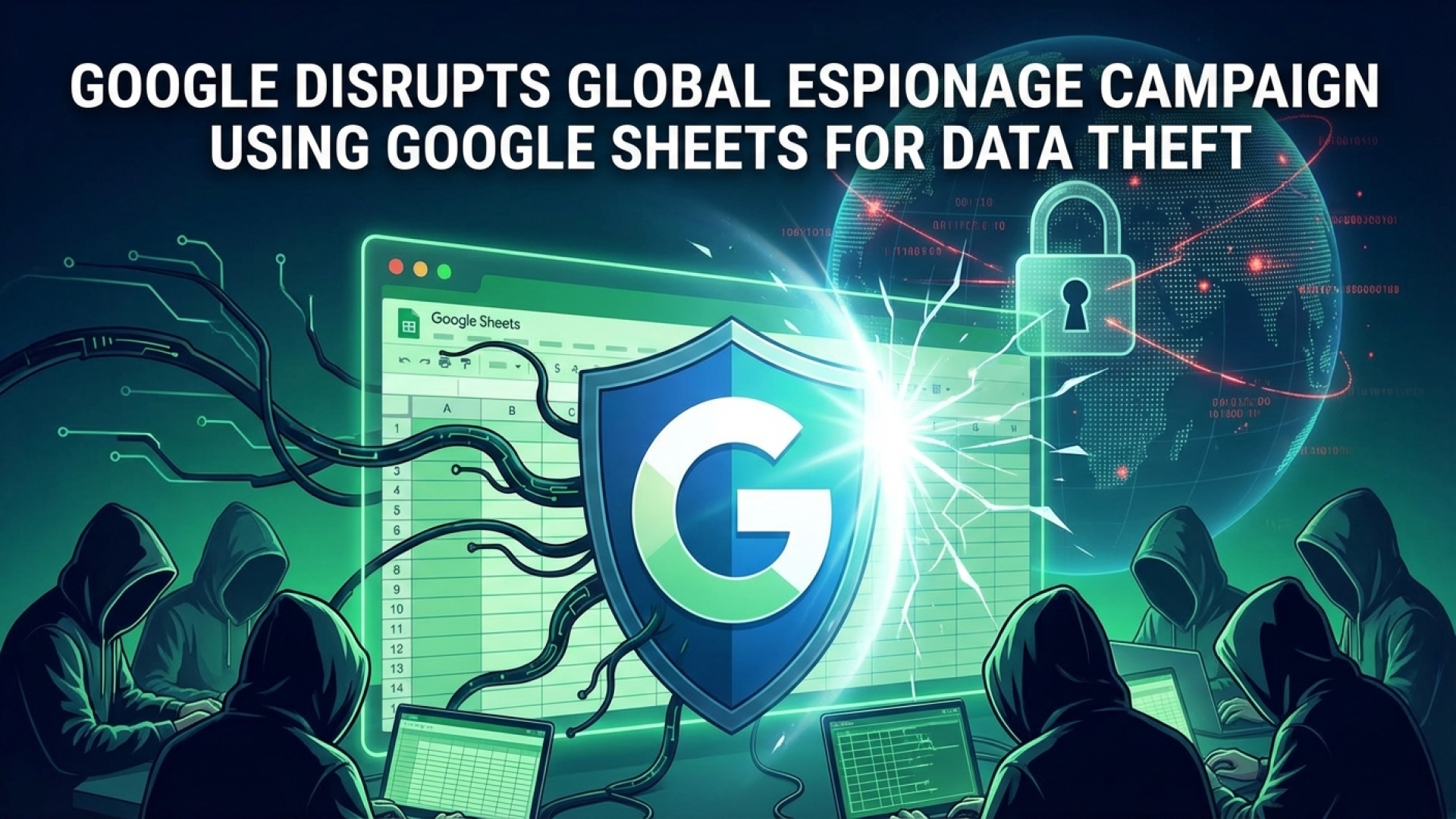
At Digital Tech Explorer, we often view Google Sheets as the reliable, if somewhat unexciting, backbone of data management. It’s the tool we use for everything from budget tracking to SEO audits. But as TechTalesLeo, I’ve always believed that even the most “boring” software has a story to tell. Today, that story involves a high-stakes game of global espionage where a simple spreadsheet was transformed into a weapon of digital intrusion.
Google recently revealed that its ubiquitous spreadsheet editor was co-opted for an international spying operation. While we usually focus on software productivity, this discovery serves as a stark reminder of how vulnerable our daily tools can be when targeted by sophisticated actors.

Disrupting a Global Espionage Campaign
According to the latest report from the Google Threat Intelligence Group (GTIG), researchers recently moved to dismantle a massive espionage campaign. This operation targeted telecommunications and government organizations across four continents, spanning dozens of nations.
The threat actor, identified as “UNC2814″—a group suspected of having ties to the People’s Republic of China—utilized API calls to interact with SaaS applications. By doing so, they managed to disguise malicious traffic as legitimate user activity, hiding in plain sight within the cloud infrastructure many professionals use every day.
The primary tool for this deception? Google Sheets. It is a classic “wolf in sheep’s clothing” scenario, where a mundane document editor served as the gateway for unauthorized access to sensitive networks.
Gridtide: How Google Sheets Became a C2 Platform
The technical mechanism behind this intrusion is known as Gridtide. Google describes it as a sophisticated C-based backdoor capable of executing arbitrary shell commands and facilitating the uploading and downloading of files.
What makes Gridtide particularly clever is its use of Google Sheets as a high-availability C2 (Command and Control) platform. Instead of viewing the spreadsheet as a document, the malware treated it as a communication channel. This allowed the attackers to transfer raw data and shell commands without triggering the traditional red flags associated with unverified server communication.
The Mechanism of Intrusion
For those interested in the coding and technical execution, the process is fascinatingly complex. A compromised Google Sheet file is programmed to connect to a Google Service Account for API authentication. After the connection is established, the file wipes its own traces and grants the attackers backdoor access via a unique 16-byte cryptographic key stored on the host machine.
Once the backdoor is active, it performs host-based reconnaissance. As Google’s report notes, the malware fingerprints the victim’s endpoint, collecting usernames, OS details, IP addresses, and environmental data like local time zones and directory structures.
This stolen information is then exfiltrated and stored directly in a specific cell—often cell V1—of the attacker-controlled spreadsheet. It’s a terrifyingly efficient use of cloud storage for nefarious ends.

Google believes this access was used to monitor “persons of interest.” In similar historical campaigns, threat actors have exfiltrated call data records, intercepted SMS messages, and abused lawful intercept capabilities within telecommunications companies.
While GTIG did not directly observe the theft of sensitive data during this specific campaign, the pattern aligns with past PRC-nexus espionage. This reinforces the need for constant vigilance in hardware and software security protocols.
The Scope of the Threat and Future Outlook
The good news is that Google has successfully disrupted the operation. However, the scale of the threat is sobering. With confirmed activity in over 70 countries, UNC2814 has proven that they can evade detection by even the most robust defenders.

At Digital Tech Explorer, we keep a close eye on these developments to help you stay ahead of the curve. As the GTIG report concludes, intrusions of this magnitude are the result of years of planning. We fully expect UNC2814 and similar groups to try and re-establish their global footprint using even more creative methods in the future.
For now, keep your AI-driven security tools updated and your API permissions tight. Even a humble spreadsheet can be a gateway to a much larger story.