
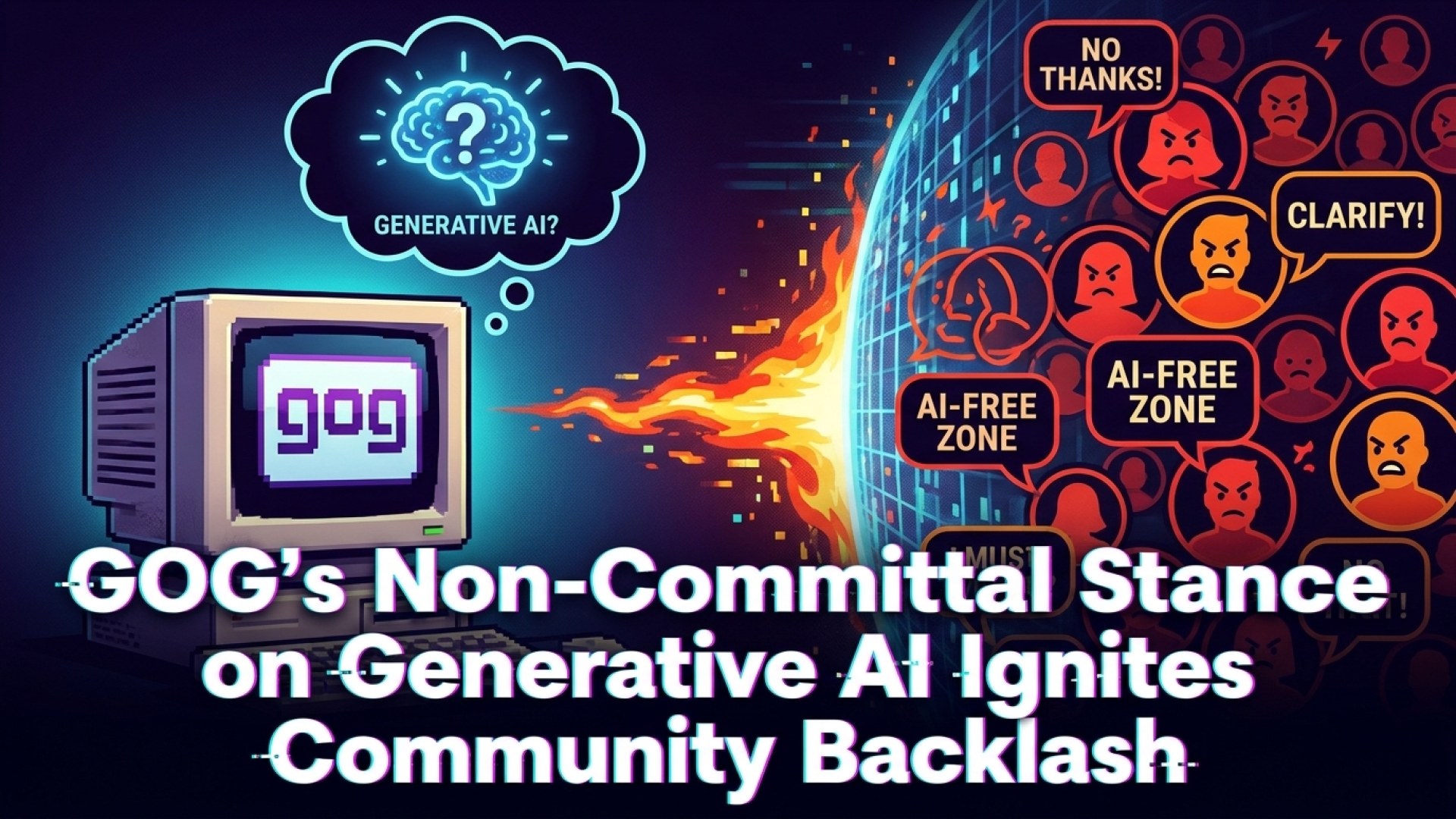
The digital landscape was set ablaze this past January when GOG forum users flagged a sale banner that appeared suspiciously like it was AI-generated. In the initial wave of allegations, KosmicznaPluskwa—a senior graphics designer and GOG team member—confirmed the suspicions. They noted the banner “is fully AI,” though they stopped short of further details to protect their employment status.

While GOG initially remained quiet, a representative eventually acknowledged that the company was “aware of the conversations and the assumptions” surrounding the use of AI acceleration in their marketing materials. At Digital Tech Explorer, we’ve seen similar controversies ripple through the gaming industry as companies navigate the fine line between efficiency and authenticity.
GOG’s Official Stance on Artificial Intelligence
During a recent Reddit AMA, GOG finally broke its silence, though the response has left many in the community wanting more. GOG Managing Director Maciej Gołębiewski clarified that the company isn’t ready to set absolute boundaries just yet.
“AI tools are one of many technologies we test and try out,” Gołębiewski stated. “In some contexts, it genuinely helps us push our mission forward. However, we understand that adopting new hardware or software solutions doesn’t mean skipping human judgment.”
This middle-ground approach mirrors the sentiment expressed by other industry giants like Larian Studios, which faced its own PC games controversy regarding generative assets last December. It highlights a growing trend where tech providers must balance innovation with the expectations of their core audience.
Community Pushback: Preservation vs. Automation
The response from the GOG faithful was swift. For many, GOG represents a sanctuary of “human-first” digital preservation, making any move toward automated “AI slop” feel like a betrayal of the brand’s core values.
Reddit user dragon-mom argued that GOG needs a more definitive stance: “Going against corporate corner-cutting while celebrating real human art is why we liked GOG in the first place.”
Another user, hinckley, pointed out the inherent connection between ethical business practices and the value of human expression. They suggested that GOG’s reputation, built on DRM-free ownership, is at risk if they sacrifice their identity for “a quick buck.”
The discourse took a more personal turn when concerns were raised about KosmicznaPluskwa. The artist reportedly left the GOG Cafe Discord shortly after the banner controversy became public. Gołębiewski noted that leaving the server was a personal decision, citing the overwhelming “social pressure” and “spotlight” as factors in what has been a difficult internal situation for the team.
The Broader Impact on Game Preservation
For a company like GOG, which thrives on its mission of longevity and software preservation, the integration of machine learning is a double-edged sword. While it offers potential for restoring legacy titles, the “purity” of that mission is now under scrutiny.
This debate isn’t happening in a vacuum. In 2025, Xbox lead Phil Spencer discussed a future where an AI model could potentially recreate old games using video data. However, critics argue this is a simulation, not true preservation. For GOG—a platform supported by users who pay specifically to keep historical code running—leaning too heavily into these models could alienate the very professionals and enthusiasts who keep the platform alive.
As we continue to explore the intersection of technology and creativity here at Digital Tech Explorer, it remains clear that while AI can assist in the process, it cannot replace the human narrative that defines the soul of gaming.