

Videogames are Losing the ‘War for Attention’ as Global Player Numbers Decline
In the high-stakes landscape of the digital economy, attention is the ultimate currency. For years, the gaming industry reigned supreme as the titan of engagement, but new data suggests the throne is beginning to wobble. Here at Digital Tech Explorer, we closely monitor how shifting digital trends impact both developers and enthusiasts. A recent deep-dive report titled “The State of Video Gaming in 2026” by industry analyst Matthew Ball reveals a “severe, persistent reality”: the industry is struggling to maintain its grip on the world’s most valuable resource—human attention.

According to the Epyllion report, the “Mature Market 8″—consisting of the US, Japan, South Korea, the UK, Germany, France, Canada, and Italy—historically represented over 60% of total consumer spending. In the wake of the post-pandemic era, these regions have entered a period of stagnation that signals a significant shift in how we consume digital media.
The Post-Lockdown Participation Slump
The 2020 gaming boom was heralded as a new baseline for the industry, but recent data suggests it was a temporary spike rather than a permanent floor. In many major markets, the number of regular players is currently lower than pre-pandemic levels. For instance, participation in the United States has dipped by 2.5 to 4 percentage points. The decline is even more visible when looking at specific global demographics.
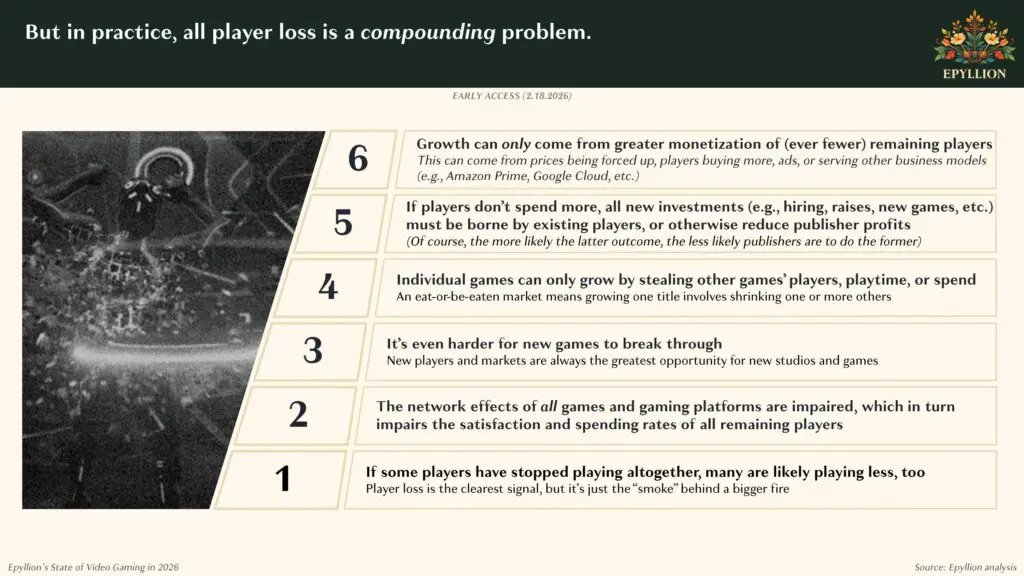
To better understand the scale of this “War for Attention,” let’s look at the participation decline across the Mature Market 8:
| Region | Key Metric of Decline |
|---|---|
| Canada | Lost approximately one in six adult players between 2018 and 2022. |
| South Korea | Self-reported gamer numbers are down 15% from pre-pandemic averages. |
| Italy | Adult player participation has fallen over 5% since 2019. |
| United Kingdom | After a 21% surge in 2020, the market has lost a third of that gain. |
The Growth and Monetization Paradox
Even in regions like Japan and Germany, where player numbers have shown slight resilience, the financial forecast is far from sunny. Matthew Ball notes that combined PC and console spending has remained largely stagnant over the last four years. This creates a “compounding problem” for the industry. As player bases shrink or hit a ceiling, shareholders continue to demand consistent growth.
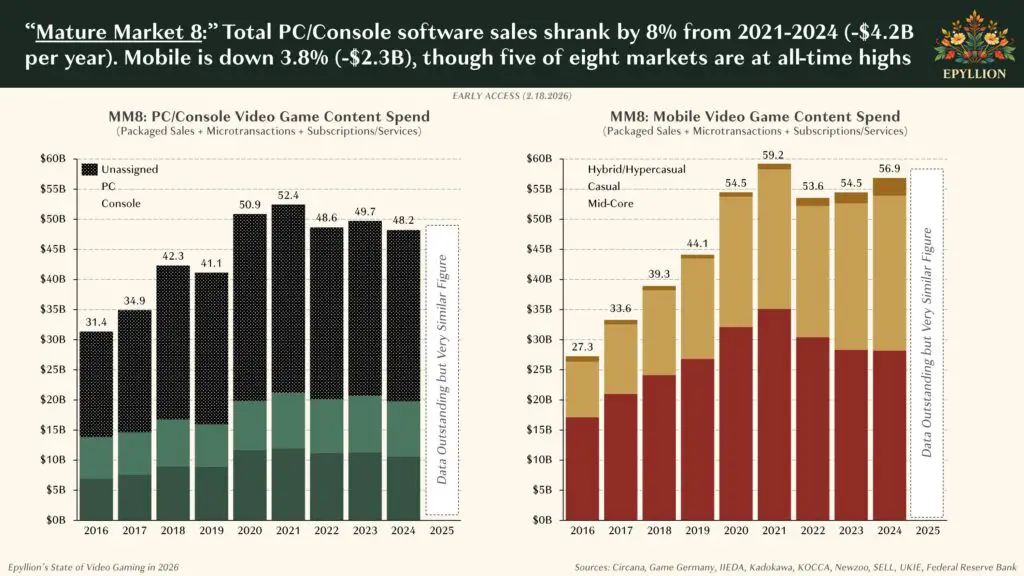
This pressure forces publishers to lean into more aggressive monetization strategies. By trying to extract more revenue from a smaller pool of players, the industry risks creating a cycle of “enforced growth” that degrades the user experience. For the seasoned software engineers and developers we follow here at Digital Tech Explorer, this trend highlights the urgent need for innovation that prioritizes engagement over sheer extraction.
New Challengers: TikTok, AI, and Interactive Substitutes
If gaming is losing the war for attention, who is winning? The report identifies several “interactive substitutes” that are siphoning time away from traditional gaming. Since 2020, TikTok usage in the US alone has climbed by 50 million daily hours. Meanwhile, the rise of AI has been meteoric; quarterly installs of consumer AI applications have skyrocketed from 100 million to nearly 1 billion since 2023.

The core gaming demographic—men aged 18–35—is leading this exodus. This group is 3.6 times more likely to engage with short-form video, prediction markets, and AI-driven tools than the general population. The challenge isn’t necessarily that games have decreased in quality, but that the modern digital economy is designed to capture attention instantly, often before a player even considers launching a game.
As we navigate these shifting trends, it’s clear that the gaming industry must evolve to compete with the immediacy of modern digital pastimes. Staying ahead of these shifts is vital for anyone looking to understand the future of technology and entertainment.

Disclaimer: All content on Digital Tech Explorer is for informational and entertainment purposes only. We do not provide financial or legal advice.
Affiliate Disclaimer: Some of the links on Digital Tech Explorer are affiliate links. This means we may earn a commission if you click through and make a purchase, at no additional cost to you. Our recommendations are based on thorough research and personal experience.