
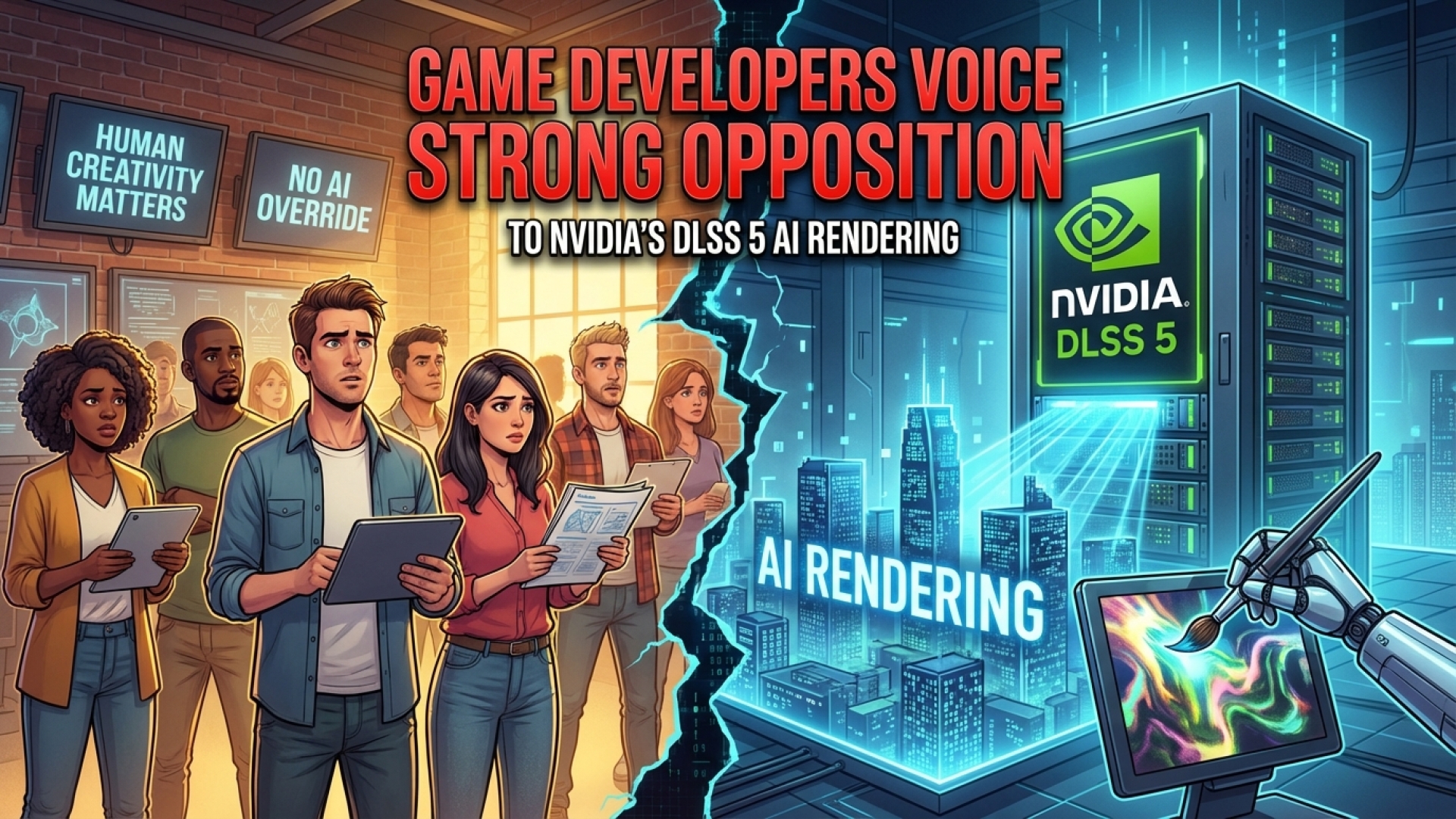
At Digital Tech Explorer, we keep a close eye on how emerging technologies reshape the creative landscape. Recently, the announcement of DLSS 5 ignited a firestorm of debate within the gaming community and among professional developers. While industry giants like Capcom and Bethesda seem ready to embrace this generative AI rendering tool, the sentiment on the ground is far more fractured. Many developers have voiced sharp criticism, labeling the technology as “slop” that threatens the intentional art direction of human creators. To get to the heart of the story, we look at the perspectives of Dave Oshry, co-founder of indie publisher New Blood Interactive, and David Szymanski, the developer behind cult hits like Dusk and Iron Lung.
Developer Concerns: Artistic Integrity vs. AI Automation
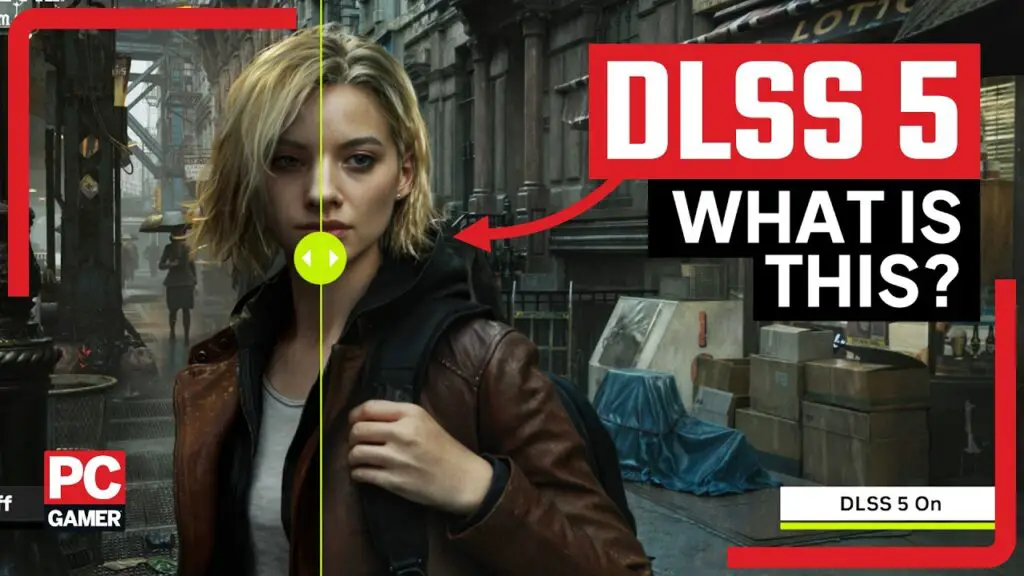
Generative AI remains a polarizing topic in PC gaming. The primary friction stems from ethical concerns regarding models trained on scraped data and the fear that executive-level push for “efficiency” will sacrifice quality. Oshry didn’t mince words, comparing the current AI hype to previous trends: “We as developers and players need to push back against this… just like we did with NFTs and crypto games.”
While DLSS 5 is technically designed to enhance existing assets rather than generate them from scratch, the fear of “AI drift” remains. Oshry argues that this technology fundamentally alters how a game looks based on training data that may have nothing to do with the developer’s vision. “You used to have to spend hours modding your games to make them look this ‘cinematic’,” he noted with irony, “and now Nvidia is going to let you do it for free! Just kidding, it’ll cost like $5,000.”
That “cost” is a nod to the hardware requirements. Early reports suggest that the initial DLSS 5 demos required dual RTX 5090 GPUs to function at peak performance. For Digital Tech Explorer readers—many of whom are software engineers and hardware enthusiasts—this raises a critical question: is the pursuit of AI-driven visuals making high-end gaming inaccessible to everyone but the top 1% of consumers?
Voting With the Wallet: The Call for Pushback
For Oshry, the solution is simple: consumer and developer action. “The only thing we can do is voting with our wallets. Cripple their sales, tank their stock price. Stop collaborating with them as developers.” He clarified that New Blood Interactive has experimented with DLSS and RTX in titles like Amid Evil, but found it didn’t necessarily improve the aesthetic or drive sales, despite the “free GPUs” Nvidia provided for the experiment.
Real-World Testing: The Case of Resident Evil Requiem
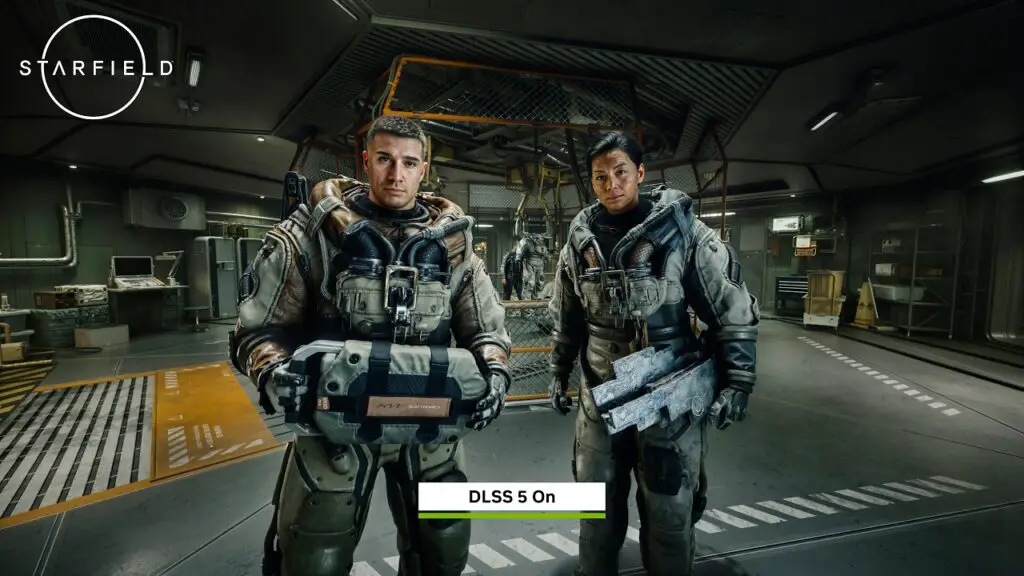
David Szymanski’s critique focuses on the visual “truth” of the image. Even putting aside the ethics of machine learning, he argues that the lighting and contrast added by DLSS 5 can make scenes look less realistic. He pointed specifically to the implementation in Resident Evil: Requiem. “Seeing Grace and Leon getting run through the slop filter definitely feels like insult and injury combined,” Szymanski stated.
However, the industry is not in total agreement. Jean Pierre Kellams, a lead producer at Epic Games, defended the tech, highlighting technical improvements like enhanced subsurface scattering on character models and more accurate light catching on small details. The director of Kingdom Come: Deliverance 2 also sided with the innovation, suggesting that “haters” won’t be able to stop the progression of these tools, which he views as far more sophisticated than simple “motion smoothing” on a TV.
Is AI Rendering Truly Optional?
One of the most frequent defenses of DLSS 5 is that it is an optional feature. Szymanski vehemently disagrees. He points to technologies like Temporal Anti-Aliasing (TAA) and Real-time Global Illumination (GI) as examples of features that were once “optional” but are now baked into the foundation of modern AAA titles. When games are built to lean on these upscaling technologies, they often look subpar without them, effectively forcing the player’s hand.
| Feature | Developer Concern | Proponent Viewpoint |
|---|---|---|
| Generative Rendering | Loss of artistic control/intent. | Next-gen visual fidelity. |
| Hardware Cost | High barrier to entry (RTX 5090). | Pushing the limits of hardware. |
| Implementation | Seen as an “AI filter” or “slop.” | Solves complex lighting issues. |
Conclusion: A Path Forward for Devs and Gamers
At its core, the DLSS 5 debate is about the soul of digital art. As TechTalesLeo often explores, technology should bridge gaps, not create them. Most gamers and developers simply want consistent frame rates and strong art design on hardware that doesn’t require a second mortgage. As Szymanski articulated, many are tired of “lateral movements in rendering” and don’t want a “glorified autocorrect” painting over human-made art.
Whether Nvidia listens to the public outcry remains to be seen. In the meantime, the indie and AA scenes—unburdened by the need to chase every expensive AI trend—will likely continue to lead the way in diverse, accessible visual styles that respect the developer’s original vision.
Disclaimer: All content on Digital Tech Explorer is for informational and entertainment purposes only. We do not provide financial or legal advice.
Affiliate Disclaimer: Some of the links on Digital Tech Explorer are affiliate links. This means we may earn a commission if you click through and make a purchase, at no additional cost to you. Our recommendations are based on thorough research and personal experience.