
Gabe Newell Stepped Back from Game Design Because People Kept Agreeing with Him
Valve CEO Gabe Newell has been a titan of the gaming industry for decades, but his transition from a hands-on designer to a high-level executive wasn’t just about the growth of Steam. Here at Digital Tech Explorer, we often look at the intersection of leadership and innovation. According to a recently resurfaced interview, Newell intentionally moved away from active game development during the production of Portal 2 because he realized his massive influence was inadvertently stifling the team’s creativity.
While Newell remains the CEO of Valve, he has described himself as “retired for a long time,” focusing his energy on frontier technologies like neural interfaces and marine research. However, the exact timeline of his departure from the trenches of game design has often been vague. TechTalesLeo dives into an interview with Portal 2 project lead Josh Weier by Kiwi Talkz, which sheds new light on why this shift occurred between 2007 and 2011.
The Intimidation Factor in Tech Leadership
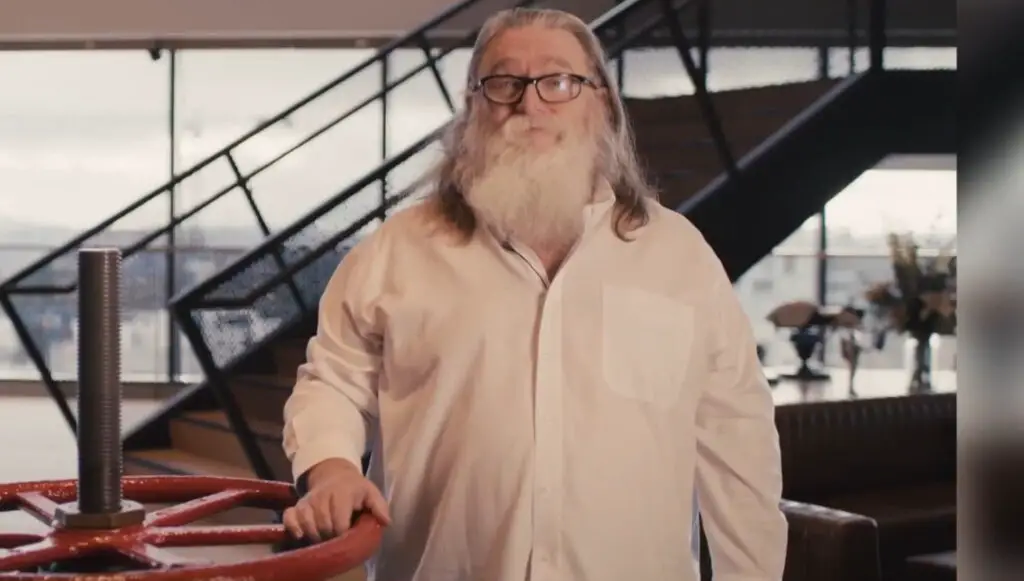
“If you haven’t met him, Gabe is a very imposing guy,” Weier explained during the interview. “He’s literally just a tall dude, and also his mannerisms can be imposing.” Weier recalled his early days at Valve, admitting that when Newell would take him to lunch to discuss ideas, the power dynamic made it difficult to offer honest pushback. He often found himself nodding in agreement rather than engaging in the creative friction necessary for gaming innovation.
This dynamic became a hurdle for Newell, who genuinely wanted to be a collaborator rather than a dictator. He recognized that for Valve to maintain its reputation for excellence in PC games, the “flat hierarchy” the company is famous for had to actually function without the CEO’s shadow looming over every decision.
The GLaDOS Redesign: A Turning Point
A specific point of friction occurred during the development of Portal 2 when the team decided to redesign GLaDOS. Newell was adamant that the iconic AI should have a more traditional “face,” but the development team wanted to go in a different, more abstract direction. After a period of back-and-forth, Newell eventually recognized that the team needed the space to follow their own vision to achieve greatness.
“Alright, you guys got it, I’m just gonna leave you to it,” Newell reportedly told the team. From that point on, his involvement shifted from critiquing design choices to supporting the well-being of the staff, prioritizing the human element over the technical minutiae.
Gabe Newell’s Diversified Focus Areas
As Newell moved away from day-to-day game design, his interests expanded into cutting-edge fields. The following table highlights his primary ventures outside of traditional software development:
| Company/Project | Primary Industry Focus | Core Objective |
|---|---|---|
| Valve / Steam | Digital Distribution & Hardware | Revolutionizing how PC games are played and sold. |
| Starfish Neuroscience | Neural Technology | Developing high-bandwidth brain-computer interfaces. |
| Inkfish | Marine Science | Advancing ocean exploration and research via submersibles. |
A Shift in Priorities: From Software to Platform
The timing of Newell’s step back coincided with the massive explosion of Steam’s popularity. This fundamentally changed Valve’s trajectory from a pure game studio to a massive platform holder. By moving to a higher level of oversight, Newell avoided the danger of becoming a dominant creative force that could potentially cramp the innovative ideas of the talented developers Valve worked so hard to recruit.
At Digital Tech Explorer, we believe this story is a testament to effective leadership: knowing when to step in and, more importantly, when to step out. While fans may miss Newell’s direct hand in the design of titles like Half-Life, his decision ensured that Valve’s culture of creative autonomy could survive his own legendary reputation.
For more stories on digital innovation and the people behind your favorite tech, follow TechTalesLeo on Digital Tech Explorer.
Disclaimer: All content on Digital Tech Explorer is for informational and entertainment purposes only. We do not provide financial or legal advice.
Affiliate Disclaimer: Some of the links on Digital Tech Explorer are affiliate links. This means we may earn a commission if you click through and make a purchase, at no additional cost to you. Our recommendations are based on thorough research and personal experience.