
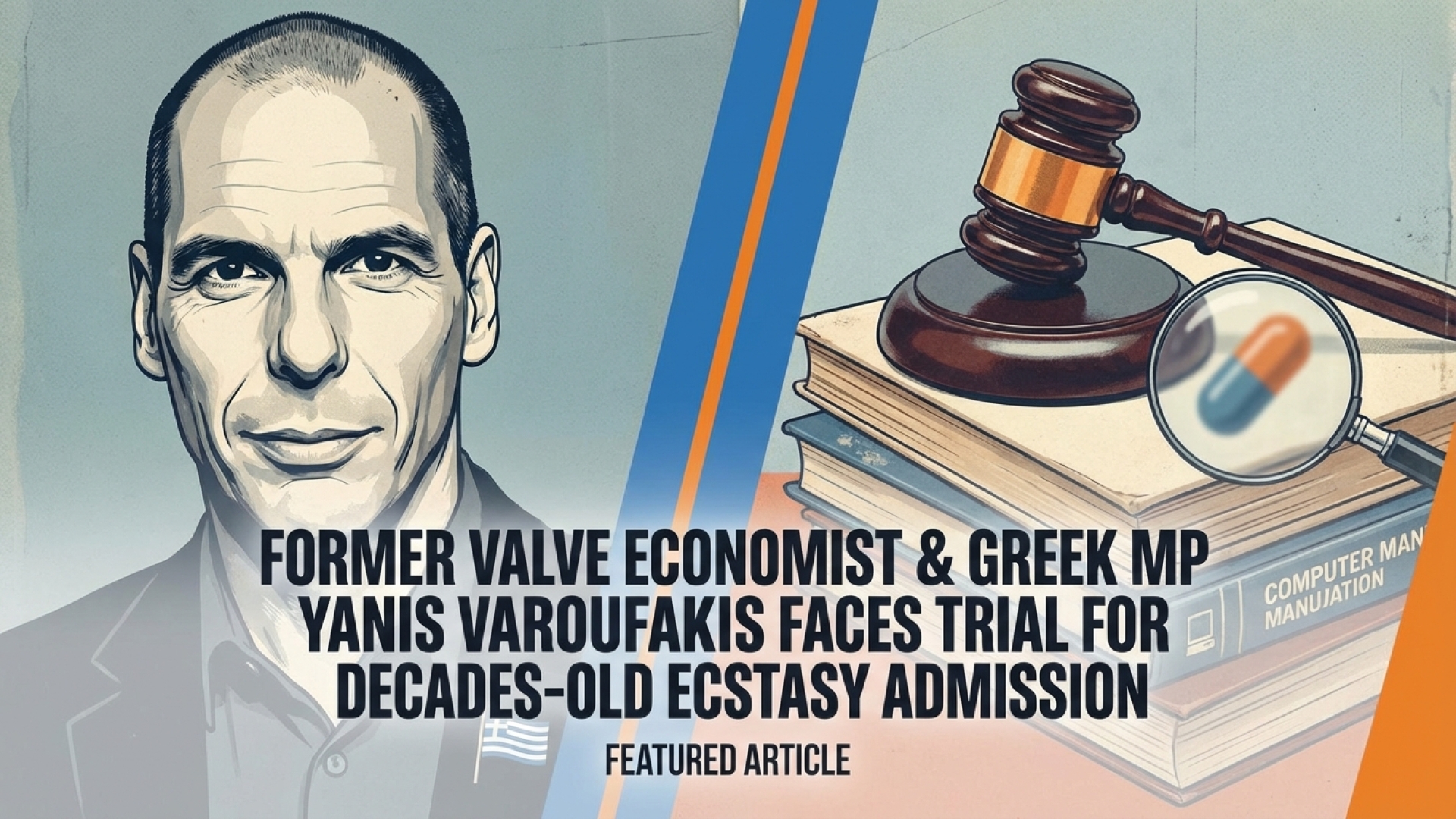
At the intersection of digital economics and global politics stands Yanis Varoufakis, a figure as polarizing as he is brilliant. Before he was a firebrand in the Greek parliament or a former finance minister navigating the Eurozone crisis, he was Valve’s economist-in-residence, tasked with managing the complex virtual economies of Team Fortress 2 and Dota 2. Here at Digital Tech Explorer, we’ve followed his trajectory from the halls of Bellevue to the benches of Athens. Today, however, Varoufakis finds himself in a narrative twist that feels more like a legal thriller than a policy debate.

The founder of the MeRA25 party (the European Realistic Disobedience Front) is currently facing trial over comments regarding his personal history—specifically, a single instance of ecstasy use from over three decades ago. It is a case that raises questions about the intersection of personal transparency and the long arm of the law.
The Career Profile of Yanis Varoufakis
To understand the weight of this legal battle, one must look at the diverse roles Varoufakis has played in the tech and political landscapes. The following table summarizes his unique professional journey:
| Role | Organization / Entity | Key Focus |
|---|---|---|
| Economist-in-Residence | Valve Corporation | Virtual economies & digital marketplaces |
| Finance Minister | Greek Government | Eurozone debt negotiations |
| Founder / MP | MeRA25 Party | Political reform and digital rights |
The Prosecution’s Core Argument
The legal action focuses on a charge of promoting drug use. This stems from a podcast appearance where Varoufakis recounted an experience with ecstasy in 1989. While the prosecution interprets this as an endorsement, the former economist views it as an exercise in honesty regarding the mistakes of youth.
In a detailed video response, Varoufakis clarified his stance. He noted that while he described the immediate experience at a 1989 Kylie Minogue concert in Australia as “pleasant” (noting he danced for 16 hours), he emphasized the severe aftermath: a week-long migraine. He explicitly stated that this “price to pay” served as a permanent deterrent, and he has never used the drug since. For Varoufakis, the story was a cautionary tale about consequences, not a promotion of illegal substances.
“Human Algorithm”: A Sci-Fi Setting for a Real-World Trial
The setting of the controversial remarks is as tech-focused as the author of this piece, TechTalesLeo, would expect. The statements were made on the “3026: Human Algorithm” podcast. This show features a futuristic frame where hosts dress in sci-fi attire and interview subjects on behalf of a supercomputer from the distant future.
Aimed at a younger, tech-savvy audience, the episode explored the “hypocrisy” of 21st-century norms regarding substance use and personal freedom. Varoufakis used his story of a night in Sydney during Mardi Gras as a vehicle to discuss how societal standards evolve—a topic he often touches upon when discussing blockchain, digital governance, and human rights.

Political Repercussions and MeRA25’s Stance
While the premise of the trial—prosecuting someone for a 36-year-old anecdote—may seem surreal to the international tech community, the MeRA25 party is treating the matter with the utmost gravity. In a formal statement, the party labeled the trial “dangerous,” suggesting it is not a mere bureaucratic blunder but a calculated political maneuver.
They argue that the justice system is being used to target individuals who challenge the status quo. For a man who transitioned from the data-driven world of gaming and AI acceleration to the high-stakes world of European politics, this trial represents yet another chapter in a life defined by disruption. At Digital Tech Explorer, we will continue to monitor how this legal narrative unfolds, especially as it touches on the broader themes of digital transparency and personal history in the public eye.