
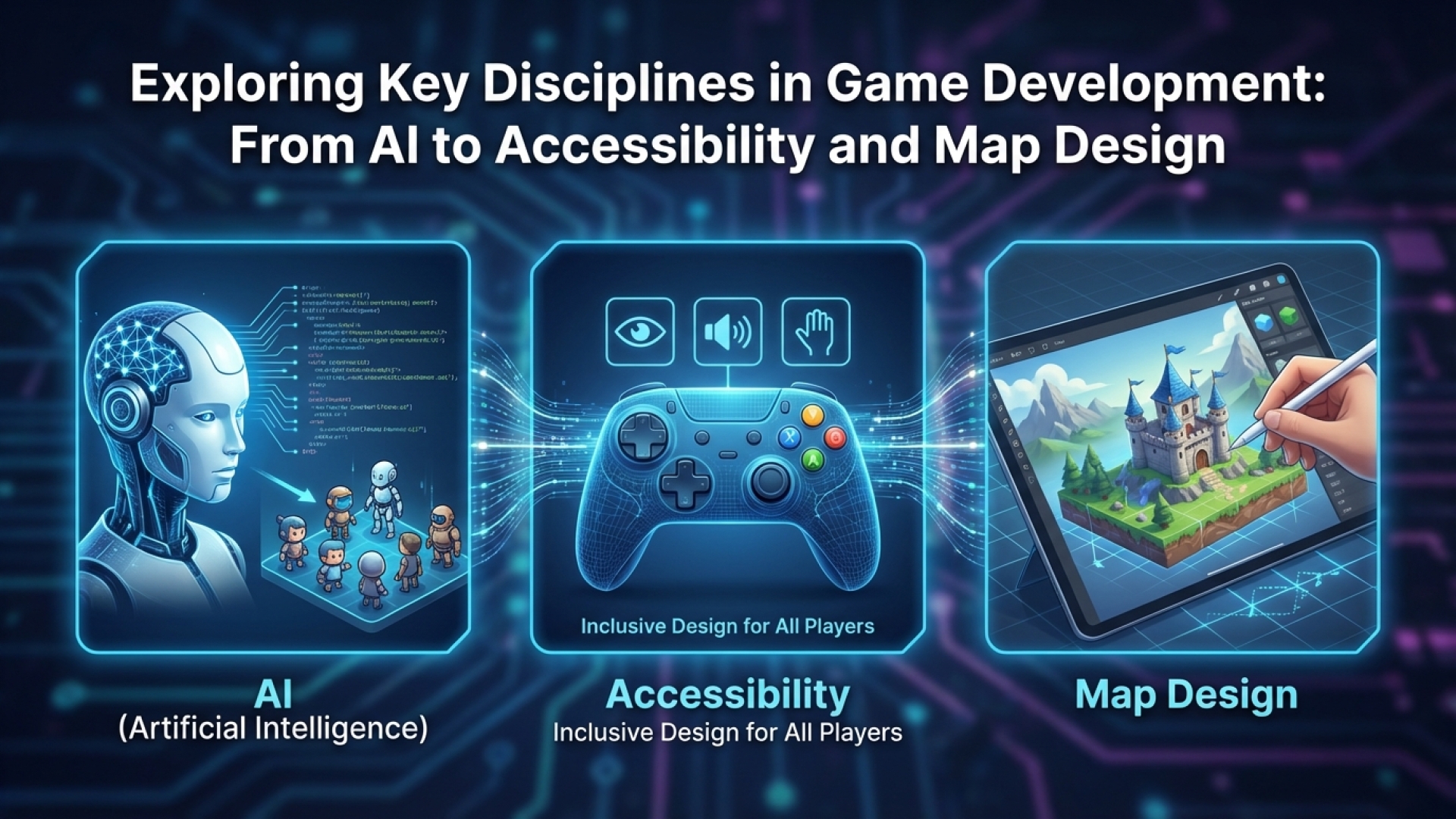
At Digital Tech Explorer, we are constantly tracking how software engineering and creative vision collide to shape the future of entertainment. In the rapidly evolving landscape of video games, the path from a conceptual idea to a global hit is paved with increasingly specialized technical disciplines. As TechTalesLeo, I’ve seen how these innovations bridge the gap between complex code and immersive storytelling.
As part of our deep dive into the best game design programs for 2026, we are exploring the critical elements that define modern development: creative accessibility, believable AI, the iterative search for “fun,” and the complex engineering behind multiplayer map design.
Creative Accessibility: Beyond the Basics
Accessibility in gaming has moved far beyond standard colorblind modes. Modern developers are now identifying project-specific hurdles early in production to ensure their digital worlds are open to everyone. A prime example is Clair Obscur: Expedition 33, which launched with a camera stabilization feature specifically designed to mitigate motion sickness caused by its dynamic combat camera.
By addressing these needs during the initial coding phase without compromising the artistic vision, developers ensure their software is reachable by the widest possible audience—a core tenet we value here at Digital Tech Explorer.

Programming Believable AI Characters
While artists create the world’s look, programmers create its soul through machine learning and complex AI logic. In Arc Raiders, the mysterious robot fleet known as the Arc displays sophisticated, physics-based behaviors. When a drone loses a propeller, it doesn’t just play a pre-canned animation; the code dynamically attempts to compensate for the loss of power in real-time.
Similarly, the upcoming Fable reboot features a “living population” where every citizen possesses a unique personality profile. These NPCs form shifting opinions of the player based on actions and reputation, representing a massive leap in how we utilize AI acceleration to enhance narrative depth.

Finding Fun: The Power of Prototyping
In my experience covering digital innovation, I’ve found that game design is rarely a straight line. The hit game REPO is a masterclass in this iterative process. It began as a single-player horror cleaning simulator. However, through rigorous playtesting, the team at Semiwork realized that cooperative mechanics and the high-stakes tension of carrying fragile objects were far more engaging.
This pivot from “cleaning” to “co-op retrieval” highlights the importance of flexibility in the development lifecycle. It proves that “finding the fun” is often about being willing to scrap your original script in favor of what the data and player experience suggest.
| Development Pillar | Core Technical Focus | Industry Impact |
|---|---|---|
| Creative Accessibility | Adaptive UI & Stability Code | Broadens player base and inclusivity. |
| Dynamic AI | Physics-based Logic & ML | Creates more emergent, unscripted gameplay. |
| Iterative Design | Rapid Prototyping & Playtesting | Ensures long-term engagement and “fun.” |
| Environmental Design | Spatial Flow & Destructibility | Redefines tactical PC games and shooters. |
The Specialized Art of Map Design
Multiplayer map design is a unique hardware-taxing challenge that balances visual storytelling with competitive fairness. Designers often use “camouflaged symmetry” to ensure balance, as seen in Battlefield 6‘s Mirak Valley, where different environmental themes provide equal tactical opportunities for both teams.
Furthermore, titles like Rainbow Six Siege and The Finals have redefined map design through real-time destructibility. Whether it is the controlled “soft walls” of Siege or the total environmental collapse in The Finals, mappers must now account for environments that change dynamically. This requires a deep understanding of spatial flow and architectural logic, pushing the limits of modern game engines.

For those looking to enter the industry, these disciplines represent the cutting edge of the craft. At Digital Tech Explorer, we believe that the future of game design is as much about empathy and logic as it is about raw creativity. Stay tuned for more insights into the 2024 and 2026 releases that are pushing these boundaries even further.