
Ubisoft’s ‘Allergy’ to New Ideas Led to Massive Talent Drain, Says Former Director
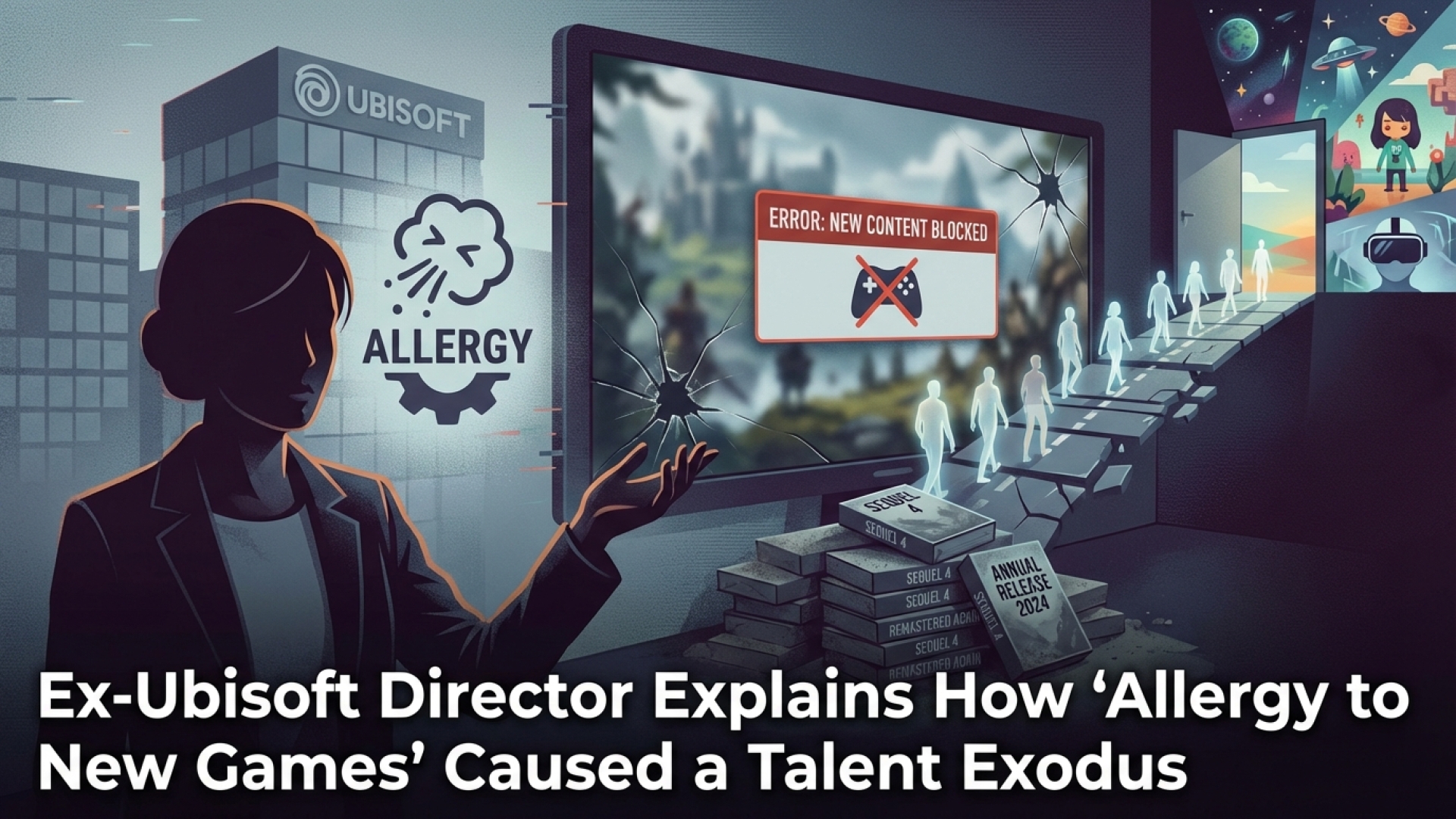
Ubisoft has long been a titan in the gaming industry, but the last few years have told a story of internal friction and commercial hurdles. From the $200 million disappointment of Skull and Bones to staff revolts regarding return-to-office mandates and the growing influence of Tencent, the publisher is navigating a difficult chapter. According to Alex Hutchinson, the former creative director for Far Cry 4 and Assassin’s Creed 3, these struggles aren’t just bad luck—they are the result of a corporate culture that became “allergic” to original ideas and a subsequent “talent drain.”

As we explore the evolution of digital innovation here at Digital Tech Explorer, understanding the lifecycle of major studios provides a crucial roadmap for developers and tech professionals alike. Ubisoft’s current predicament offers a sobering lesson in how organizational scale can become a double-edged sword.
The Great Talent Exodus
Hutchinson, who left Ubisoft in 2017 to co-found Typhoon Studios, suggests that a surge in private equity and external investment over the last five years created an irresistible pull for senior developers. This exodus of veteran staff left a significant experience gap that the company has struggled to fill.
“It’s a shame,” Hutchinson noted in a recent interview with PC Gamer. “A lot of senior people left Ubisoft and started studios or splintered off. So there was this talent drain that went out.” He highlighted that while Ubisoft pioneered a revolutionary development style—breaking large teams into smaller, autonomous groups—the sheer scale of the organization eventually became a “noose” around its neck, particularly when the global pandemic disrupted traditional workflows.
Managing remote teams of 800 people proved to be an immense hurdle. The lack of physical proximity led to a breakdown in mentorship, leaving junior developers without the daily guidance of the seniors who had built the company’s most successful franchises.
An “Allergy” to New IP and Creative Risks
During its prime, Ubisoft was a machine of efficiency, famously releasing six major Assassin’s Creed titles in just six years. In the modern era of PC games, that pace has slowed dramatically. Fans have seen only Valhalla, Mirage, and the upcoming Shadows over a much longer period.

Hutchinson argues that this slowdown wasn’t utilized to foster creativity. Instead, he claims the corporate environment began actively stifling fresh concepts in favor of “safe” sequels. He pointed to his own cancelled project, Pioneer—a non-violent sci-fi exploration game—as a prime example of this trend. After his departure, the project was reportedly retooled into a co-op shooter before being scrapped entirely.
“They became very allergic to the new things,” Hutchinson stated. “They had nothing new to come through.”
A Summary of Ubisoft’s Shift
To better understand the transition Hutchinson describes, we can look at the core differences between Ubisoft’s “Golden Era” and its current trajectory:
| Feature | The “Golden Era” (2010-2017) | The Current Era (2018-Present) |
|---|---|---|
| Release Frequency | Rapid (6 Assassin’s Creed titles in 6 years) | Extended cycles (3 major releases in 5+ years) |
| Talent Density | High concentration of industry veterans | Significant “Talent Drain” to independent studios |
| Risk Appetite | Willingness to experiment with new IP | Reliance on established sequels and safe bets |
| Work Structure | In-person collaborative mentorship | Remote/Hybrid struggles with large-scale teams |
The Long Road to Recovery
The director’s departure eventually led to the successful release of Journey to the Savage Planet and its upcoming sequel, Revenge of the Savage Planet, under his new banner, Raccoon Logic. For Ubisoft, however, the path forward is less certain. Hutchinson views the current state as a “death from a thousand cuts,” pointing toward the struggle to adapt to digital platforms and the heavy human cost of restructuring.
The industry felt another tremor just last week when Ubisoft laid off 40 employees from its Toronto studio. This is the latest in a string of studio closures and project cancellations. While the company is attempting to pivot by establishing new “creative houses,” Hutchinson’s insights suggest that the road to recovery will be long. For the developers and hardware enthusiasts watching from the sidelines, the results of this internal restructuring may not be felt in the games we play for several years.
At Digital Tech Explorer, we believe that transparency in the tech world is vital. As Ubisoft attempts to recapture its creative spark, we will continue to monitor how these shifts in corporate culture impact the quality and innovation of the software we love.