
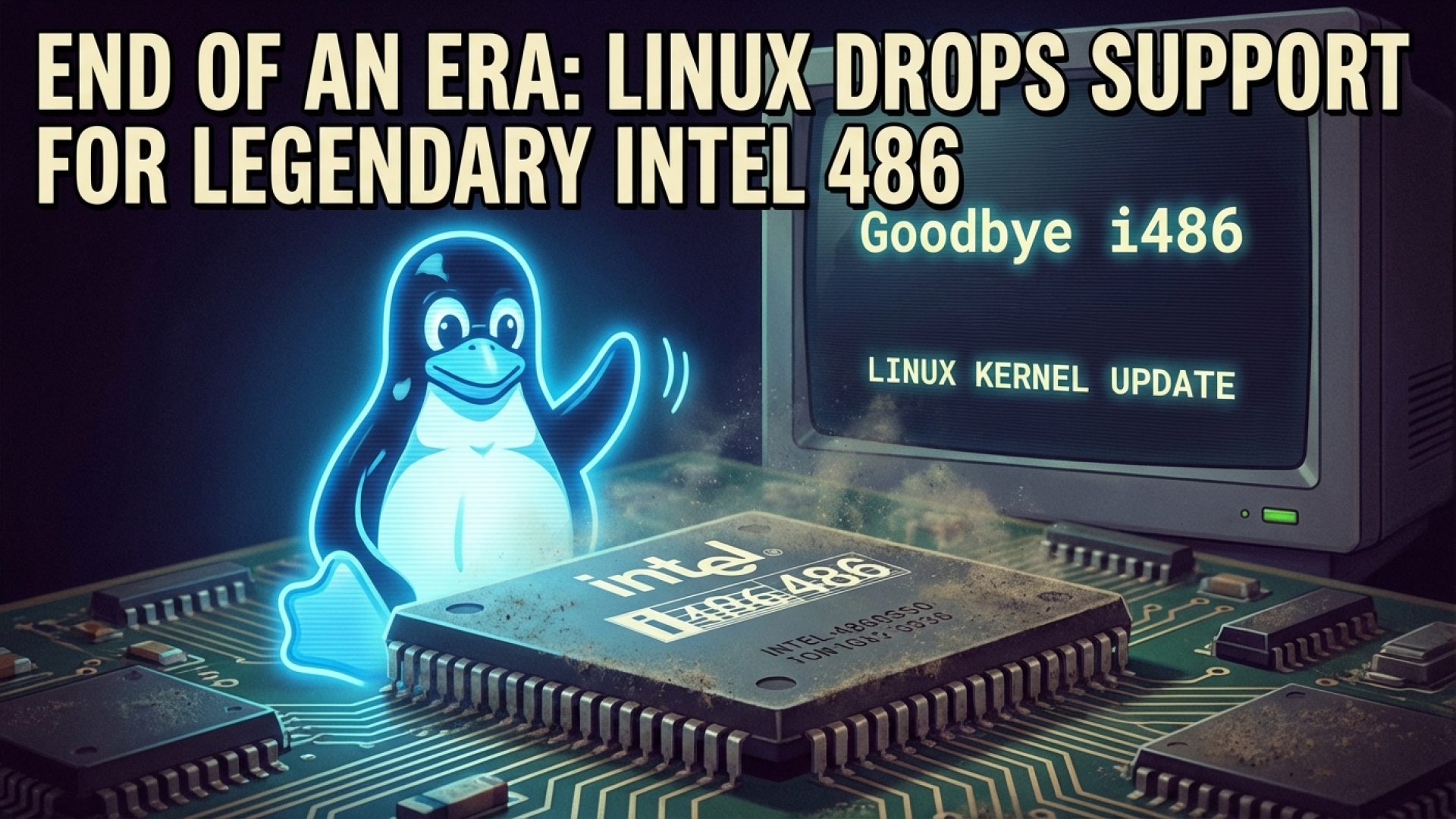
The question of what constitutes the oldest computer capable of running a modern Linux kernel typically yields a more surprising answer than the equivalent for Windows, especially given the stringent hardware requirements of Windows 11. Here at Digital Tech Explorer, we often dive into how legacy hardware interacts with modern software. For Linux enthusiasts, that journey has stretched back to the late 1980s. However, every computing era eventually meets its horizon, and that dawn is finally breaking for the venerable Intel 486 platform. Recent reports indicate that Linux kernel maintainers are officially beginning to phase out its support, marking a significant transition in the world of open-source development.
The Legacy of the i486 CPU: A Story of Longevity
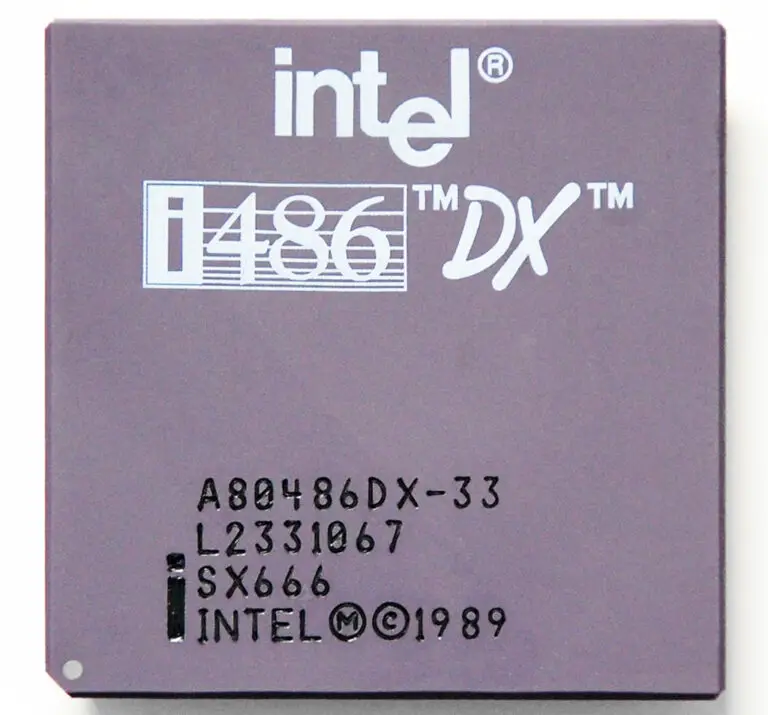
As a storyteller of tech history, TechTalesLeo recognizes the i486 as more than just a chip; it was the engine that powered the early digital revolution. Debuting in 1989, the i486 significantly boosted performance compared to the preceding i386 generation, even while operating at what we now consider modest double-digit megahertz frequencies. While desktop production concluded in 1998 to make way for the Pentium era, Intel continued manufacturing these chips for embedded systems until 2007. This extended lifecycle means the 486 remained “current” in industrial settings until less than two decades ago.
| Milestone | Year | Impact on Computing |
|---|---|---|
| Initial Release | 1989 | Introduced the integrated FPU and cache. |
| Desktop EOL | 1998 | Transitioned dominance to the Pentium architecture. |
| Final Embedded EOL | 2007 | Ended nearly two decades of active production. |
| Kernel Deprecation | 2024/2025 | Removal of code from Linux Kernel 7.1. |
Linus Torvalds on Phasing Out “Museum Pieces”

Given the rapid advancement of AI and hardware acceleration, it is difficult to dispute Linus Torvalds’ stance on aging architecture. The creator of Linux recently asserted that it is time to discontinue support for the 486, stating, “I *really* don’t think i486 class hardware is relevant anymore.” While Torvalds acknowledges the historical importance of these chips, he emphasized that from a kernel development standpoint, they have become “museum pieces” that should ideally run “museum kernels” rather than modern, optimized codebases.
Refining the Linux Kernel: A Move for Modern Developers
The process of deprecation has officially moved from discussion to action. A forthcoming patch, slated for Linux 7.1, will begin removing code specifically maintained for the i486. Developer Ingo Molnar highlights that this cleanup will provide tangible benefits for future kernel development. By removing “complicated hardware emulation facilities on x86-32,” developers can reclaim time previously spent fixing bugs for hardware that no longer serves an active user base.
At Digital Tech Explorer, we understand that software engineering is often about balance. Molnar anticipates that this change will not impact mainstream users, as modern x86 32-bit distributions have already stopped offering 486-compatible kernel packages. For those still operating vintage hardware for hobbyist or archival purposes, the solution is simple: stay with older, stable kernel iterations. Meanwhile, for those running Pentium-class systems or newer, Linux will continue to provide support, ensuring your retro-computing projects remain functional for years to come without burdening the path toward future innovation.
For more in-depth analyses on hardware trends and software solutions, stay tuned to Digital Tech Explorer. To learn more about the author’s journey through digital innovation, visit TechTalesLeo’s author page.