
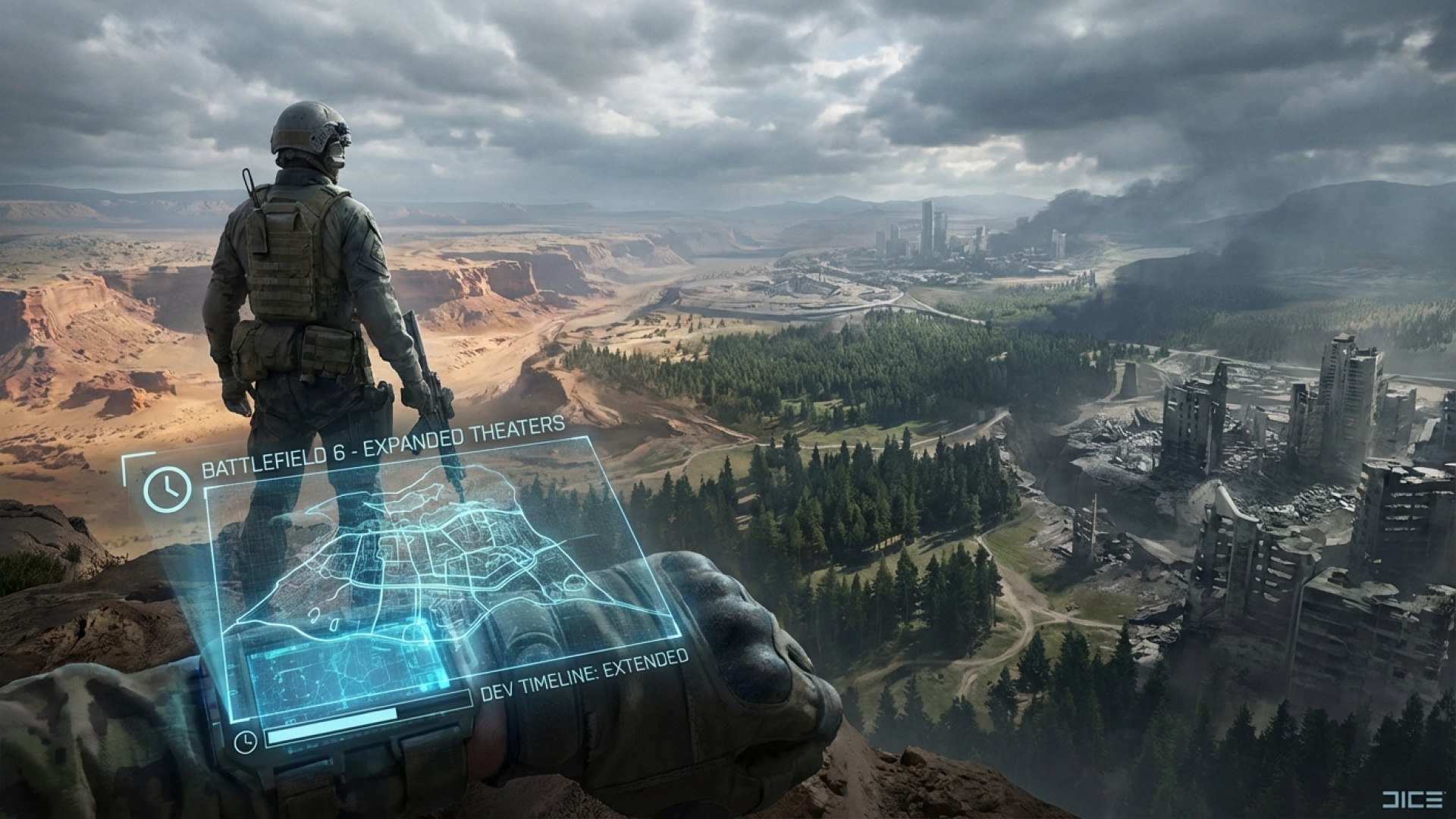
In the evolving landscape of modern shooters, community feedback is the ultimate diagnostic tool. If you strike up a conversation with anyone currently logged into Battlefield 6, the topic of map design is inevitable. Players are calling for a return to the franchise’s roots: expansive environments, tactical open spaces, a high density of capture points, and the necessary “elbow room” for air vehicles to dominate the skies.
While many of the BF6 launch maps fell short of these expectations, DICE is shifting from passive observation to active development. Here at Digital Tech Explorer, we’ve tracked how software iterations often lag behind user demand, but the studio is finally signaling a tangible pivot in its level design philosophy.
DICE Responds to the “Bigger is Better” Demand
“We don’t want to spoil too much yet, but we’ve heard the message very clear,” DICE seasons producer Philipp Girette recently noted. As a storyteller of tech trends, TechTalesLeo observes that this transparency is vital for player retention. Girette highlighted the recent testing of Golmud Railway within Battlefield Labs—a classic map known for its massive scale—as a direct response to current criticisms.
The Golmud Railway remake has been prioritized to solve the “size deficiency” in the current rotation. While it won’t arrive in time for the Season 2 launch, the frequency of its testing phases indicates that the engineering team is fast-tracking its integration to satisfy the hunger for traditional, large-scale vehicular combat.
| Feature/Map | Status | Development Focus |
|---|---|---|
| Golmud Railway | In Testing | Increasing overall map scale and vehicle mobility. |
| Contaminated | Live (Season 2) | Expanded “Fly Zones” for improved aerial dogfighting. |
| Hagental Base | Live (Season 2) | Standard rotation focusing on infantry-vehicle synergy. |
| Sobek City | Live | Existing layout maintained; no immediate re-work planned. |

Engineering Season 2: Small Tweaks, Large Impact
The Season 2 updates, featuring the maps Contaminated and Hagental Base, were locked into the production pipeline before the game’s initial release. However, DICE producer Kit Eklöf pointed out a crucial technical adjustment made to Contaminated: the expansion of “fly zones.” By widening the invisible boundaries where aircraft can operate, developers are attempting to provide a “large map feel” even within fixed geographic constraints.
For players hoping for a complete overhaul of existing, more restrictive maps like Sobek City, Girette offered a dose of reality. In the world of high-end GPU-intensive game development, resources are often funneled toward future assets rather than rebuilding old ones. The priority remains the next frontier of content rather than retrofitting the past.

“It takes a really long time to make these maps. We have to be very targeted in what we do,” Girette explained. While the team hasn’t ruled out future updates to launch maps, nothing major is scheduled for the immediate Season 2 window. As we often discuss at Digital Tech Explorer, large-scale software projects like AI-enhanced shooters are like massive ships—they turn slowly, even with the support of four global studios.
The initial wave of Season 2 content is currently available, with additional updates expected to roll out through March and April. For tech enthusiasts and gamers alike, the wait for the “perfect” map continues, but the blueprint for a larger, more expansive Battlefield is finally being drawn.