
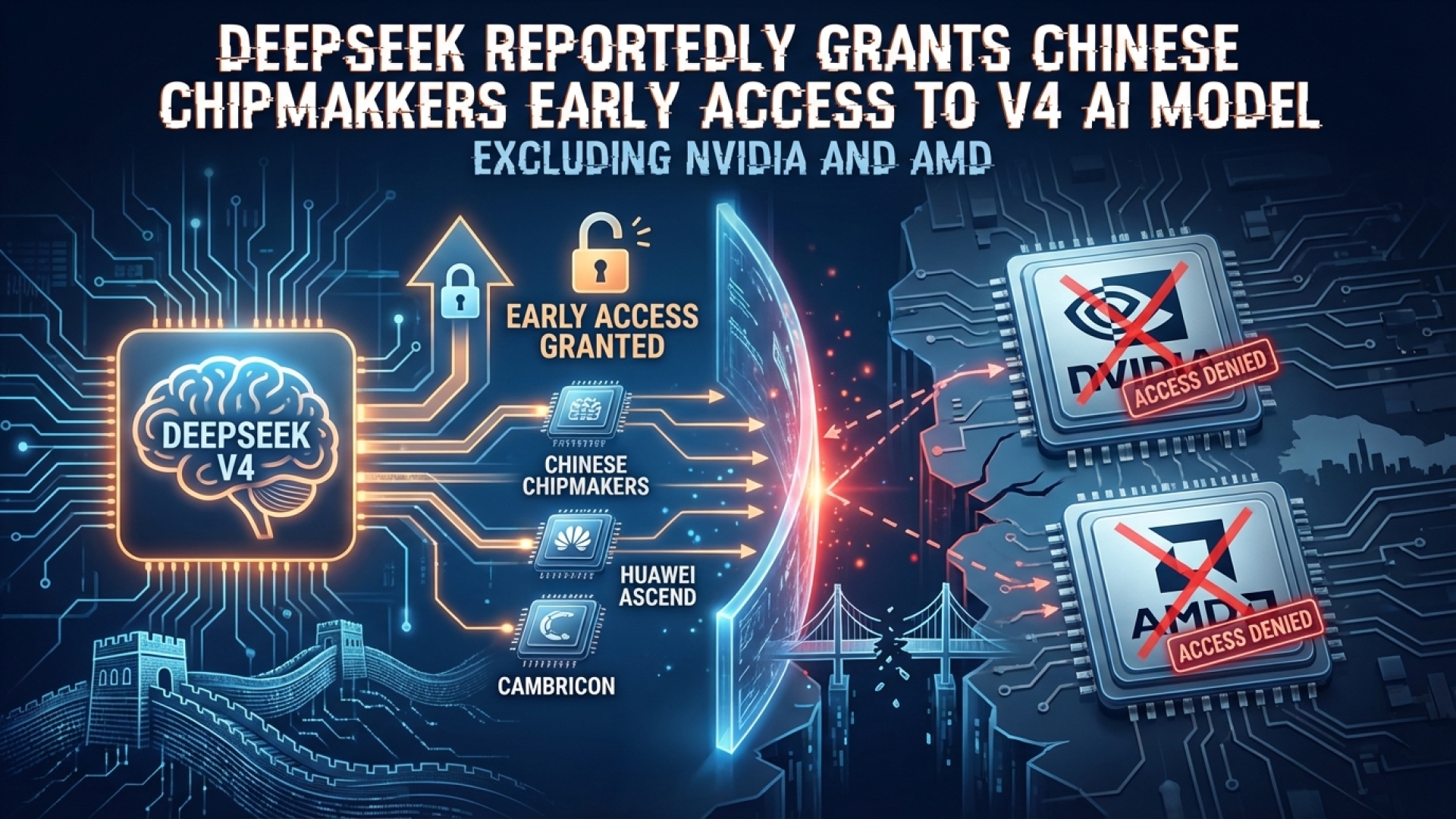
In the high-stakes theater of global artificial intelligence, a new chapter is unfolding that could redefine the relationship between software innovators and hardware titans. Here at Digital Tech Explorer, we’ve been tracking the rapid evolution of the AI landscape, and the latest move from Chinese powerhouse DeepSeek is a narrative-shifter. Reportedly, the company has denied early access to its upcoming V4 model to U.S. chip giants Nvidia and AMD, opting instead to favor domestic rivals like Huawei.
A Strategic Pivot: Favoring Domestic Hardware
As a storyteller who has covered the intersection of code and silicon for years, I find DeepSeek’s decision particularly calculated. By withholding the V4 model from American companies, DeepSeek is effectively breaking the traditional industry synergy where software developers and chipmakers work hand-in-hand to optimize performance before a public release. Instead, early access has been granted to Huawei and other Chinese hardware suppliers.
This “home field advantage” provides Chinese firms a multi-week head start to fine-tune their AI acceleration capabilities. In a field where milliseconds of latency can make or break a product, this lead time is a significant strategic asset for domestic Chinese GPU manufacturers.
The Blackwell Controversy and Export Tensions
This development is set against the backdrop of tightening U.S. export controls. A particularly striking allegation has surfaced via Reuters, suggesting that the DeepSeek V4 model was actually trained using a cluster of Nvidia Blackwell chips located within Inner Mongolia. If verified, this would represent a major breach of U.S. policy, which strictly prohibits the export of Blackwell-class hardware to China.
| Chip Architecture | Export Status (China) | Performance Class |
|---|---|---|
| Nvidia H200 | Approved (Conditional) | High-End Enterprise |
| Nvidia Blackwell | Strictly Prohibited | Next-Gen Frontier AI |
| Huawei Ascend Series | Domestic Priority | Competitive Alternative |
While the U.S. government has eased restrictions on the older Nvidia H200 chips, the Blackwell remains the “crown jewel” of the AI world. Nvidia CEO Jensen Huang has previously noted that China remains “nanoseconds behind” the U.S. in chipmaking technology, yet the hunger for Western hardware persists despite the rise of domestic alternatives.
The Broader Impact on Tech Innovation
From the perspective of Digital Tech Explorer, this isn’t just a story about trade wars; it’s about the fragmentation of the global tech stack. When software is optimized specifically for one region’s hardware, it creates a “walled garden” effect that could slow down global collaboration. Analysts suggest this is a deliberate move to keep U.S. hardware at a disadvantage within the Chinese market, effectively leveraging successful models like DeepSeek to bolster local infrastructure.
For developers and tech professionals following our 2024 tech releases, this tension underscores the importance of hardware-agnostic coding. As the gap between East and West hardware ecosystems grows, the ability to port AI models across different chip architectures will become a critical skill for the next generation of software engineers.
Disclaimer: All content on Digital Tech Explorer is for informational and entertainment purposes only. We do not provide financial or legal advice. Affiliate Disclaimer: Some of the links on Digital Tech Explorer are affiliate links. This means we may earn a commission if you click through and make a purchase, at no additional cost to you. Our recommendations are based on thorough research and personal experience.