
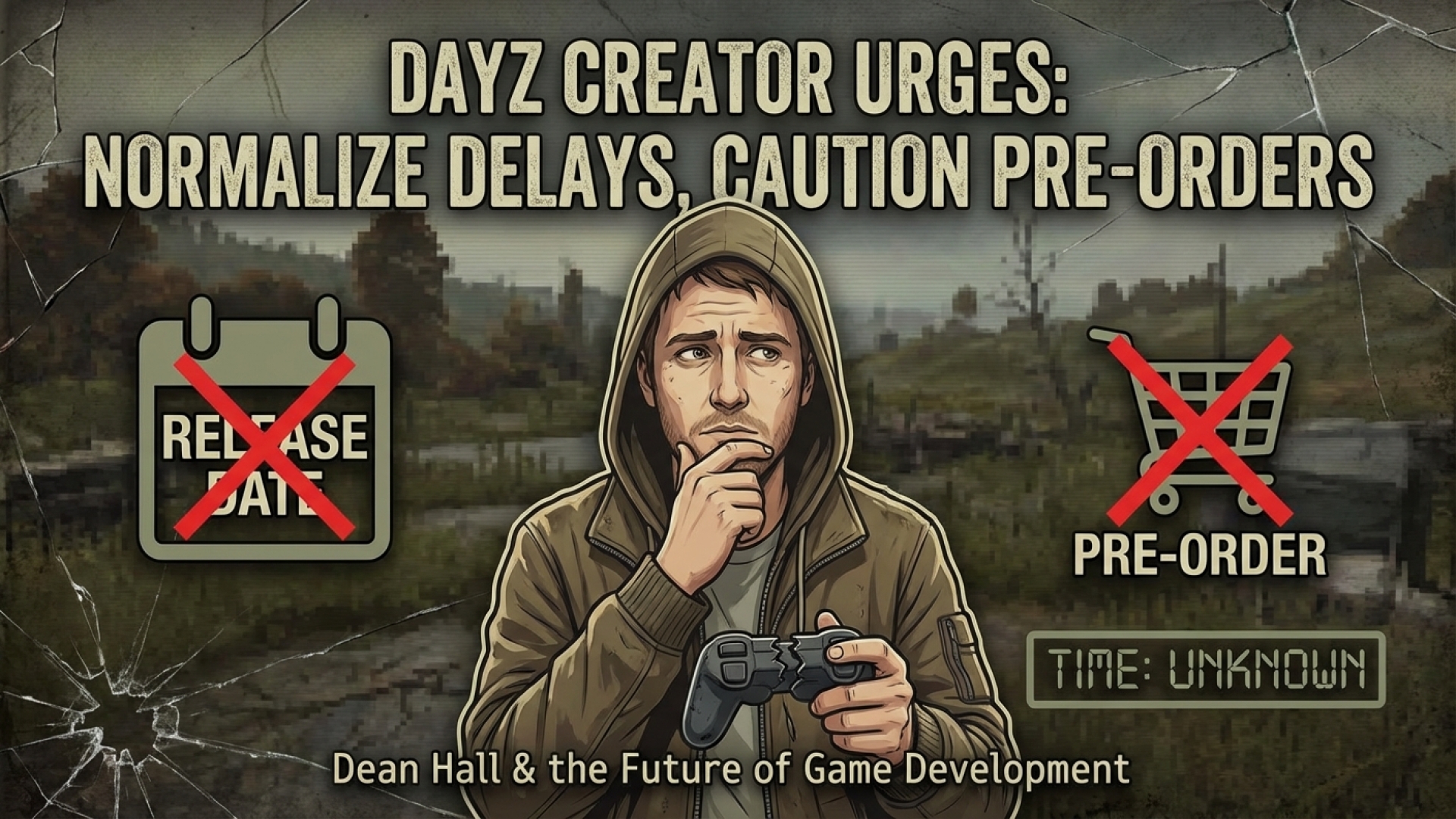
At Digital Tech Explorer, we closely monitor the shifting landscapes of digital innovation and game development. Recently, a significant voice in the industry, Dean Hall—the visionary creator of DayZ and CEO of RocketWerkz—has sparked a vital conversation. Hall is calling for a fundamental shift in how we perceive the development cycle: the normalization of game delays. He argues that the industry’s “target fixation” on rigid launch dates is a primary catalyst for compromising software quality and developer well-being.

The True Cost of Rushing Innovation
As a storyteller in the tech space, I’ve seen how the pressure to perform can stifle creativity. Developing modern, high-fidelity games requires astronomical financial investment, where timing dictates the bottom line. However, Hall points out that developers often fall victim to “target fixation.” This psychological trap isn’t just about revenue; it’s fueled by a fear of losing momentum in the hype cycle or disappointing a vocal player base.
According to Hall, this reluctance to push back a release date directly feeds into the detrimental “crunch culture.” Most delays, he asserts, are a direct result of a “failure to hit quality” benchmarks. When a studio lacks the resources to meet these standards but refuses to delay, they often overlook critical bugs, leading to the “launch now, fix later” meta that plagues contemporary gaming.
A Comparison: Quality vs. Deadlines
To better understand Hall’s perspective on the industry’s current state, we can break down the consequences of the two primary development paths:
| Factor | Rushed Release | Strategic Delay |
|---|---|---|
| Final Quality | Technical debt, bugs, and “Mixed” reviews. | Polished mechanics and stable performance. |
| Team Health | High burnout and “crunch culture.” | Sustainable pace and higher morale. |
| Brand Trust | Significant long-term damage. | Short-term frustration but long-term loyalty. |
| Platform Visibility | High initial visibility, poor retention. | Potential loss of “hype” but better tail-end sales. |
Consumer Influence and the ICARUS Lesson

Hall emphasizes that we, as consumers, hold the power to influence platform giants like Xbox and PlayStation. By rewarding quality over speed, we encourage a healthier ecosystem. Hall speaks from experience; the initial launch of ICARUS struggled due to unmet quality standards, which was reflected in its Steam ratings.
Since then, RocketWerkz has prioritized transparency. The Dangerous Horizons expansion has faced several delays to ensure it meets player expectations. Similarly, the development of the Icarus console version—available on the PlayStation Store and Xbox Store—has been adjusted to prioritize a stable experience over an arbitrary date.
The Pre-Order Paradox
In a moment of refreshing honesty, Hall shared a perspective that resonates with our mission at Digital Tech Explorer regarding consumer education: “Personally: don’t preorder games, folks. Commercially: please preorder games, as it’s the only way PlayStation/Xbox notice us.” This highlights the friction between savvy consumer habits and the commercial metrics required to gain visibility on major digital storefronts.
Prioritizing Quality Over Haste
The gaming world often cites the wisdom that a delayed game is eventually good, but a rushed game is forever bad. As we look toward upcoming releases, Hall’s advocacy serves as a reminder that patience is a virtue in the digital age. While the wait for a highly anticipated PC game can be frustrating, supporting developers who choose quality over haste is the only way to ensure the long-term health of the industry.
At Digital Tech Explorer, we believe that transparency from creators like Dean Hall is essential for bridging the gap between complex tech development and the players who love it. Whether it’s AI acceleration in game engines or the latest survival mechanics, quality must remain the north star.
For more insights into the evolving world of technology and digital innovation, stay tuned to Digital Tech Explorer. Explore more stories from TechTalesLeo.