
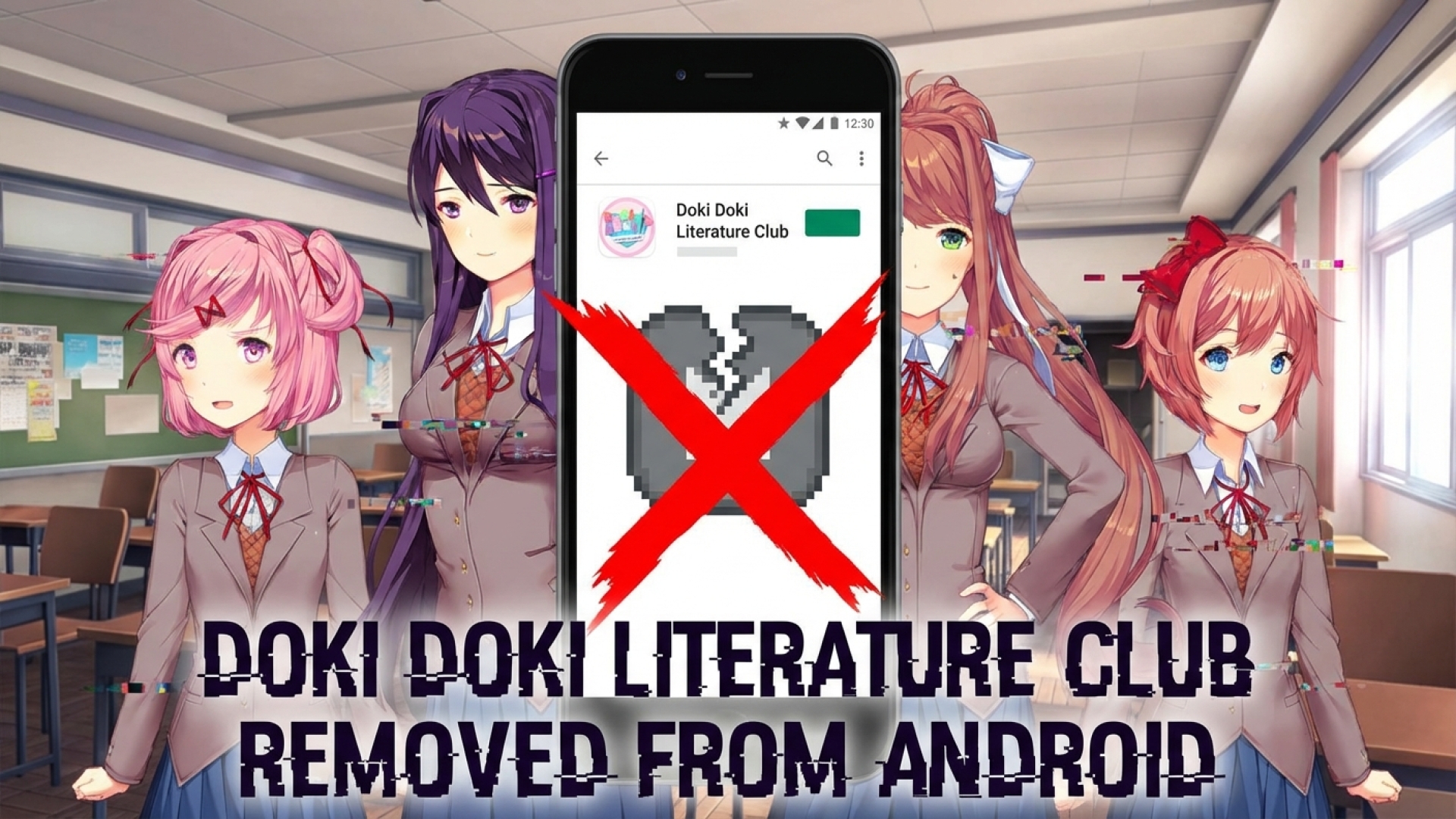
In the ever-evolving landscape of digital storytelling, few titles have managed to subvert expectations as masterfully as Doki Doki Literature Club (DDLC). However, the tech world was recently shaken by the news that this iconic psychological horror experience has been abruptly removed from the Google Play Store. Here at Digital Tech Explorer, we track these shifts in digital distribution closely, as they often highlight the complex relationship between creative software and mobile platform policies.

As a storyteller who follows digital innovation, I’ve seen how DDLC bridged the gap between a niche genre and mainstream gaming. Originally a 2017 PC sensation, the game made its way to Android in a surprise December launch, following successful ports to Nintendo Switch, PlayStation, and iOS. Now, its sudden disappearance from Google’s ecosystem raises questions about how “sensitive themes” are moderated in the modern app marketplace.
The Deceptive Charm of the Literature Club
At first glance, Doki Doki Literature Club mimics the aesthetic of a lighthearted Japanese visual novel. Players take on the role of a student joining a club filled with seemingly stereotypical characters. The initial experience, as noted in its Steam description, focuses on poetry and high school romance. However, this is a calculated narrative trap.
The story eventually shifts into intense psychological horror, tackling heavy themes such as depression and suicide. This transition is what turned the game into a cult classic among PC games. Creator Dan Salvato used the familiar tropes of the genre to explore mental health with a level of depth rarely seen in interactive media, earning the title over 126,000 “overwhelmingly positive” reviews on Steam.
Why Google Pulled the Plug
The removal stems from Google’s strict Terms of Service regarding “Sensitive Events” and “Inappropriate Content.” Specifically, the Play Store prohibits apps that are perceived to promote self-harm or suicide. While the developers and most fans argue that DDLC explores these themes to foster empathy and understanding rather than promotion, the graphic nature of certain scenes likely triggered Google’s automated or manual flagging systems.
For tech enthusiasts and developers, this highlights a recurring issue in the Android ecosystem: the fine line between artistic expression and platform safety compliance. While Apple’s App Store and various console storefronts have maintained the game’s presence, Google’s stance remains more conservative regarding these specific depictions.
Platform Availability Comparison
| Platform | Availability Status | Notes |
|---|---|---|
| PC (Steam/Itch.io) | Available | Original version and Plus version. |
| Nintendo Switch | Available | Physical and Digital. |
| PlayStation 4/5 | Available | Part of DDLC Plus. |
| iOS (App Store) | Available | Strictly moderated but remains live. |
| Google Play (Android) | Removed | Currently under review for TOS violations. |
The Path Forward: Developer and Publisher Response
In a joint statement via Bluesky, Dan Salvato and publisher Serenity Forge expressed their commitment to the community. They highlighted that the game was designed to help players feel “less alone” by addressing the realities of mental health. The team is currently in discussions with Google to seek reinstatement.
Furthermore, they are exploring “alternate methods of distribution” for Android. This could mean a move toward third-party app stores or direct APK downloads from their official site—a move that aligns with the open-source spirit often discussed here at Digital Tech Explorer. For now, fans can still access the game on PC and consoles, ensuring the literature club’s doors aren’t closed forever.
As we continue to monitor this story, it serves as a reminder of how digital gatekeepers influence the software we can access. Stay tuned for more updates on this and other 2024 releases and tech trends.