
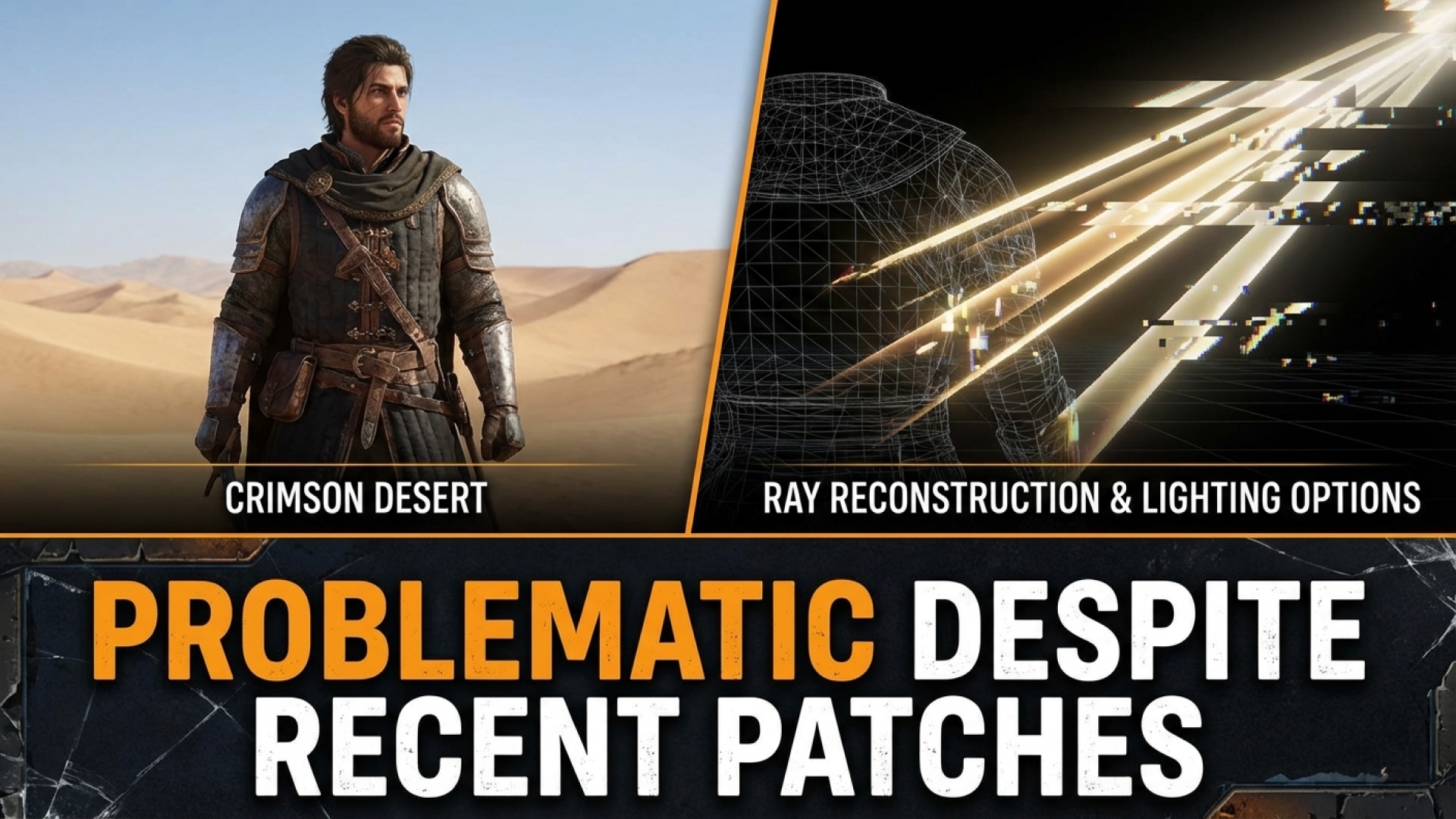
I’ve been spending a significant amount of time traversing the vast, sprawling open world of Pywel in Crimson Desert. From scaling rugged cliffs to interacting with the local citizenry, the scale of Pearl Abyss’s creation is undeniable. However, as someone who follows the pulse of hardware innovation closely, I’ve found my journey interrupted not by bandits, but by a persistent sea of graphics-related hurdles that challenge even the most robust systems.
Ray Reconstruction: A Double-Edged Sword for Performance
At Digital Tech Explorer, we often discuss the intersection of cutting-edge software and the hardware required to run it. The most prominent issue in Crimson Desert right now is the implementation of Ray Reconstruction (RR). The technical bottleneck here is that RR is hard-coded to the “Cinematic” lighting setting. Enabling it forces ray tracing to its maximum possible variables, which can absolutely tank the frame rate.
Testing on an RTX 5070 Ti, I observed the frame rate drop by more than 50% when toggling this single setting. While the visual fidelity is theoretically higher, the cost-to-performance ratio is a tough pill to swallow for most PC gamers. Fortunately, recent patches have addressed the “neon-green grass” bug that previously plagued users who turned Ray Reconstruction off, making the “High” lighting setting a much more viable alternative to “Cinematic.”
Armor Visual Bugs and Cinematic Lighting Hurdles
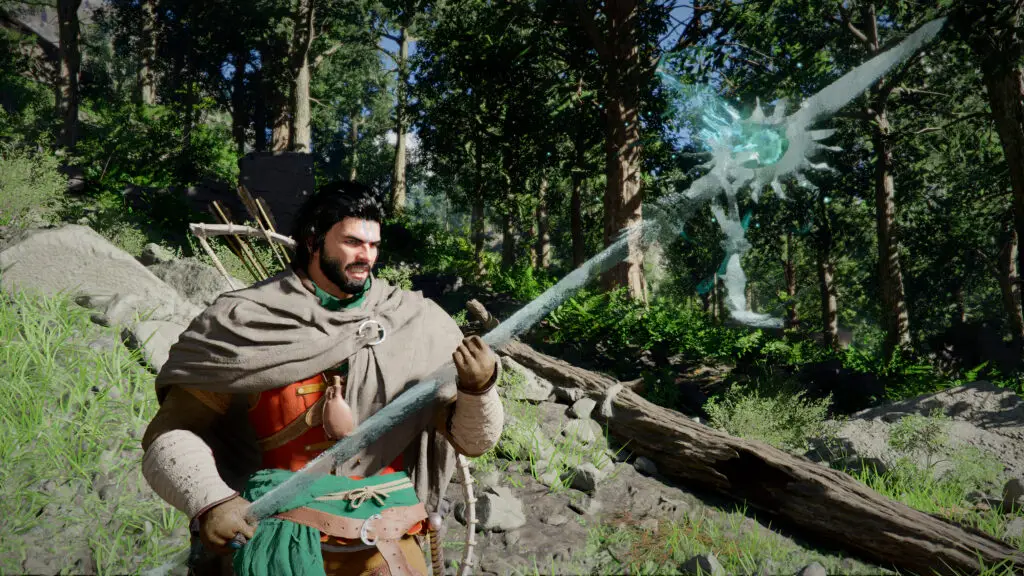
When dropping the lighting to Cinematic but keeping Ray Reconstruction off—a middle ground many players seek for better performance—new visual artifacts emerge. Most notably, the game struggles with specular highlights on metallic surfaces. As TechTalesLeo, I value the “story” told by the environment, and nothing breaks immersion faster than high-tier plate armor looking like a low-resolution asset from two console generations ago.
This “flat” armor glitch is a known issue within the community. Even with motion blur disabled and the character stationary, the metallic sheen often fails to render correctly, resulting in a dull, plastic-like appearance. While the latest Steam patches have attempted to resolve these “visual nasties,” the results remain inconsistent across different GPU architectures.
DLSS, Image Noise, and 4K Resolution
To maintain a stable experience at 4K resolution, upscaling is essentially mandatory. However, Crimson Desert’s image quality is notably “noisy” regardless of the preset. This is exacerbated when using DLSS Performance mode. Because the ray-traced lighting is calculated based on the pre-upscaled (lower resolution) buffer, the final output often features shimmering and graininess that the DLSS algorithm struggles to clean up.
| Setting Component | Performance Impact | Visual Trade-off |
|---|---|---|
| Ray Reconstruction (On) | Very High (Extreme) | Best lighting, but heavy blur in motion. |
| Cinematic Lighting (No RR) | Moderate | Occasional “flat” textures on armor/metal. |
| DLSS Performance (4K) | Low (Boosts FPS) | Increased visual noise and shimmering. |
A recent update shifted the DLSS Ray Reconstruction preset from D to E. While intended to fix displacement mapping and texture animation quirks, some users (myself included) have noted that it handles fast movement poorly at Performance settings. It creates a ghosting effect that can be distracting during high-octane combat sequences.
The Verdict: A Beautiful, Messy Innovation
Despite these technical friction points, my time with Crimson Desert hasn’t been soured. There is a level of “bizarre creativity” and digital innovation here that is rare in modern AAA titles. At Digital Tech Explorer, we value transparency: while the game is currently a “total mess” from an optimization standpoint, the core experience is incredibly engaging.
Pearl Abyss is demonstrating a herculean effort with their post-launch patch cycle. For those looking to bridge the gap between complex settings and playable frame rates, I recommend sticking to “High” lighting and “Quality” DLSS presets for now. We will continue to monitor future updates to see if the developers can finally tame the beast that is Pywel’s rendering engine. Stay tuned for more deep dives into the latest in AI and gaming technology.
Affiliate Disclaimer: Some of the links on Digital Tech Explorer are affiliate links. This means we may earn a commission if you click through and make a purchase, at no additional cost to you. Our recommendations are based on thorough research and personal experience.