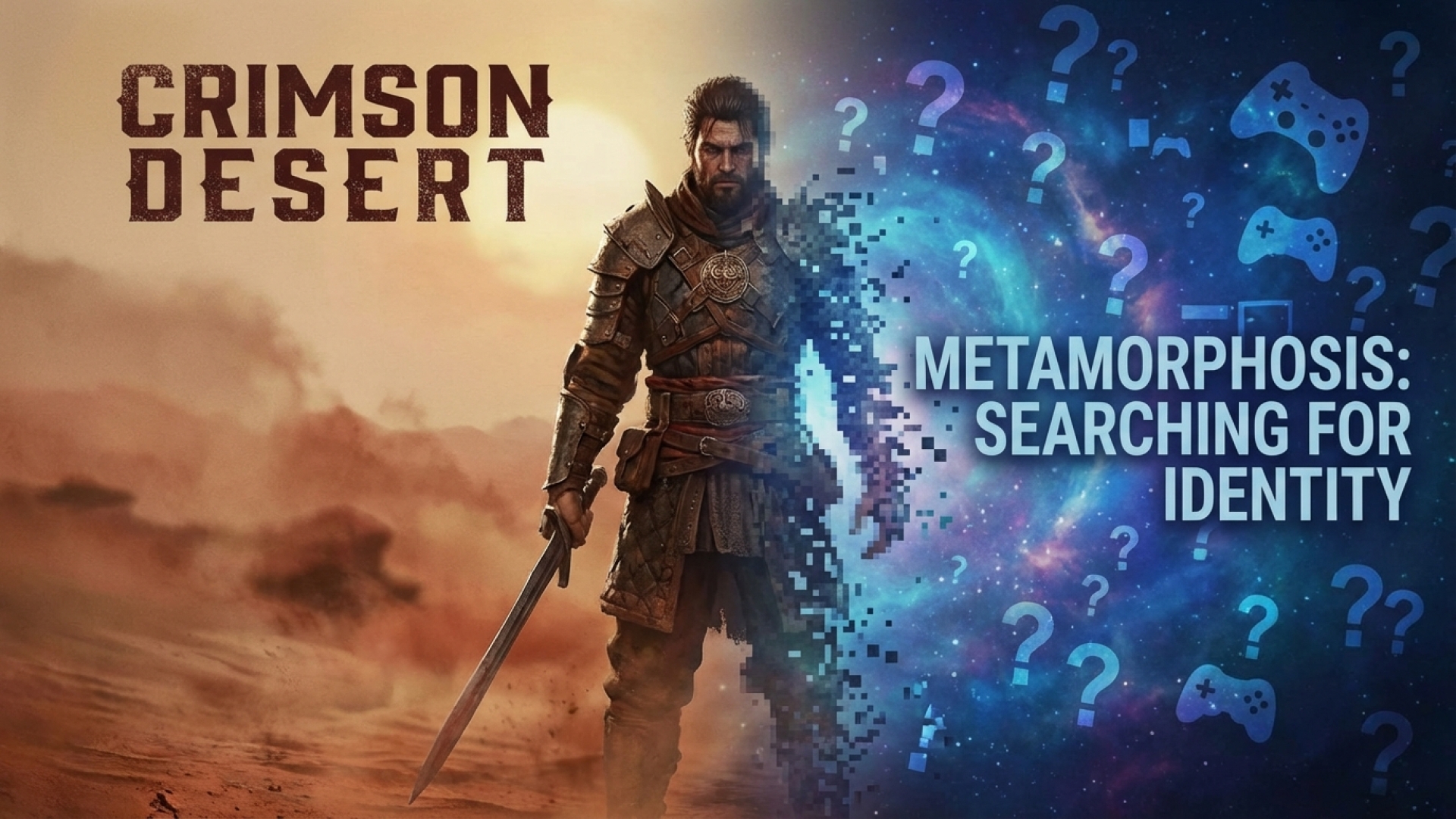
Few things illustrate the evolution of modern software development quite like the post-launch journey of Crimson Desert. At Digital Tech Explorer, we often see titles shift and grow, but the rapid-fire patch cadence from developer Pearl Abyss is something unique. It is a fascinating case study of an MMO developer applying a live-service velocity to a single-player action RPG, fundamentally altering the experience in just a matter of weeks.
Within days of release, Pearl Abyss has aggressively tackled quality-of-life hurdles, bug fixes, and feature requests that typically take months to address. For instance, when the community highlighted a frustrating lack of storage, private chests were implemented in just four days. When players noted the chest locations were inconvenient, they were relocated within the week. This level of agility reflects a developer deeply attuned to real-time user data and feedback loops.
Damiane in Crimson Desert: A world in constant flux.
Swift Iterations and the Feedback Loop
This high-speed response cycle is a net positive for the immediate player experience. By identifying and smoothing out abrasive mechanics, Pearl Abyss has made gaming in the world of Pywel significantly more accessible. However, as a storyteller who follows digital innovation, I find the underlying conflict intriguing: how much can a game change before it loses its original creative soul?
Crimson Desert has been in development for nearly seven years, taking various forms before arriving on our screens. The readiness to contort the core experience suggests a developer still searching for the perfect balance between their original vision and mass-market appeal.
Evolution of Features: A Snapshot
To understand the scale of these changes, let’s look at how the game has been refined since its debut:
Feature/Issue
Launch State
Post-Patch Adjustment
Storage
Limited inventory; no global storage.
Private storage chests added and optimized.
Difficulty
Fixed, Souls-adjacent challenge.
Introduction of dynamic difficulty sliders.
Endgame Density
Static enemy populations.
Re-blockading of forts to refresh enemy counts.
Navigation
Intentionally obtuse UI.
Streamlined wayfinding and HUD updates.
The Shifting Identity of Pywel
Kliff’s journey has changed significantly since launch.
These rapid transformations raise vital questions about the developer’s initial design philosophy. Was the lack of storage a deliberate choice intended to force inventory management, or simply an oversight? Was the original difficulty meant to provide a “hardcore” experience that was later softened to satisfy a broader audience?
Industry whispers and reports from former Pearl Abyss staff suggest a “hodgepodge” development cycle. Having pivoted from an MMO to a single-player PC game, the project has weathered internal shifts in leadership and vision. The current flurry of updates could be seen as a humble acknowledgment of past missteps, or conversely, a sign of a design philosophy that is perhaps too malleable.
Balancing Innovation and Developer Wellness
While the community benefits from a more polished game, we must consider the human cost of such a pace. Implementing complex mechanical changes—like the recent overhaul of fort blockades to fix endgame enemy density—is an intensive task. At Digital Tech Explorer, we value transparency in the industry, and it is our hope that this rapid evolution isn’t coming at the cost of developer burnout.
Ultimately, Crimson Desert is a game that is finding itself in real-time. While its identity remains somewhat blurred between a hardcore RPG and a mainstream blockbuster, the moment-to-moment gameplay remains engaging. For tech enthusiasts and players alike, watching this title evolve is as much a part of the experience as the game itself.
Stay tuned to Digital Tech Explorer for more deep dives into 2024 releases and the latest in software innovation.