
In the world of digital innovation, some stories are told through lines of code, while others emerge from the cold, hard numbers of market data. As we navigate the evolving landscape of PC hardware here at Digital Tech Explorer, we’ve spotted a narrative shift that every developer and tech enthusiast needs to see. For anyone deeply involved in data analysis, the longer the collection period, the clearer the trends become—and the latest CPU sales figures are telling a story of a market in transition.
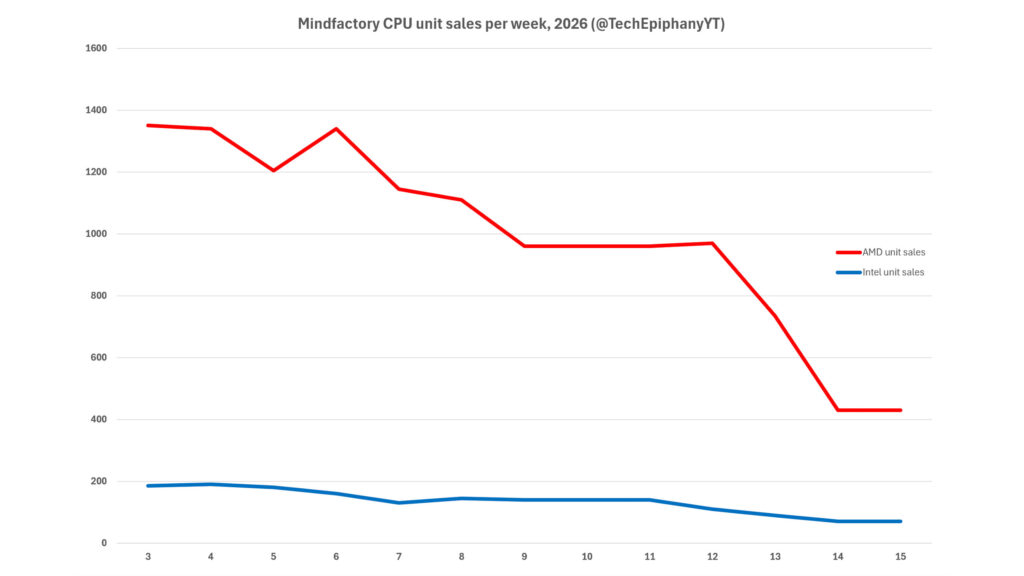
The recent sales data from the German retailer Mindfactory paints a definitive picture of the current state of PC hardware. These insights, regularly compiled by the YouTube channel TechEpiphany and shared via their X account, track the weekly momentum of GPUs, CPUs, and motherboards. By aggregating data from Mindfactory and other giants like Amazon, TechEpiphany provides a roadmap for where the industry is heading.
An Unprecedented Decline in CPU Sales
Analyzing the data for both AMD and Intel CPUs from week 3 to week 15 of the current year reveals a dramatic downturn. While raw numbers can sometimes be obscured by market noise, the visual representation of this data highlights a sharp drop-off that has caught even seasoned veterans off guard. TechEpiphany noted, “In 10 years of tracking retail CPU sales, I have never seen such a steep decline.”
This isn’t just a minor fluctuation; it’s a significant market correction. For tech enthusiasts and professionals who rely on AI acceleration and high-performance computing, this trend suggests that the usual upgrade cycle has hit a massive roadblock.
The Barrier: Why Components Are Stalling Upgrades
The primary hurdle isn’t the processors themselves—it’s the exorbitant cost of the supporting cast. To build a modern rig capable of 3D gaming or complex machine learning tasks, you need more than just a fast chip. You need high-speed DRAM and reliable SSDs, both of which are currently sporting colossal price tags.
To put this into perspective, let’s look at the current market costs for essential secondary components. When these prices are stacked against the cost of a CPU or GPU, the financial barrier becomes clear:
| Component Type | Example Specification | Estimated Market Price |
|---|---|---|
| NVMe SSD | 1 TB PCIe 4.0/5.0 Drive | $160.00 |
| DDR5 RAM | 32 GB Kit (DDR5-6000) | $380.00 |
| Total “Support” Cost | RAM + SSD Bundle | $540.00 |
At Digital Tech Explorer, we find this total of $540 particularly striking. For that same amount, a builder could purchase a mid-to-high-range graphics card or pair an AMD Ryzen 5 7600X with a solid motherboard. When storage and memory alone cost as much as the core processing units, the value proposition for a full system upgrade vanishes for many consumers.
Strategic Waiting: A Prudent Move for Techies
Consequently, PC shoppers and developers are making the calculated decision to defer comprehensive platform upgrades. Many are holding out for a return to the pricing levels seen just 12 months ago, when a 1 TB PCIe 4.0 SSD and 32 GB of fast DDR5 could be found for under $200. However, our analysis suggests that a return to those budget-friendly days is unlikely within the next year.
As we continue to monitor these 2024 releases and hardware shifts, our mission remains the same: to help you make informed decisions in an increasingly expensive landscape. Whether you are building for Minecraft or 8K video production, transparency in pricing is key to staying ahead of the curve.
Affiliate Disclaimer: Some of the links on Digital Tech Explorer are affiliate links. This means we may earn a commission if you click through and make a purchase, at no additional cost to you. Our recommendations are based on thorough research and personal experience.
Disclaimer: All content on Digital Tech Explorer is for informational and entertainment purposes only. We do not provide financial or legal advice.