
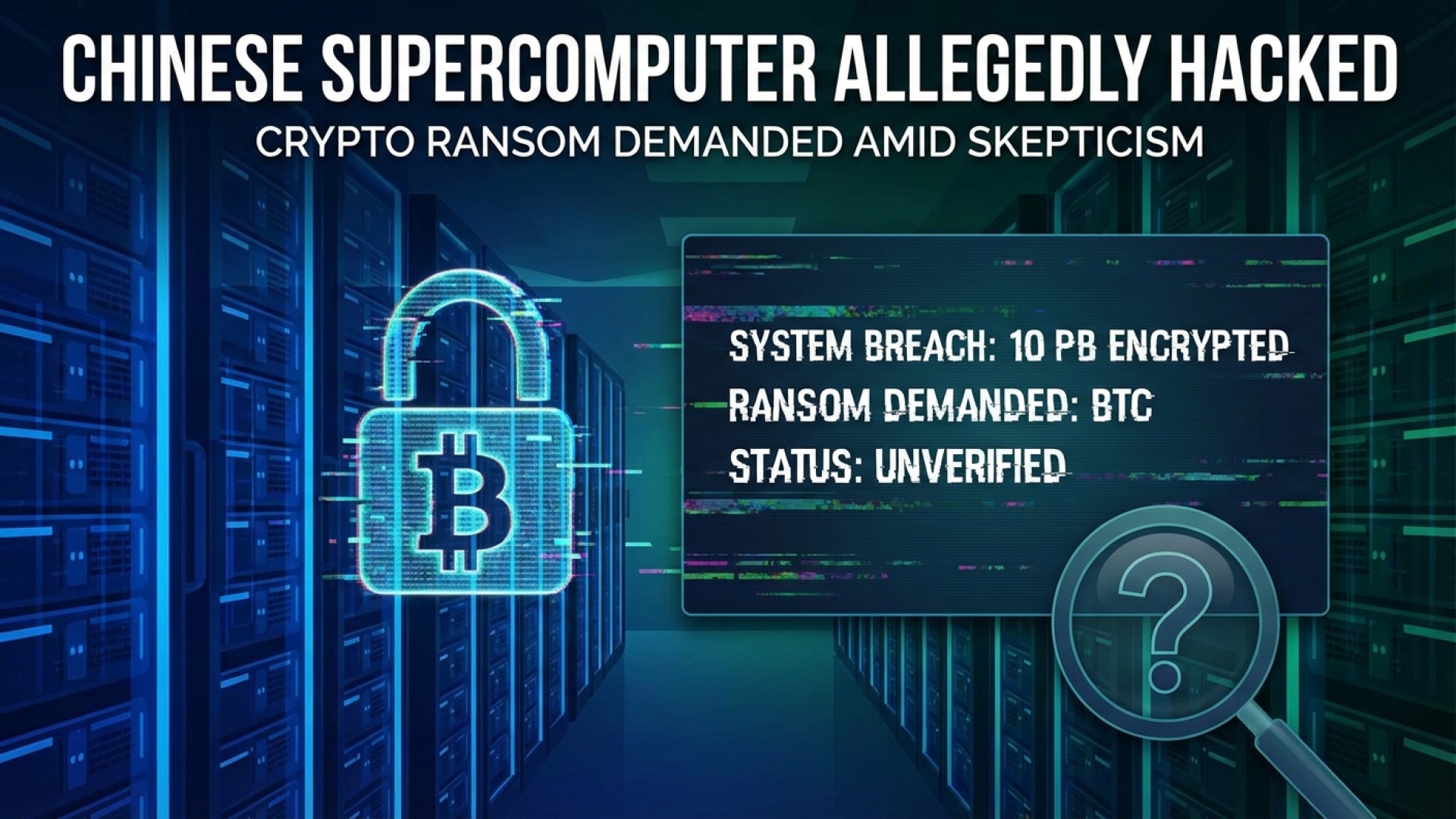
At Digital Tech Explorer, we closely monitor the intersection of high-performance computing and global security. Recently, a narrative has emerged from the shadows of the dark web that sounds like a plot from a techno-thriller: a massive 10-petabyte data breach targeting one of the world’s most powerful facilities. Our resident storyteller, TechTalesLeo, dives into the claims, the skepticism, and the staggering logistics behind the alleged hack of the National Supercomputing Center (NSCC) in Tianjin, China.

The Alleged Breach: A 10-Petabyte Heist?
The story broke when a threat actor group known as FlamingChina claimed to have exfiltrated a monumental haul of data from the NSCC. Initially brought to light by security researcher NetAskari, the breach was reportedly advertised on dark web forums by a user named ‘airborneshark1.’ The asking price for a sample of this digital treasury was a mere $3,000 in cryptocurrency, with the full 10 petabytes reserved for the highest bidder.
For context, 10 petabytes is equivalent to roughly 10,000 terabytes. In the world of digital innovation, such a volume of data is almost unfathomable for a single exfiltration event. The leaked samples provided as “proof” included internal directory structures, user credentials, and sophisticated physics simulation renderings. These renderings allegedly showed payload impacts against specific military targets—precisely the kind of high-stakes research performed at an institution serving over 6,000 elite clients.
“The leaked sample data… includes a video of what seems to be a simulation of a bunker buster bomb, designed to penetrate bunkers and damage underground structures.”
— Reported via X, March 19, 2026
The Logistical Nightmare of Storing Stolen Data
As tech enthusiasts and professionals, we must look at the hardware reality. Even if a hacker bypassed the cybersecurity protocols of a national supercomputing center, the physical and financial cost of moving and storing 10PB of data is astronomical. Renowned security archivist Vx-underground raised eyebrows at these claims, noting that the sheer cost of maintaining such a cache would be prohibitive for most independent hacker groups.
To put the scale into perspective, here is a breakdown of the estimated monthly costs for a group attempting to host this much exfiltrated data:
| Storage Type | Estimated Monthly Cost (USD) | Infrastructure Requirement |
|---|---|---|
| Cold Storage | $43,000 | High-capacity archival servers (slow access) |
| Hot Storage | $150,000 | High-speed SSD arrays (immediate access) |
| Data Transfer Fees | $100,000+ | Massive bandwidth for initial upload/exfiltration |
Skepticism and Cybersecurity Realities

While the samples look authentic to some, the lack of an official statement from China’s Ministry of Science and Technology adds a layer of mystery. At Digital Tech Explorer, we prioritize transparency and research. Experts like Dakota Cary from SentinelOne suggest that while the data reflects the “breadth of customers” one would expect from the NSCC, China’s overall cybersecurity landscape has historically been described as lagging behind its rapid hardware advancements.
The “FlamingChina” moniker itself is a red flag for some researchers. Vx-underground noted that the group appeared almost overnight, with a Telegram channel established only weeks before the leak was announced. In the world of coding and software security, a group capable of such a massive breach usually leaves a longer trail of breadcrumbs.
Final Thoughts: Insider Threat or Elaborate Hoax?
If the 10PB figure is accurate, it likely implies an insider threat. Moving that much data over a standard network connection would take months, if not years, and would almost certainly trigger automated security alarms. However, as CNN noted, a sophisticated botnet-based approach could theoretically distribute the load, though even this would require elite-level coordination.
As we continue to explore the digital frontier, the NSCC incident serves as a stark reminder: in the age of AI and supercomputing, data is the ultimate currency, and its protection is more complex than ever. Whether this is the largest leak in history or a masterfully crafted deception, it highlights the critical need for robust, real-world testing of our security infrastructures.
For more in-depth tech news and software analysis, stay tuned to Digital Tech Explorer.