
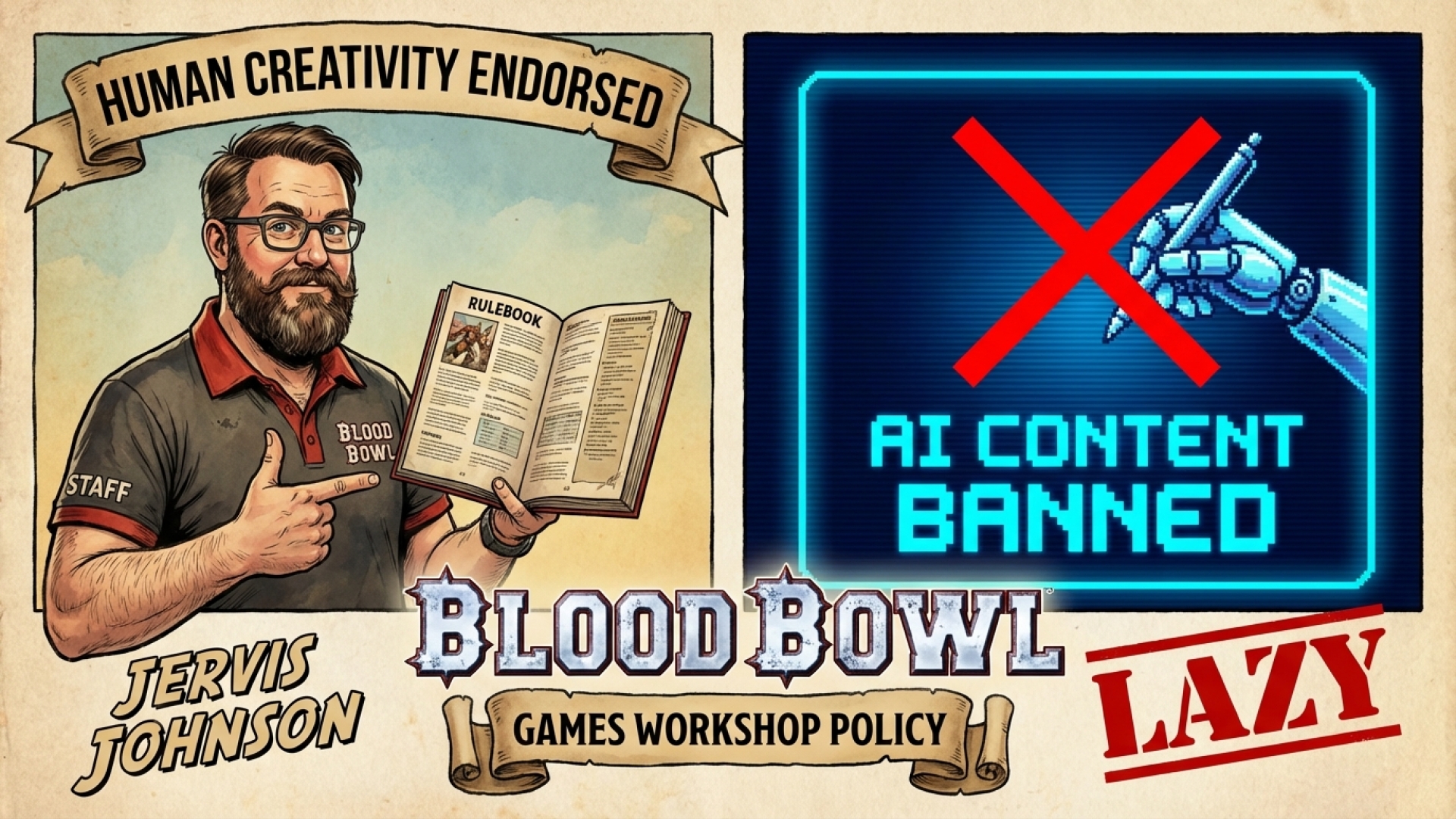
At Digital Tech Explorer, we closely monitor how traditional creative industries navigate the disruptive wave of Artificial Intelligence (AI). Recently, Jervis Johnson—a legendary figure in tabletop game design—stepped into the spotlight to voice his firm agreement with Games Workshop’s decision to ban AI from its creative workflows. Having dedicated nearly forty years to the company, Johnson’s perspective carries the weight of a man who helped build the very foundations of modern hobby gaming.
During his tenure, Johnson became synonymous with innovation, crafting iconic titles like Blood Bowl and co-creating the gritty world of Necromunda. His fingerprints are across the industry, from the core rules of Advanced Heroquest to the foundational editions of Warhammer 40,000 and Age of Sigmar.
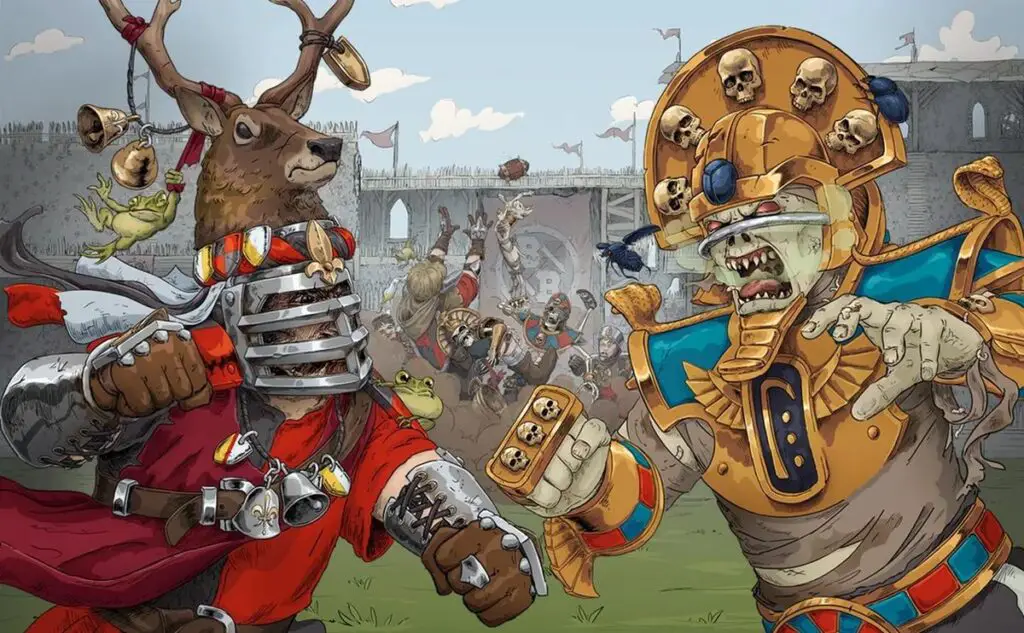
Even in retirement, Johnson remains a vital voice in the community, contributing to high-profile projects such as the Godzilla TTRPG and DreadBall All Stars. In a recent dialogue with FRVR regarding the latter, the conversation shifted toward the technical ethics of game design and machine learning, specifically focusing on Games Workshop’s recent prohibition of AI-generated content.
The Human Element: Jervis Johnson’s View on AI
Johnson expressed staunch support for his former employer’s stance. While he acknowledges that AI can produce “middling” results at a low-end level, he remains unimpressed by its potential for professional-grade, high-tier creative work. From his perspective, relying on these tools is a shortcut that ultimately dilutes the quality of the final product.
“It allows you to be a bit lazy and not put in the effort,” Johnson remarked, suggesting that the “effort” is exactly where the magic of game design happens. For a creator who spent decades hand-tuning balance and lore, the idea of outsourcing that intuition to an algorithm seems counter-intuitive to the craft.
Games Workshop Sets a Strict Boundary
The official word from Games Workshop is equally definitive. CEO Kevin Rountree used the company’s latest half-yearly financial report to draw a line in the sand. Rountree stated clearly: “We do not allow AI-generated content or AI to be used in our design processes.”
Rountree’s comments also touched on a sentiment many tech enthusiasts share: the feeling of “tech-creep.” He noted that AI engines seem to be “automatically included on our phones or laptops whether we like it or not,” signaling a protective stance over the intellectual property and human-driven artistry that defines the Warhammer brand.
The “Asbestos of the Internet”
Perhaps the most striking part of Johnson’s critique was his use of a unique analogy. He noted that despite the massive hype, much of what AI produces fails to live up to professional standards. He shared a comparison he had encountered that resonated deeply with his own skepticism:
“AI is going to be like the asbestos of the internet and the computer industry. We’re going to be spending decades getting this stuff out again after we’ve used it a lot and found out it’s actually a bit rubbish.”
This “asbestos” analogy highlights a growing concern among tech professionals and creators: that the rush to integrate AI might lead to a “pollution” of digital and creative spaces with low-quality, derivative content that will eventually need to be purged or corrected.
Dive Deeper into Warhammer

Whether you agree with the ban or believe AI is the future of PC gaming and design, there is no denying the depth of the worlds Games Workshop has built through human ingenuity. Explore more of these settings through our curated guides:
- Best Warhammer Games: A journey through fantasy epics.
- Best Warhammer 40K Titles: The complete ranking of grimdark classics.
- Warhammer TTRPG Guide: Role-playing experiences for every setting.
- Essential 40K Reading: The best novels of the 41st millennium.
For more insights into the intersection of technology and creativity, stay tuned to Digital Tech Explorer.
Disclaimer: All content on Digital Tech Explorer is for informational and entertainment purposes only. We do not provide financial or legal advice.
Affiliate Disclaimer: Some of the links on Digital Tech Explorer are affiliate links. This means we may earn a commission if you click through and make a purchase, at no additional cost to you. Our recommendations are based on thorough research and personal experience.