
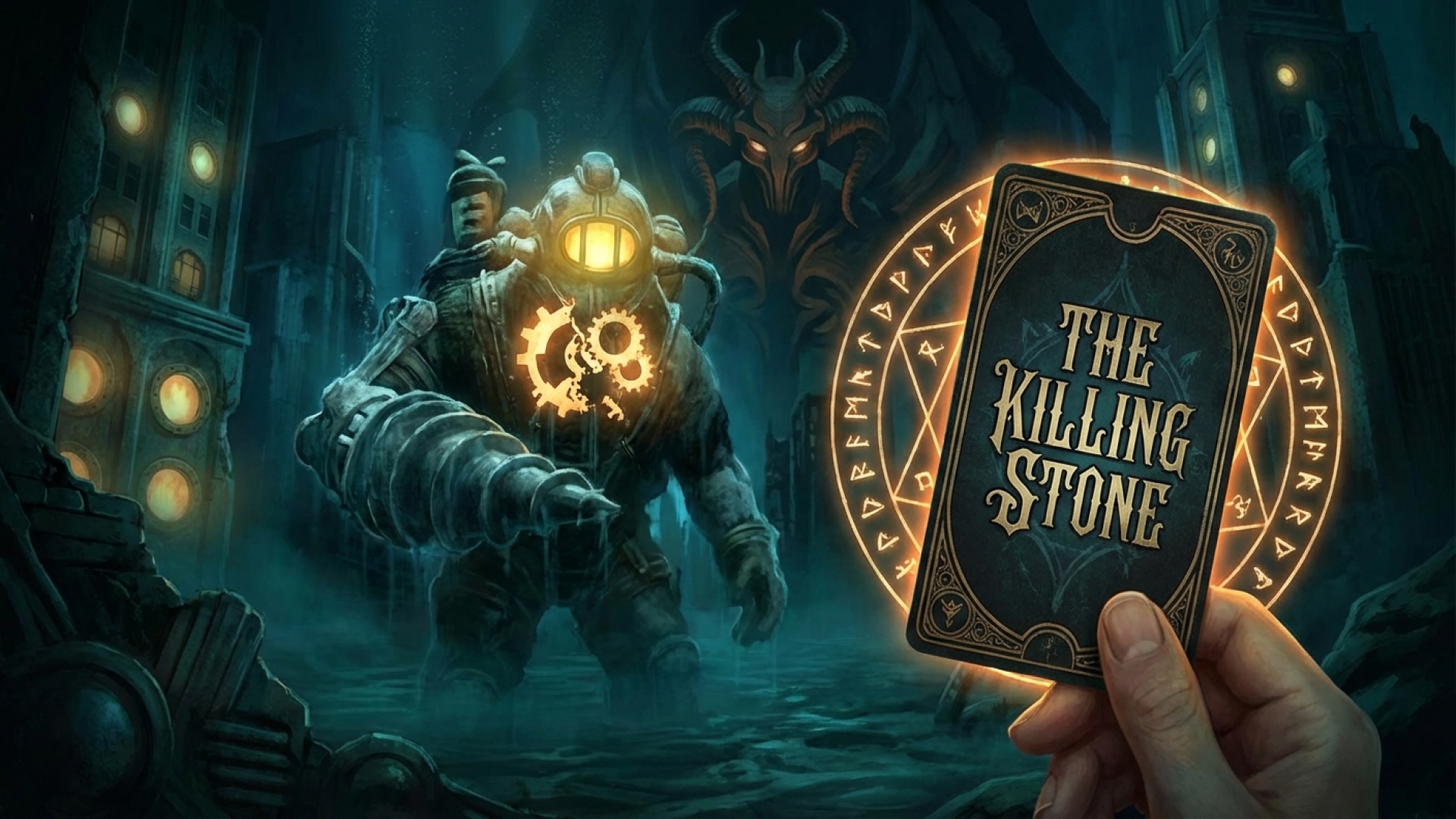
At Digital Tech Explorer, we love uncovering the hidden threads of game development history. Sometimes, a revolutionary idea is ahead of its time, only to be shelved and rediscovered years later by a new generation of creators. Such is the case with BioShock 2, the atmospheric sequel to Irrational Games’ 2007 masterpiece. Originally, the developers at 2K Marin envisioned a mechanic that would have redefined the horror of Rapture: a dynamic Big Sister scare system. While this feature was ultimately cut, it is now finding a second life in the upcoming occult deckbuilder, The Killing Stone.

The Lost Innovation of Rapture
The revelation of this scrapped feature comes from David Lindsey Pittman, a former developer at 2K Marin. During the development of the 2010 sequel, Pittman and colleague Kent Hudson explored a mechanic where the Big Sister—a lethal, agile antagonist—would haunt the player’s peripheral vision. Instead of appearing at fixed intervals, the system was designed to trigger during “low tempo” moments, spawning the Big Sister just at the edge of the screen to keep players in a state of constant, unscripted dread.
This approach to first-person horror was significantly ahead of its time. It mirrored the persistent, systemic AI threats found in modern classics like Alien: Isolation or the terrifying pursuits of Mr. X in the Resident Evil 2 remake. However, the complexities of the tech at the time led the team to stick with scripted encounters, leaving the dynamic scare system on the cutting room floor—until now.
Reviving the Scare: The Killing Stone
Pittman is now breathing new life into this concept at Question, a studio co-founded by BioShock 2 director Jordan Thomas. Their current project, The Killing Stone, is a unique blend of card-based combat and eerie exploration. By leveraging modern software engineering practices, the team has successfully implemented a version of the scare system that Pittman once dreamed of for BioShock.
In this new title, players navigate a snowbound 17th-century manor. While the core gameplay involves deep card battling, the exploration phases utilize the dynamic system to trigger surprising, immersive moments. As Pittman notes, the unpredictability is so effective that even the developers find themselves caught off guard by their own creation.
Comparison: BioShock 2 vs. The Killing Stone
| Feature | BioShock 2 (Original Vision) | The Killing Stone |
|---|---|---|
| Scare Mechanic | Dynamic Big Sister ambushes | Systemic scares in a haunted manor |
| Implementation | Scrapped (Switched to Scripted) | Active (Early Access) |
| Primary Genre | First-Person Shooter / Horror | Occult Deckbuilder / Exploration |
| Setting | Underwater Dystopia (Rapture) | 17th-Century Snowy Manor |
The Technical Craft of The Killing Stone
Beyond its innovative AI-driven scares, The Killing Stone offers a fascinating look at linguistic immersion. The game allows players to toggle between modern English and a period-accurate 17th-century dialect. This attention to detail adds a layer of authenticity to the occult mystery, though the developers have wisely included modern text options to help players manage the “mental horsepower” required to solve the game’s complex puzzles.

Currently available in Steam Early Access, the game is undergoing active refinement. Early impressions suggest that while the concept and storytelling are top-tier, the pacing is still being polished—a perfect use case for the Early Access model. For tech enthusiasts who appreciate the intersection of narrative design and systemic AI, this is a title to watch closely.
Conclusion
The journey of the dynamic scare system from a 2010 “what-if” to a 2024 reality proves that good ideas never truly die in the tech world. By bridging the gap between complex software design and engaging storytelling, the team at Question is showing us how the ghosts of development past can become the innovations of the future. Stay tuned to Digital Tech Explorer as we continue to track the evolution of this project and other emerging trends in AI-driven gameplay.
All content on Digital Tech Explorer is for informational and entertainment purposes only. We do not provide financial or legal advice. Some of the links on Digital Tech Explorer are affiliate links. This means we may earn a commission if you click through and make a purchase, at no additional cost to you. Our recommendations are based on thorough research and personal experience.