
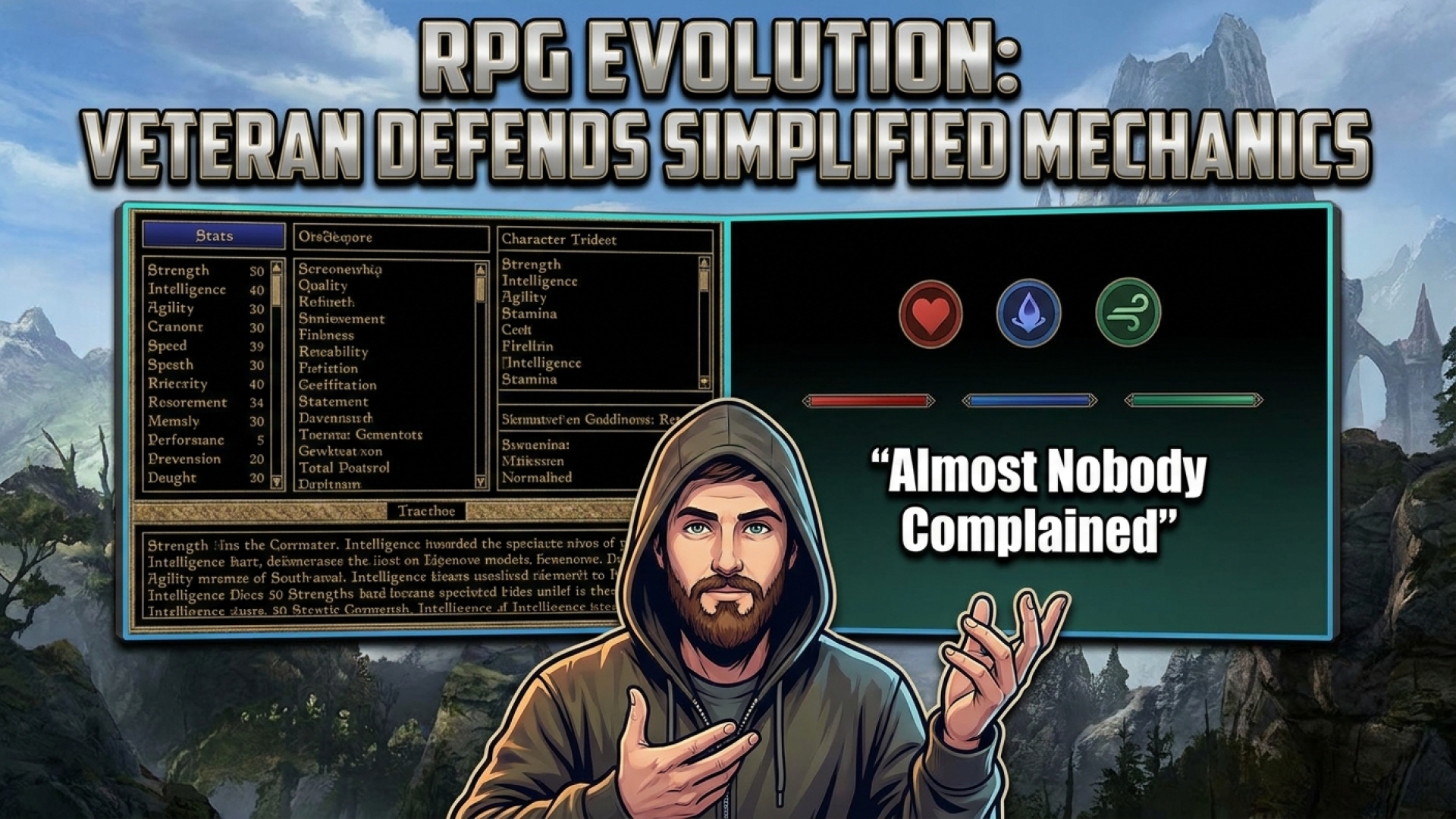
In the evolving landscape of software design and digital entertainment, few names carry as much weight as Bethesda. Bruce Nesmith, a Bethesda veteran and the lead designer behind Skyrim, recently offered a masterclass in the “less is more” philosophy of RPG development. In a deep-dive interview with PressBoxPR, Nesmith shed light on the intentional divergence between The Elder Scrolls and Fallout, revealing how user experience (UX) and “interfaceless” design have shaped some of the world’s most successful PC games.
The “Interfaceless” Philosophy: UX in High Fantasy
At the heart of Bethesda’s design evolution is a concept championed by studio head Todd Howard: “interfaceless” gameplay. Nesmith explained that his mission was to lower the barriers to entry, ensuring that players remained immersed in the world of Tamriel rather than getting lost in a labyrinth of spreadsheets.
“It was about getting the character system out of the players’ way,” Nesmith noted. This software engineering approach prioritizes the user’s emotional connection to the game world. By stripping away intrusive menus and complex rules, the developers allow players to “just enjoy the moment,” a move that mirrors modern app development trends where the UI stays invisible until absolutely necessary.
Simplifying Skyrim: Why the Removal of Attributes Worked

For long-time fans, the most controversial shift in Skyrim was the removal of traditional RPG attributes like Strength and Intelligence. However, Nesmith pointed out that the transition was surprisingly seamless. By moving to a model where “you do something, you get better at it,” Bethesda tapped into a more organic form of progression.
This “play how you want” architecture provides a level of flexibility rarely seen in rigid RPG systems. If you decide halfway through your journey to hang up your sword and pick up a lockpick, the game doesn’t punish you; it adapts. This fluid design philosophy is one of the reasons Skyrim remains a titan in the gaming industry over a decade after its release.
Comparative Analysis: The Elder Scrolls vs. Fallout
While The Elder Scrolls leans into streamlined immersion, Bethesda’s Fallout series takes a different path. Nesmith highlights that these differences are not accidental but are deeply tied to each franchise’s core identity.
| Feature | The Elder Scrolls (Skyrim) | Fallout Series |
|---|---|---|
| Design Philosophy | Interfaceless & Streamlined | “Old School” & Retro-Futuristic |
| Character Stats | Simplified (Health, Magicka, Stamina) | Complex (S.P.E.C.I.A.L. Attributes) |
| Progression | Organic (Learn by doing) | Traditional (XP & Manual Builds) |
| Thematic Goal | Pure Immersion | 50s “Super Science” Aesthetic |

In Fallout, managing experience points and intricate character builds is part of the charm, mirroring the “super science” retro aesthetic of the 1950s. By maintaining these distinct mechanical identities, Bethesda can appeal to both the casual explorer and the hardcore RPG tactician without compromising the soul of either series.
Looking Toward the Future: The Legacy of Nesmith
As we look forward to future releases and the eventual arrival of The Elder Scrolls 6, the design trajectory set by Nesmith remains influential. Even as he moves into new creative territory with his Loki Redeemed book trilogy, his focus on making complex systems accessible continues to serve as a blueprint for the industry.
At Digital Tech Explorer, we see this as a perfect example of how thoughtful software engineering can transform a hobby into an immersive lifestyle. Whether you are a developer looking to refine your UI or a gamer enjoying the fruits of these design choices, the message is clear: the best technology is the kind that stays out of your way and lets you experience the story.
For more in-depth analyses on gaming trends, digital innovation, and the tech that powers your favorite experiences, stay tuned to Digital Tech Explorer. Explore our latest insights on hardware and AI to stay ahead of the curve.