
At Digital Tech Explorer, we often dissect the intricate code and systems that power modern masterpieces. While Larian Studios delivered a landmark achievement with Baldur’s Gate 3, even the most robust titles leave some of their most ambitious ideas on the cutting room floor. As a tech storyteller, I find that the “what ifs” of game development often reveal as much about the creative process as the final product itself.
If the massive volume of fan art and digital narratives are any indication, the interpersonal mechanics of Baldur’s Gate 3 were among its most celebrated features. We adore the complex, immersive RPG gameplay Larian crafted, but for many players, the emotional connection to the companions was the real hook.
The Platonic Equivalent: Friendship “Dates”
In a recent interview with Edge Magazine, Kevin VanOrd, the lead writer for Lae’zel, shared insights into the social systems that didn’t quite make the final cut. Due to the staggering scope of the project and inevitable time constraints, several layers of character depth remained unrealized.
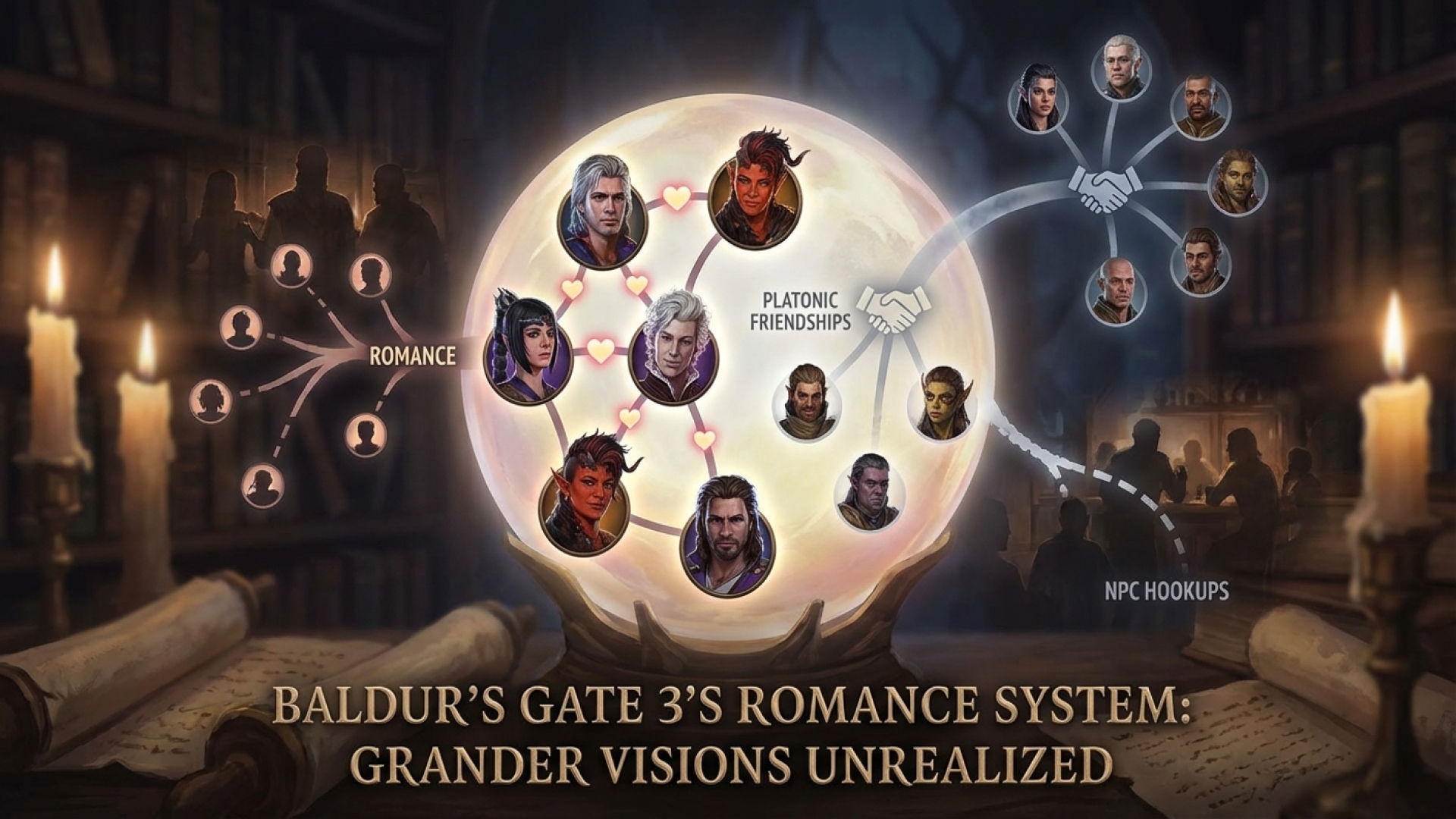
“We had a lot of great ideas that never made it into the game,” VanOrd explained. One such concept was a dedicated platonic friendship system. While the game currently tracks “Approval,” VanOrd envisioned a system where non-romantic bonds could be celebrated with the same weight as romances. This would have included specific “date” events that were purely friendly, allowing players to build deep, meaningful connections without the pressure of a romantic subtext.
Imagine the wizard Gale inviting you to a quiet evening of magical theory or a friendly competition rather than a cosmic romantic encounter. This addition would have added a unique layer to the PC gaming experience, making the party feel less like a collection of potential suitors and more like a true fellowship.
A More Dynamic World: NPC-to-NPC Relationships
Perhaps the most intriguing cut feature was the idea of inter-companion romances. In the final version of the game, the social world revolves almost entirely around the player. However, the writers originally hoped for a more dynamic world where characters could fall in love with each other, independent of the player’s choices.
“I think it would have been really cool for characters to have romances with each other, outside of the player,” VanOrd stated. This concept, seen in other RPG classics like Mass Effect 3, would have shifted the game’s focus away from a purely player-centric universe, making the world of Faerûn feel more alive and autonomous.
Comparing the Vision vs. Reality
To help visualize how these changes would have impacted the gameplay experience, I’ve broken down the differences between the current system and the original design goals:
| Feature Category | Final Game Implementation | Original “Dream” Concept |
|---|---|---|
| Social Focus | Player-centric romance and approval. | Broad interpersonal bonds (Platonic & Romantic). |
| Special Events | Romance-specific dates/scenes. | Platonic “friendship dates” for all companions. |
| NPC Autonomy | Companions react mostly to the player. | NPCs could initiate romances with each other. |
| Narrative Impact | Focuses on the player’s journey. | A living world where stories happen without player input. |
Developer Perspective and Player Impact
While these “unrealized ambitions” offer a tantalizing glimpse at what could have been, VanOrd remains incredibly proud of what the team achieved. At Digital Tech Explorer, we understand that software development is the art of the possible, and Larian pushed those possibilities further than almost any other studio in the modern tech landscape.
VanOrd expressed joy at how the community has taken these characters and expanded upon them through creative works. “Something that makes me happy is getting to see all the wonderful artwork with which players interpret the characters,” he shared. Even without the specific friendship mechanics, the depth of the writing has clearly resonated with the global gaming community.
As we continue to track the evolution of 2024 releases and beyond, Baldur’s Gate 3 stands as a testament to the power of storytelling in technology. Whether you’re a developer looking for inspiration or a player lost in the narrative, these insights remind us that the journey of creation is just as complex as the games themselves.