
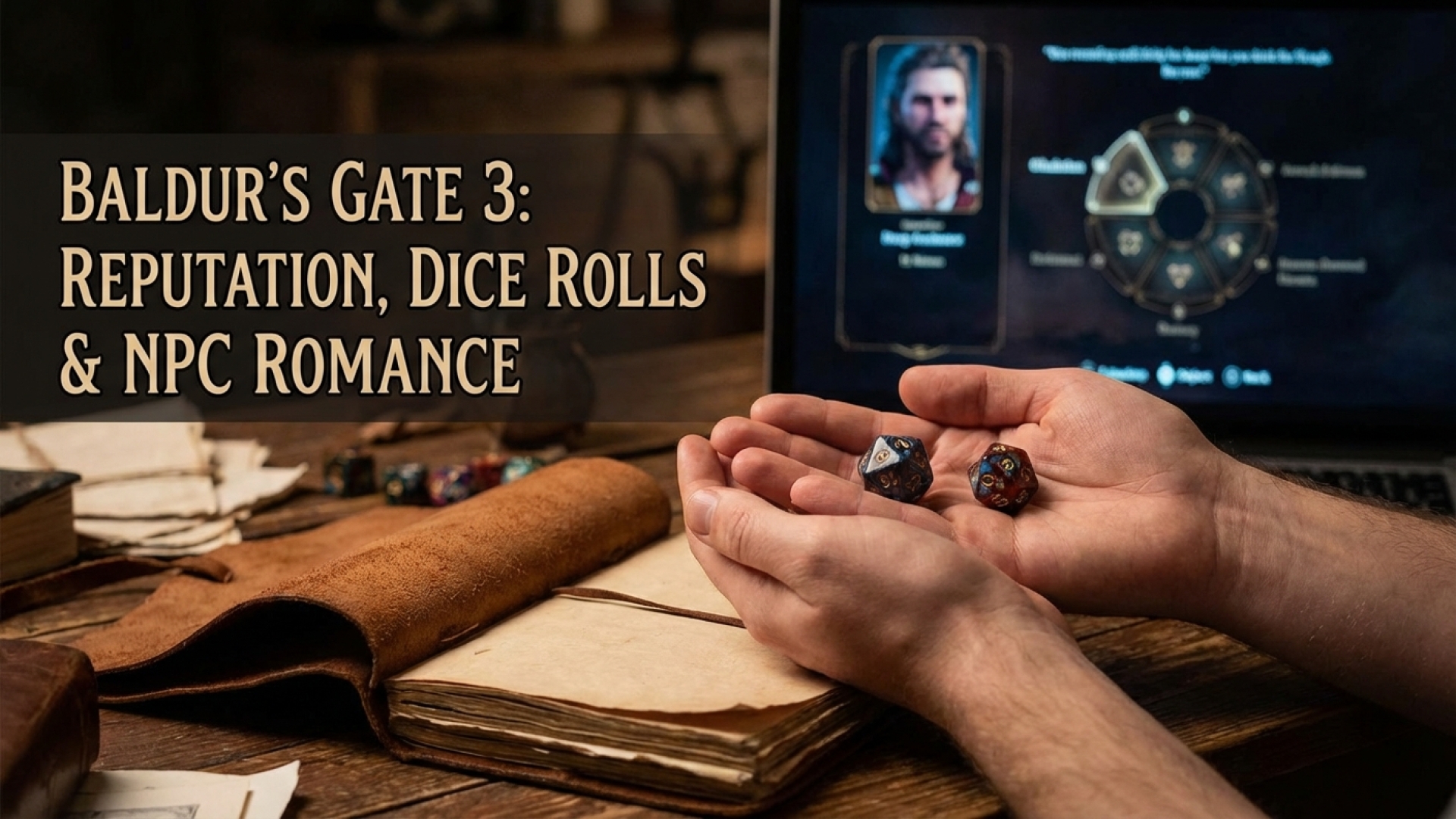
If you have spent any time navigating the intricate world of Baldur’s Gate 3, you are likely intimately familiar with the notification “Astarion disapproves.” For many players, these small pop-ups became a constant companion, signaling the moral friction between their choices and the party’s resident vampire. While these notifications feel like a staple of modern gaming, they are actually a sophisticated piece of narrative software design intended to solve a common problem in massive RPG development.

In a recent feature in Edge magazine, Kevin VanOrd, one of the lead writers for the hit title from Larian Studios, pulled back the curtain on the mechanics of character approval. As we often explore here at Digital Tech Explorer, the intersection of storytelling and software efficiency is where the most interesting game design happens. VanOrd admitted that while the system provides feedback to the player, its primary advantage is that it serves as a massive time-saver for the development team.
The Logic of Narrative Design: Why Pop-ups Matter
The companion approval system in Baldur’s Gate 3 is a digital evolution of systems seen in classic titles like Dragon Age or Knights of the Old Republic. From a software development perspective, creating unique dialogue for every possible player action is an exponential nightmare. As TechTalesLeo, I’ve seen how “feature creep” can stall even the best projects; the approval system is the elegant solution to that problem.
VanOrd explained the necessity of this system: “We can’t have every character reacting to every situation, otherwise we would be working on the game forever. So this is a way of showing how they feel without writing new dialogue.” This allows the team to maintain the NPCs’ distinct personalities without bloating the game’s script to unmanageable levels.
| System Feature | Traditional Dialogue Approach | Approval Pop-up System |
|---|---|---|
| Development Time | High (requires writing/VO for every branch) | Low (reusable UI notification) |
| Character Consistency | Difficult to track across 100+ hours | Systematic and logic-driven |
| Player Feedback | Organic, but can be missed | Immediate and clear |
| Game Performance | Heavier asset load (audio/scripts) | Minimal (UI trigger) |
Balancing Character Integrity with Player Freedom
One of the core challenges in RPG design is maintaining the “integrity” of the characters. While Baldur’s Gate 3 is celebrated for its immense player freedom, there have to be technical and narrative boundaries. If a player could perform a series of heinous acts and still easily romance a virtuous character without consequence, the internal logic of the world would break.
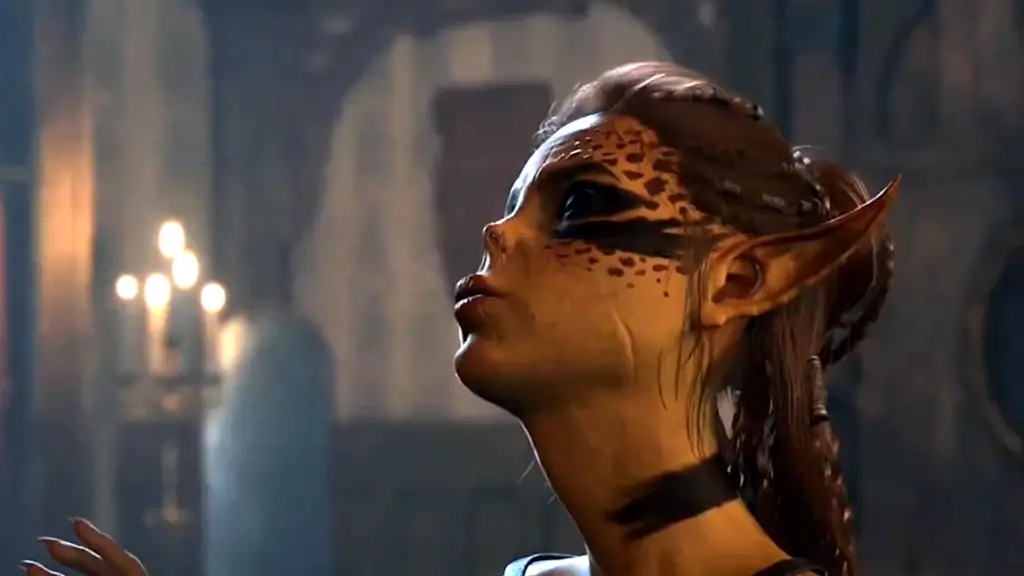
VanOrd noted that while some developers might allow players to “break” the game, Larian prefers to keep their characters grounded. “Sometimes the answer is to just let the player break the game, but when it comes to party members, usually not,” he noted. This ensures that characters like Lae’zel or Shadowheart feel like real people with actual standards, rather than just digital puppets designed to satisfy the player’s every whim.
The Math Behind the Romance
The romance mechanics in the game also rely on a blend of static variables (approval ratings) and dynamic elements (dice rolls). At Digital Tech Explorer, we find the use of randomization in social simulation particularly fascinating. By introducing dice rolls at pivotal moments, Larian prevents the relationships from feeling purely transactional.
In a purely transactional system, reaching “100 Approval” would automatically trigger a romance success. However, Larian’s approach mimics the unpredictability of real life. “If a character trusts you enough, they’ll go along with whatever you say, but if you need to convince them, that’s when it becomes a dice roll,” VanOrd explained. This adds a layer of AI-like unpredictability to the companions, making the world feel more alive and less like a series of checkboxes.

Despite the success of these systems, the sheer scale of the project was clearly a monumental task for the writing team. VanOrd admitted that the complexity of branching paths often made him “yearn for linear storytelling.” However, for the millions of fans who have explored every corner of the Forgotten Realms, it is exactly these intricate, logic-driven systems that make the experience so unforgettable. Whether you are aiming for “Astarion approves” or “Astarion disapproves,” the technology behind those words is what makes your story truly yours.
For more deep dives into the software and coding logic behind your favorite games, stay tuned to Digital Tech Explorer.