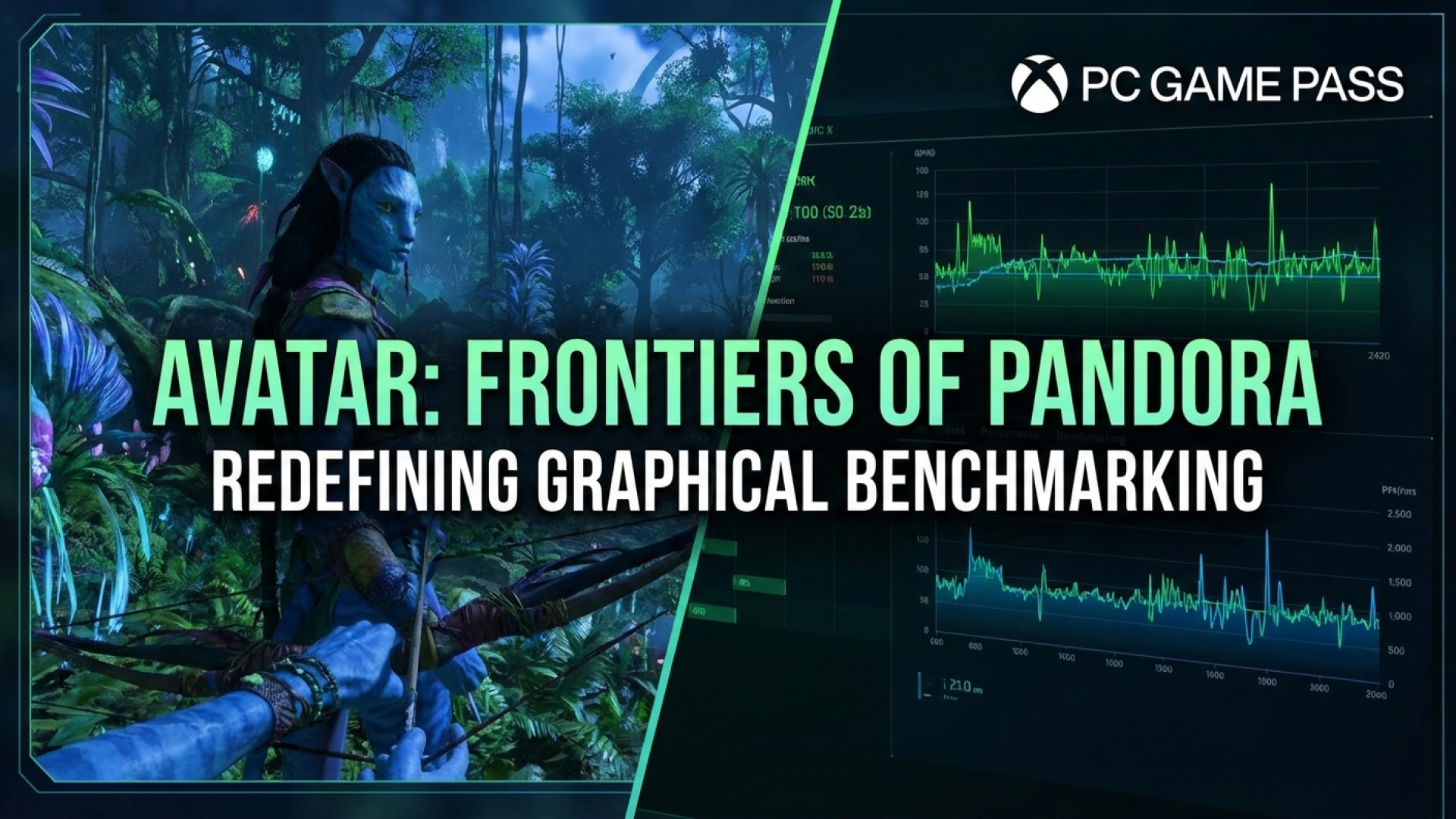
If you have been sleeping on Avatar: Frontiers of Pandora and happen to have an active subscription to PC Game Pass, there has never been a better time to dive into what many are calling Ubisoft’s most impressive open-world achievement in years. As a storyteller who loves where narrative meets high-end hardware, I found this title to be more than just a game; it is a visual odyssey designed to push your gaming PC to its absolute limits.
The experience of Pandora is truly breathtaking, especially after unlocking the PC-exclusive ‘Unobtanium’ graphics mode and applying a high-quality community reshade. At Digital Tech Explorer, we thrive on real-world testing, and this game evokes the same sense of hardware-crushing wonder we felt with the original Crysis or the path-traced glory of Cyberpunk 2077. It serves as a definitive reference point for modern system performance and aesthetic fidelity.
Avatar: Frontiers of Pandora showcases breathtaking, boundary-pushing visuals in its max graphics mode.
A New Benchmark for PC Enthusiasts
With its comprehensive suite of graphical options, Avatar: Frontiers of Pandora has effectively claimed the throne as the ultimate testbench for high-end rigs. Powered by an augmented version of Ubisoft’s Snowdrop engine, the game delivers photorealistic environments that utilize advanced AI acceleration and lighting techniques to immerse players in a living, breathing world.
For those looking to stress-test their latest GPU, the hidden “Unobtanium” preset is a must. By adding a simple command-line argument to the executable, you unlock a level of detail that the developers admit was built for future hardware. When paired with a custom Reshade, the visual density is unparalleled in the current gaming landscape.
Combining the hidden Unobtanium max graphics preset with a custom Reshade can transport you to PC gaming graphics heaven.
Real-World Performance Expectations
Achieving a stable 4K resolution at 60fps remains a tall order even for premium setups. During our testing at Digital Tech Explorer, we utilized a robust (though aging) enthusiast build to see how the “Unobtanium” settings held up.
Component/Setting
Specification / Result
GPU
NVIDIA RTX 3090 Ti (Overclocked)
CPU
AMD Ryzen 7 5700X
Resolution
4K (DLSS Upscaled)
Preset
Unobtanium + Custom Reshade
Average Framerate
35 – 45 FPS
As the table illustrates, even with ray-tracing and DLSS engaged, the demand is significant. However, for the PC gamer who values visual fidelity above all else, the trade-off is worth it for the sheer spectacle.
Refined Gameplay and Expansions
Beyond its status as a benchmark, Frontiers of Pandora has evolved into a rock-solid shooter. While it primarily focuses on a first-person perspective, the inclusion of a third-person mode for specific mechanics adds a welcome layer of versatility. The world feels more stable than at launch, benefiting from numerous patches that have optimized performance across a wider range of hardware.
If you find yourself hooked by the base game on Game Pass, the experience extends further through major story expansions like “From the Ashes.” These additions refine the action-shooter mechanics and introduce new narratives that deepen the lore of the Na’vi, ensuring that the game remains as engaging to play as it is beautiful to watch.
A Na’vi standing in front of a fire in the immersive and expansive world of Pandora.
Whether you are a developer looking at the pinnacle of environmental design or a tech enthusiast wanting to see what your rig can truly do, Avatar: Frontiers of Pandora is an essential install. It is a rare title that bridges the gap between technical demonstration and captivating storytelling, serving as the definitive hardware stress test of the 2024 release cycle and beyond.