
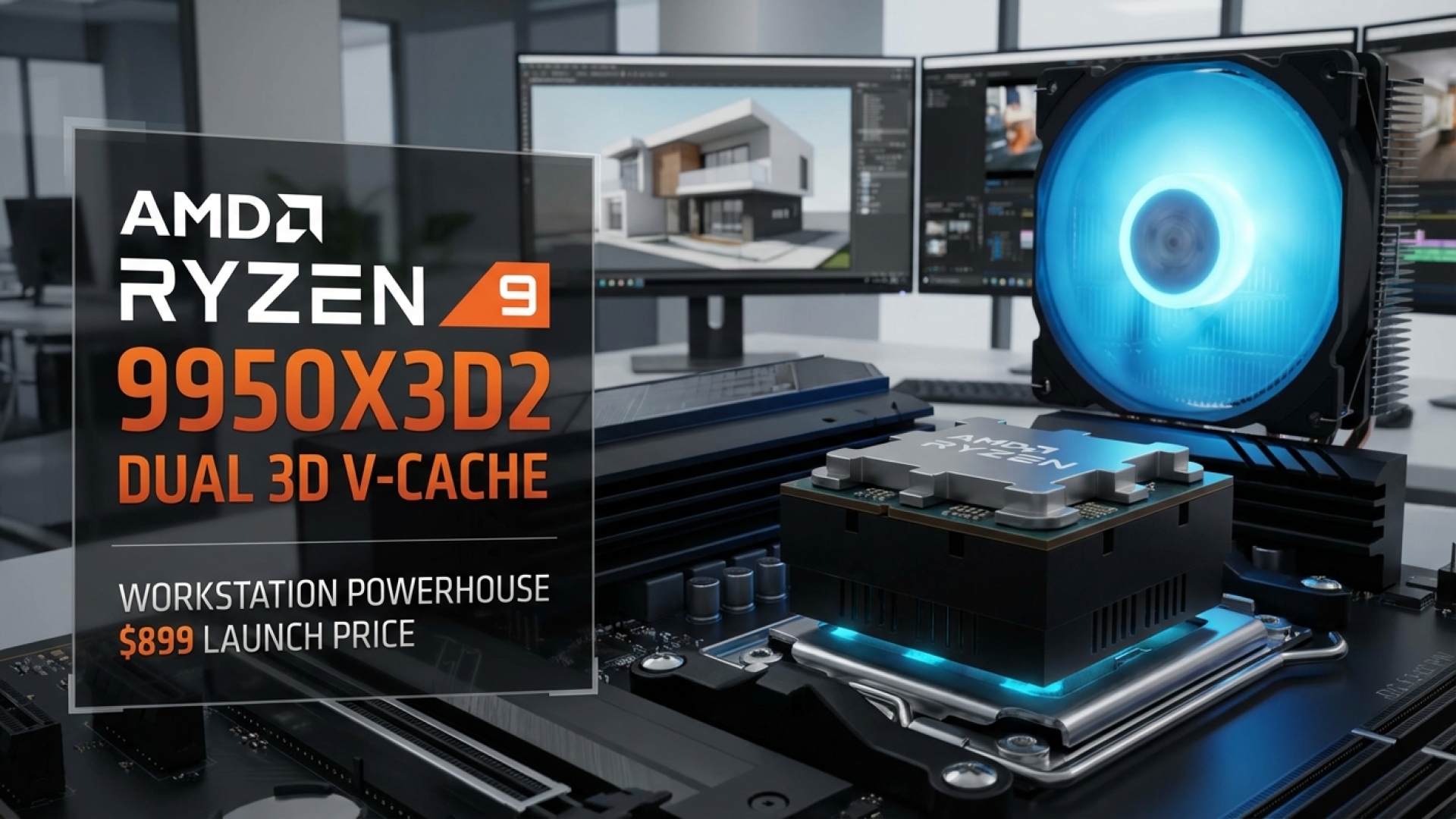
In the ever-evolving landscape of high-performance computing, market dominance often dictates the price of innovation. Here at Digital Tech Explorer, we’ve tracked the shift in AMD’s strategy as they push the boundaries of their Zen 5 architecture. The latest move? AMD has officially slapped an $899 price tag on the new Ryzen 9 9950X3D2 Dual Edition—a processor boasting a staggering 192 MB of L3 cache.
To put this into perspective, the standard Ryzen 9 9950X3D launched at $699 and can currently be found for around $676. This begs the question for developers and hardware enthusiasts alike: what exactly does that extra $200 investment buy you in a real-world workflow?
Analyzing the Specs: Ryzen 9 9950X3D2 vs. 9950X3D
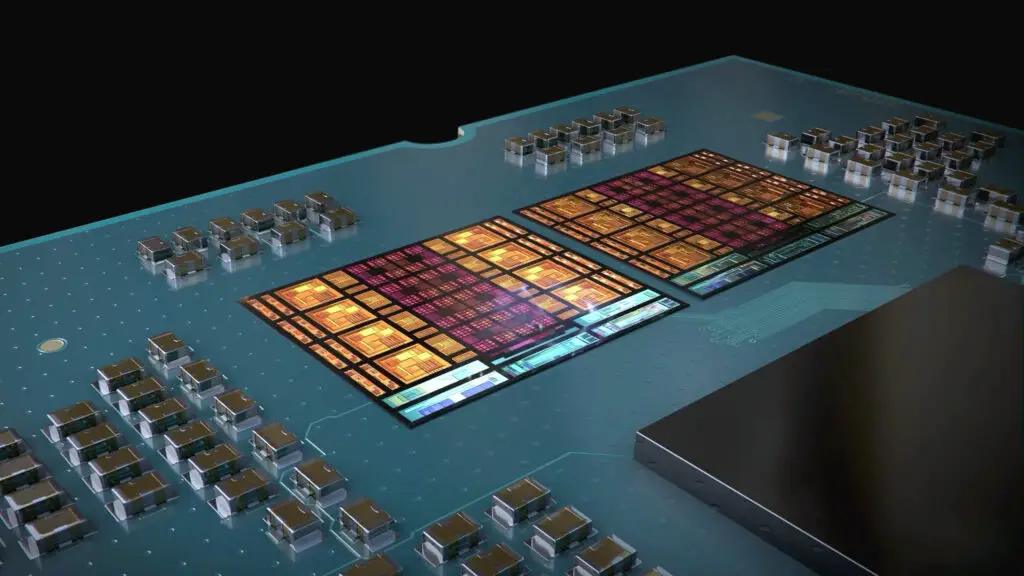
The primary upgrade in the “Dual Edition” is the addition of a 64 MB slice of 3D V-Cache on both Core Complex Dies (CCDs). In previous X3D models, the cache was limited to a single CCD to optimize gaming performance. By doubling down, AMD has reached a massive total of 192 MB of L3 cache.
However, this boost comes with trade-offs. You’ll notice a slight dip in peak boost clocks (5.6 GHz compared to 5.7 GHz) and a 30W increase in Thermal Design Power (TDP). To help you visualize the differences, our team at Digital Tech Explorer has broken down the key specifications below:
| Feature | Ryzen 9 9950X3D | Ryzen 9 9950X3D2 (Dual Edition) |
|---|---|---|
| Total L3 Cache | 128 MB | 192 MB |
| 3D V-Cache Config | Single CCD | Dual CCD |
| Boost Clock | 5.7 GHz | 5.6 GHz |
| TDP | 120W | 150W |
| Launch Price | $699 | $899 |
Is 192 MB of Cache Necessary for You?
If your primary focus is gaming, the short answer is no. Most modern games process threads on a single eight-core CCD. Adding cache to the second die offers virtually zero benefit for the vast majority of titles currently on the market. In fact, the slight reduction in clock speed might even result in a negligible performance dip in some scenarios.
Even for standard content creation—like video editing or image manipulation—the gains are modest. AMD’s own data suggests that the 9950X3D2 is only about 5% to 8% faster than its predecessor in tasks like code compilation or offline rendering. For the average creator, that marginal gain rarely justifies the $200 premium.
The Target Audience: Professionals and Scientists
The Ryzen 9 9950X3D2 isn’t built for the average user; it’s a specialized tool for niche workloads. For professionals engaged in scientific analysis, engineering modeling, or massive data processing, L3 cache is often the most significant bottleneck. These workloads rely heavily on memory performance and rapid data access rather than just raw thread counts.
Historically, users needing this level of cache would have to step up to enterprise-grade hardware like AMD Threadripper or Intel Xeon, which carry significantly higher price tags. For a developer or researcher, the 9950X3D2 provides a bridge between consumer platforms and professional workstations.
The Final Verdict for Enthusiasts
While there will always be enthusiasts who want the “best” Zen 5 hardware regardless of cost, the value proposition here is clear. If you aren’t running specialized, cache-heavy simulations, your money is better spent elsewhere. Most gamers will find their perfect match in the Ryzen 7 9800X3D, which remains the reigning champion for pure gaming performance at a much more palatable $469.
About the Author: TechTalesLeo is a storyteller at heart, bridging the gap between complex digital innovation and everyday usability. With a focus on tech trends and hardware analysis, Leo helps the Digital Tech Explorer community stay ahead of the curve.
Disclaimer: All content on Digital Tech Explorer is for informational and entertainment purposes only. Some of the links included are affiliate links, meaning we may earn a commission if you click through and make a purchase at no additional cost to you.