
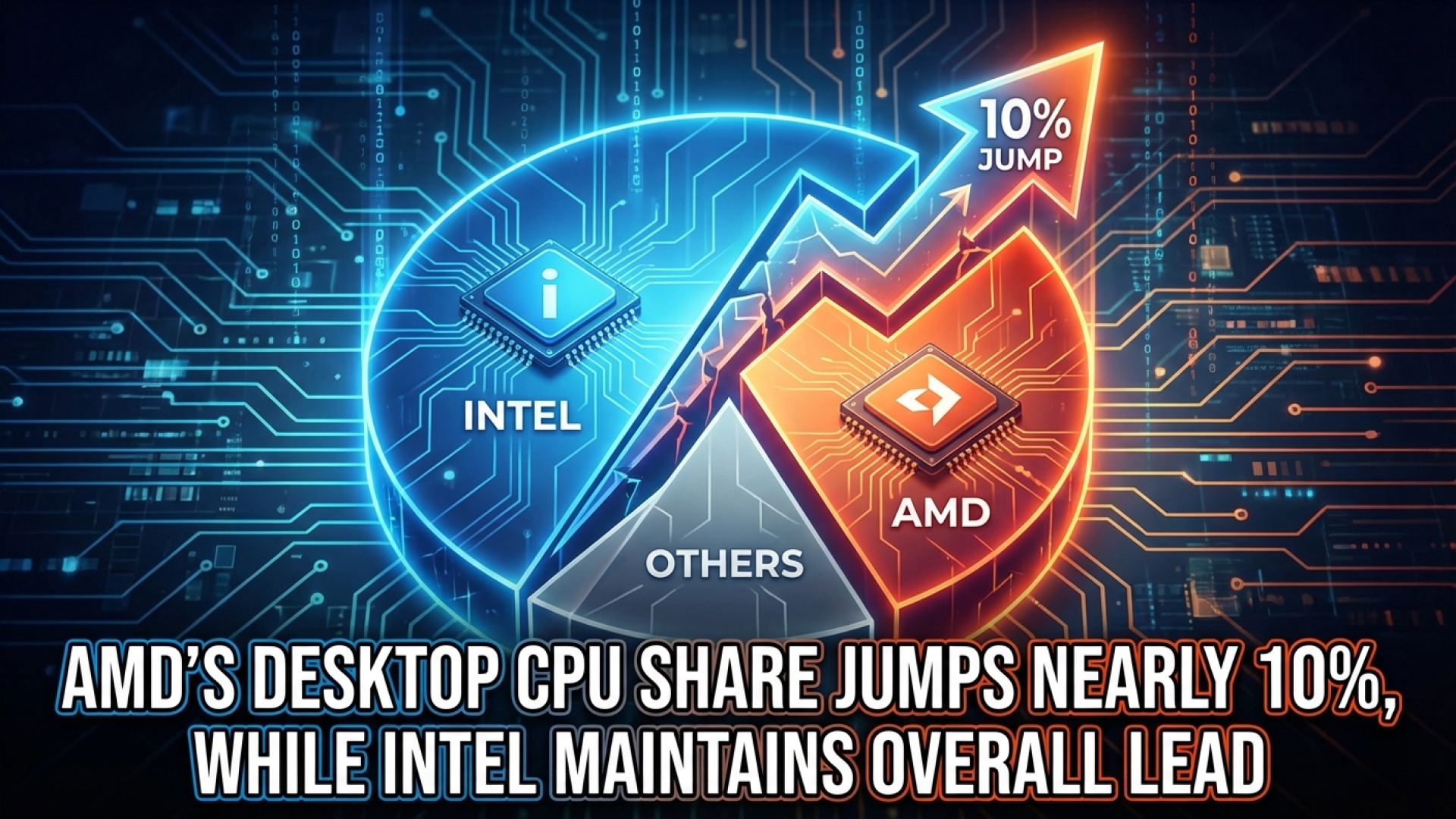
The landscape of silicon supremacy is undergoing a dramatic shift. Recent market intelligence from industry authorities Mercury Research and Jon Peddie Research (JPR) has pulled back the curtain on the latest CPU market dynamics, revealing a narrative of resilient growth for AMD and strategic pivots for Intel. At Digital Tech Explorer, we’ve been tracking these hardware trends closely, and the Q4 2025 data paints a fascinating picture for builders, developers, and tech enthusiasts alike.
While Intel remains the volume leader in the x86 ecosystem, Team Red’s momentum is undeniable. According to the latest findings, AMD secured a 29.2% share of the total x86 market (excluding embedded and IoT chips) by the end of 2025—a significant 4.5% jump from the previous year. This trajectory suggests that AMD’s “Zen” architecture continues to resonate with users seeking high-performance hardware solutions.
AMD’s Strategic Gains Across Desktop and Server Tiers
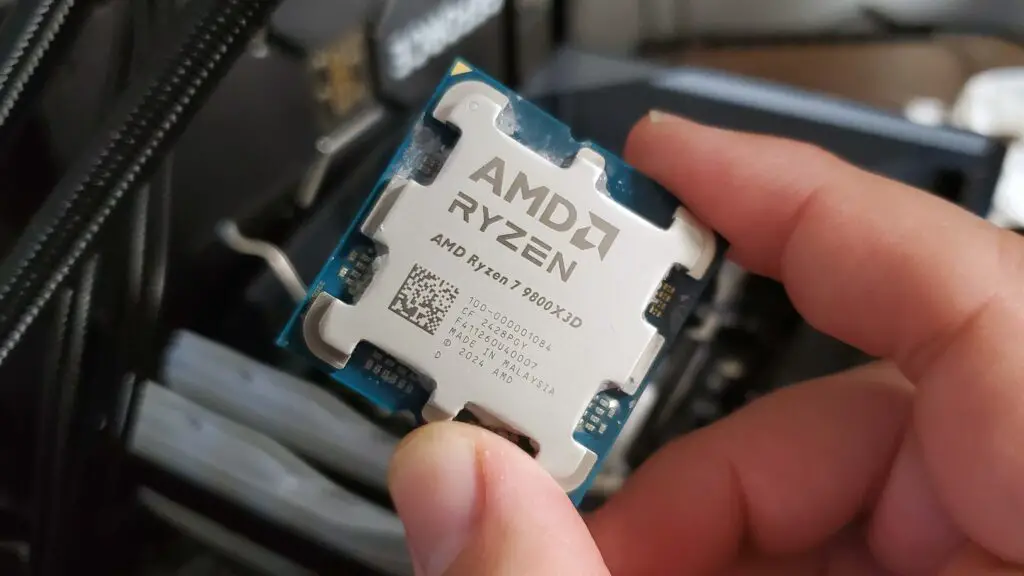
The most striking growth occurred in the desktop arena. AMD’s desktop CPU market share surged by 9.5%, now commanding over 36% of the total market. This spike is largely driven by the demand for the best CPU for gaming, where processors like the Ryzen 7 9800X3D have become gold standards for enthusiasts.
| Market Segment | AMD Share (Q4 2025) | YoY Growth |
|---|---|---|
| Total x86 Market | 29.2% | +4.5% |
| Desktop CPUs | 36.0%+ | +9.5% |
| Mobile (Laptops) | Increased Share | +2.2% |
| Server CPUs | Increased Share | +3.1% |
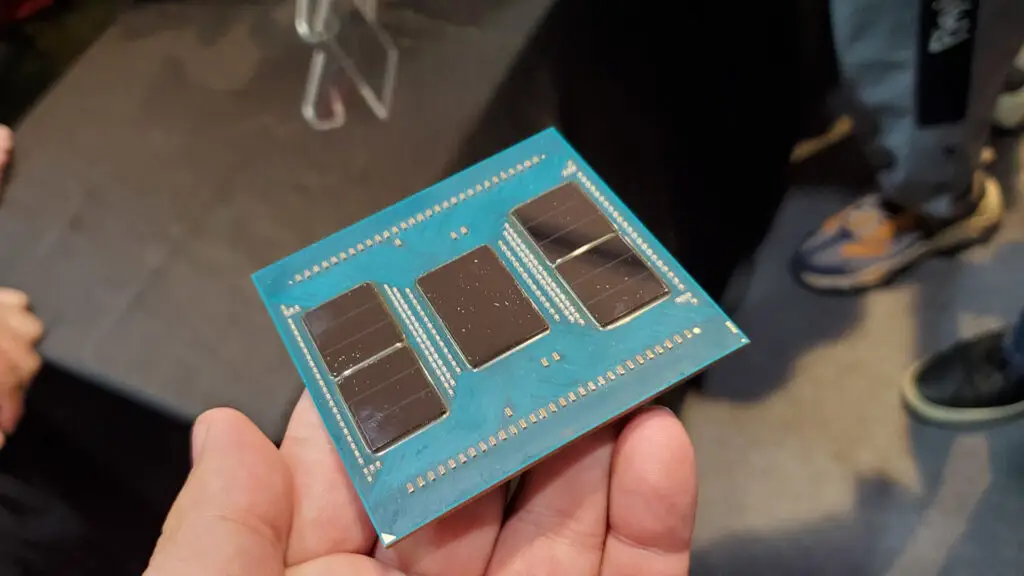
In the enterprise space, AMD is also seeing a lucrative transition. The company recently confirmed that its fifth-generation Epyc “Turin” CPUs—built on the Zen 5 architecture—now account for more than half of its server revenue. This signifies a massive shift toward high-efficiency, multi-chiplet designs in data centers.
Intel’s Balancing Act: Prioritizing the Data Center
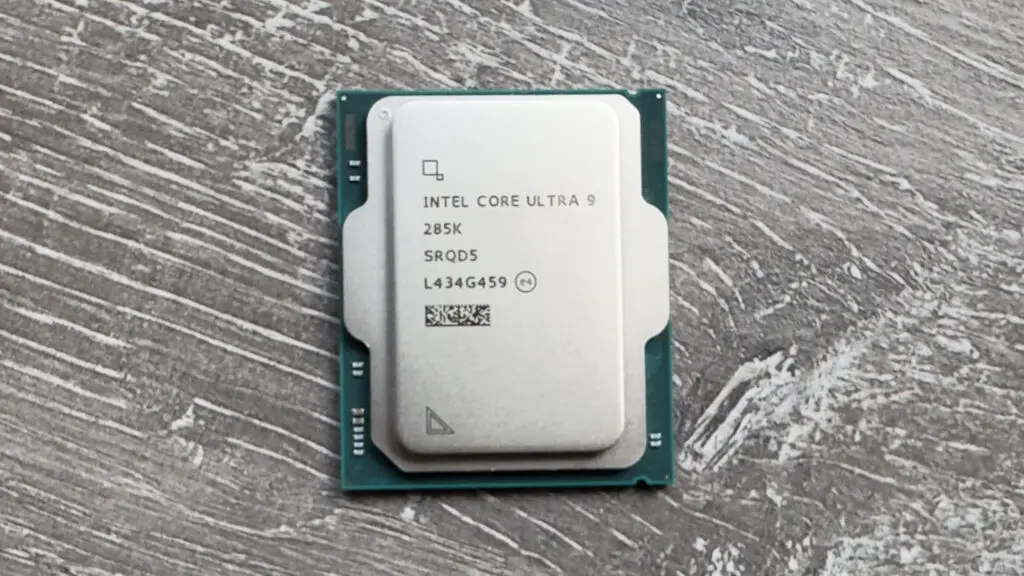
Intel’s slight dip in market share wasn’t necessarily a failure of demand, but rather a result of calculated manufacturing pivots. Reports from Mercury Research indicate that Intel intentionally reallocated its internal production capacity to prioritize high-margin server CPUs. While this move bolstered their presence in the enterprise sector, it constrained the supply of chips for the mobile and consumer PC markets.
This reallocation hit the mobile sector hardest, with laptop CPU shipments falling below typical seasonal peaks. However, despite these supply-side adjustments, the overall server market remains a bright spot for both giants. The server CPU sector grew by 6.5% quarter-over-quarter, driven by the relentless demand for AI and cloud computing infrastructure.
What Lies Ahead for 2026?
At Digital Tech Explorer, we believe the next 12 months will be a test of supply chain resilience. While JPR notes that the client CPU market grew by 2.7% recently, Dr. Jon Peddie warns of looming headwinds. Anticipated memory constraints (DRAM) and rising wafer costs may lead to a brief contraction in Q1 2026.
For those looking to upgrade, the roadmap is exciting but requires patience:
- AMD Zen 6: Expected to launch in late 2026, promising further architectural refinements.
- Intel Nova Lake: Intel’s major counter-offensive, also slated for a 2026 release.
- Supply Chain Factors: Global DRAM availability will likely dictate price stability more than the processors themselves.
As we navigate these transitions, our commitment to transparency and real-world testing remains at the forefront. Whether you are a developer looking for server-side efficiency or a gamer chasing frames, the competition between AMD and Intel ensures that innovation never stalls.
For more in-depth analyses and the latest 2024-2025 releases, stay tuned to Digital Tech Explorer.
Affiliate Disclaimer: Some of the links on Digital Tech Explorer are affiliate links. This means we may earn a commission if you click through and make a purchase, at no additional cost to you. Our recommendations are based on thorough research and personal experience.