
As a tech enthusiast who has followed the evolution of digital innovation for decades, my earliest foray into graphics card overclocking dates back roughly 26 years. I vividly remember the thrill of pushing an Nvidia Riva TNT2 Ultra from its standard 150 MHz to a then-remarkable 190 MHz. It was a milestone I shared with anyone who would listen. Fast forward to today, and the scale of achievement has shifted dramatically. When I heard that AMD, in collaboration with a legendary overclocker, reached an incredible 4,769 MHz on a compact Radeon chip, I expected a grand announcement. Instead, what we received was a surprisingly brief video for such a monumental hardware milestone.
The Record-Breaking Radeon Overclock
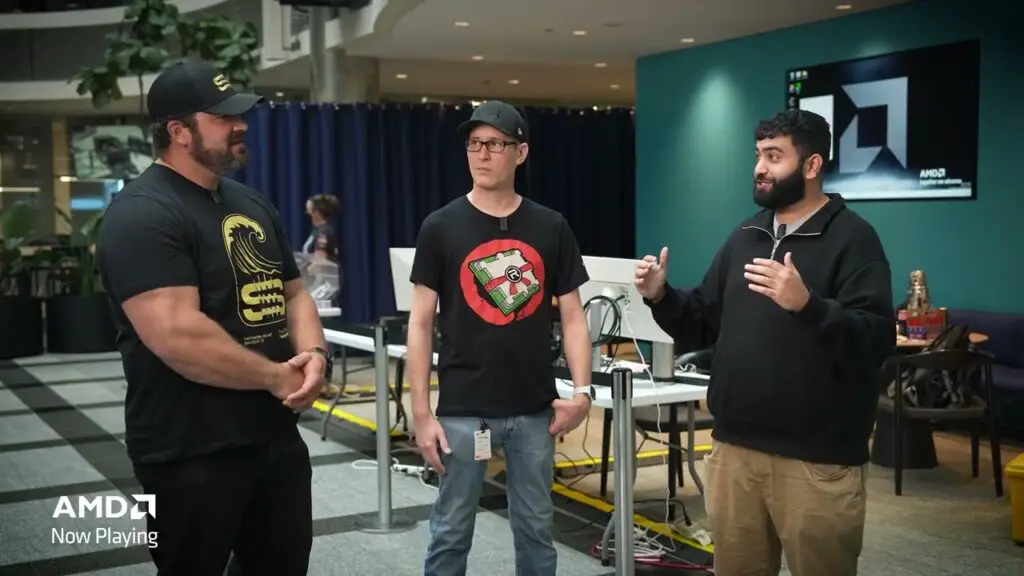
The video, featured on the AMD Gaming channel on YouTube, lasts less than two minutes. It highlights the collaborative efforts of AMD’s Bill Alverson and Allen ‘Splave’ Golibersuch, a titan in the global overclocking community. Utilizing a Radeon RX 9060 XT graphics card, the team removed the stock cooler in favor of a heavy-duty liquid nitrogen (LN2) setup. The duo successfully pushed the silicon to a staggering 4,769 MHz clock speed—representing a 52% increase over the Navi 44’s base frequency. This is an immense feat of engineering that pushes the boundaries of modern gaming tech.
| Metric | Achievement Details |
|---|---|
| GPU Model | AMD Radeon RX 9060 XT (Navi 44) |
| Record Clock Speed | 4,769 MHz |
| Percentage Increase | 52% over base clock |
| Cooling Method | Liquid Nitrogen (LN2) |
| Key Personnel | Bill Alverson (AMD) & Splave |
Unanswered Questions and Technical Discrepancies
While the achievement is technically brilliant, the presentation leaves many enthusiasts at Digital Tech Explorer wanting more. Those of us deep in the world of 2024 releases know that extreme hardware tuning is fraught with complexity. Unfortunately, the short clip lacks methodology. There is no insight into the specific benchmarks used to verify stability or the power limits encountered during the run.
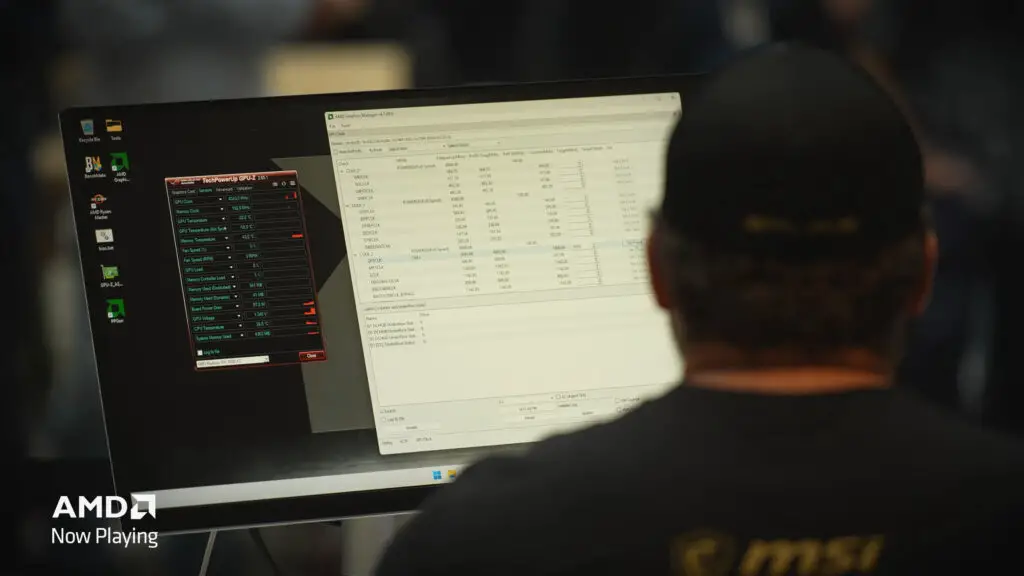
Furthermore, a noticeable discrepancy exists: the video displays a GPU-Z screen for an RX 7600 XT rather than the RX 9060 XT mentioned in the headline. In the competitive world of overclocking, where transparency is paramount, these details matter. This oversight creates confusion regarding which architecture was actually being pushed to its limit.
AMD’s Understated Promotion of a World Record
As a storyteller focused on digital innovation, my critique isn’t directed at the technical skill involved, but rather at AMD’s marketing strategy. Unlike CPU benchmarks, which are officially tracked on sites like HWBot, there is no centralized, formal repository for GPU frequency world records. This means the community relies heavily on manufacturer transparency and documentation.
This record underscores the hidden potential within AMD’s latest silicon, yet it remains hidden away on a secondary social media channel. At the time of writing, there is no mention of this milestone in the official AMD Newsroom. For a brand looking to compete in the high-performance space, failing to loudly celebrate a 4.77 GHz breakthrough seems like a missed opportunity to engage the enthusiast community.
Ultimately, AMD has secured a groundbreaking frequency record that demonstrates the raw capability of their hardware. It is a story of dedication and precision that deserves a platform as high-performing as the chip itself. For more deep dives into the latest PC games and hardware trends, stay tuned to Digital Tech Explorer.