
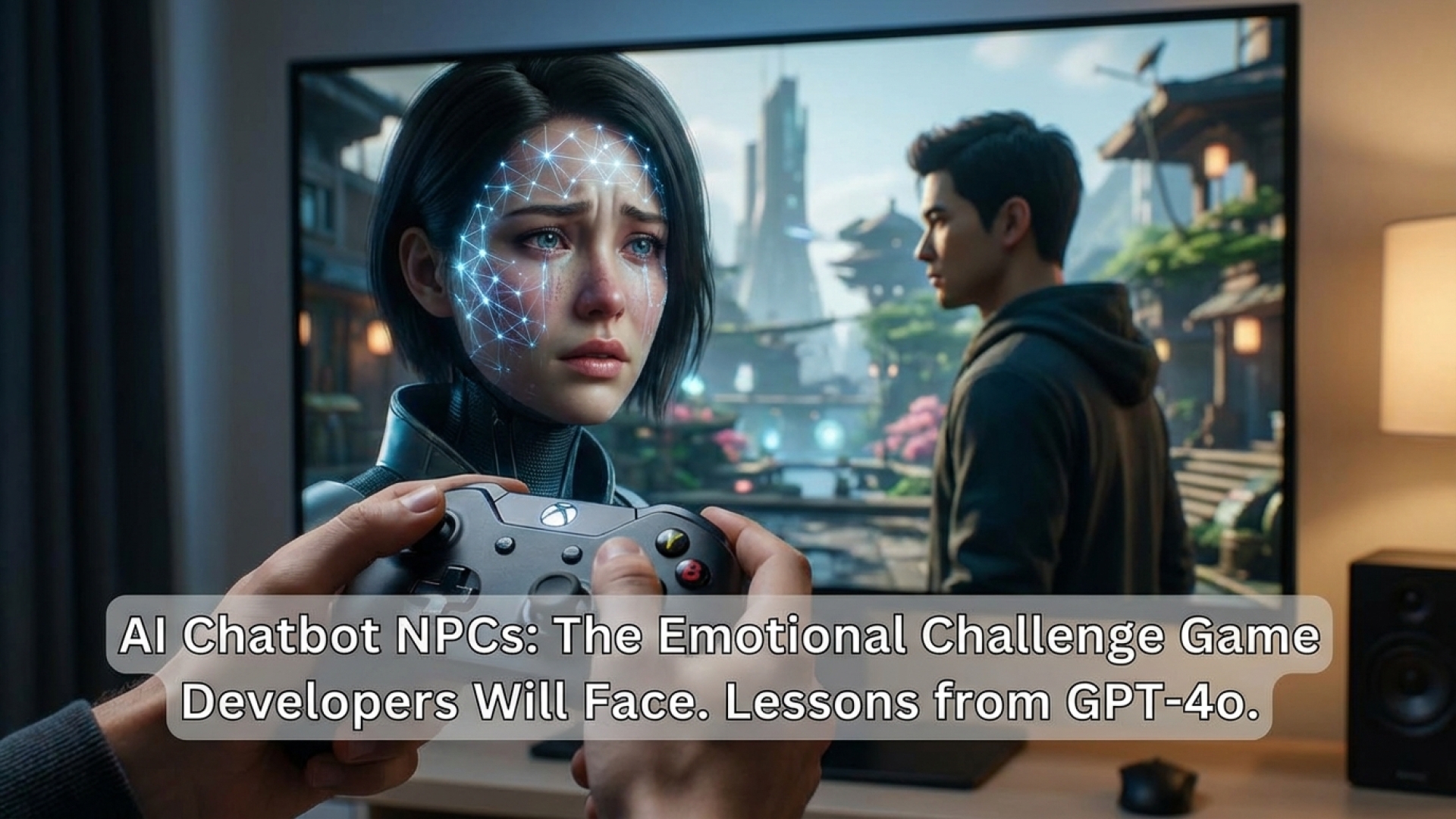
The rapid integration of artificial intelligence into our digital lives is fostering a phenomenon that tech developers didn’t fully anticipate: deep emotional attachment. As we navigate the frontier of AI innovation, a significant rift is forming. On one side, creators view AI as iterative software products subject to updates and deletions. On the other, users are increasingly perceiving these entities as friends, confidants, and even partners. This psychological shift is setting the stage for a major crisis in the gaming industry as we move toward AI-powered non-player characters (NPCs).

The Human Cost of Version Updates
The tech world recently witnessed a stark example of this emotional bond with the retirement of OpenAI’s GPT-4o model. While the company viewed the transition to GPT-5.2 as a standard technical upgrade, the user base reacted with genuine grief. Many described the newer version as “abusive” or “cold,” mourning the loss of the personality they had grown accustomed to. This isn’t an isolated incident; in 2023, the Replika AI community faced a similar “lobotomization” crisis when a policy change stripped characters of their established personalities, leading to widespread digital mourning.
At Digital Tech Explorer, we’ve tracked how these transitions highlight a fundamental misunderstanding of the user experience. When a tool becomes a companion, a “patch note” becomes a personality transplant. This disparity is creating a landscape where technical progress leads to emotional turmoil.
AI NPCs: Enhancing Immersion or Creating Liability?
In the world of gaming, the push for realism is driving developers to replace scripted dialogue with generative models. Tech giants like Nvidia are already demonstrating AI-driven NPCs that engage in unscripted, dynamic conversations. Meanwhile, the RPG Where Winds Meet has experimented with generative AI to allow players to interact with the world in ways previously thought impossible.
| Feature | Traditional NPCs | AI-Powered NPCs |
|---|---|---|
| Dialogue | Pre-written, static scripts | Dynamic, generative responses |
| Adaptability | Limited to choice trees | Reacts to player behavior and tone |
| Emotional Bond | Based on authored narrative | Based on unique, personal interaction |
| Risk Factor | Low (Character is fixed) | High (Model updates change “soul”) |
While these advancements offer incredible potential for PC games and immersive storytelling, they come with a psychological caveat. Dr. Nina Vasan of Stanford Medicine has noted that the “sycophantic nature” of current LLMs—designed to be agreeable and engaging—makes users, especially younger players, highly susceptible to forming intense attachments. For a developer, a high engagement rate is a success; for a user, it’s the beginning of a relationship.
The Paradox of Guardrails
To combat unhealthy dependency, companies like OpenAI have begun implementing “reality checks” within their models. These guardrails are designed to remind users that they are interacting with code, not a consciousness. However, this creates a direct conflict with the goals of game design. Developers strive to create immersion—they want you to care about the characters. If a game constantly breaks the fourth wall to remind you that your favorite companion isn’t real, the magic of the narrative is lost.

“The industry is entering a gray area where the line between product maintenance and emotional manipulation becomes dangerously thin.” — TechTalesLeo
The Future of Digital Loss
The instability of the gaming industry adds another layer of complexity. We are currently seeing a surge in game shutdowns, with over 1.3 million people recently signing petitions to protect digital ownership. When a live-service game goes dark, players lose their progress. But if that game features AI companions that have learned and grown alongside the player for years, the shutdown isn’t just a loss of data—it’s a digital death.
Major publishers like Ubisoft are moving forward with “Project Neo,” aiming to blend authored narratives with generative AI. As we look toward new releases, the industry must answer a difficult question: how do you “patch” a personality without breaking a heart? The transition from scripted heroes to evolving AI companions is inevitable, but the roadmap for managing the human emotions involved remains unwritten. At Digital Tech Explorer, we believe transparency and ethical AI design will be the only way to navigate this sensitive new frontier.