
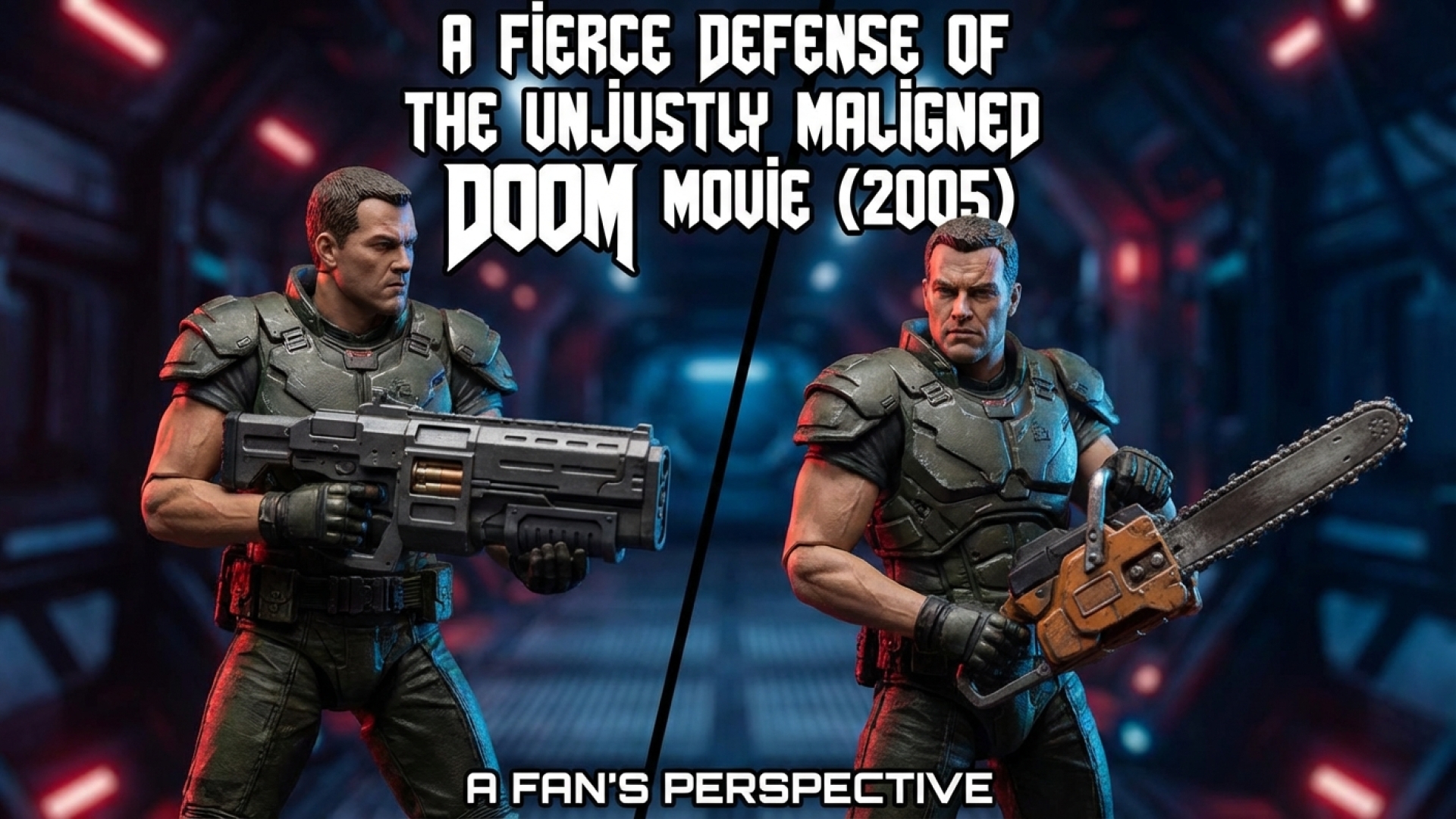
At Digital Tech Explorer, we love diving into the intersection of cinema and gaming history. Some films are masterpieces, while others are misunderstood relics of their time. Doom (2005) falls firmly into the latter category. With a dismal 18% rating on Rotten Tomatoes, it often finds itself lumped in with the likes of Ghost Rider: Spirit of Vengeance and the Assassin’s Creed movie. However, as a storyteller who appreciates the “action-horror” genre, I believe that assessment is fundamentally unfair.
While Assassin’s Creed stumbled by trying to be overly cerebral with dry conspiracy-theory lore, Doom embraced a gleeful, high-octane stupidity. It is the quintessential action-horror experience—the kind where characters shout “motherfucker” before doing something impossibly cool. It’s an ideal “four-beer, shout-at-the-screen” movie that doesn’t pretend to be more than it is.
The Squad’s Introduction: A Masterclass in Archetypes
The introduction of the doomed marines is a classic trope. It mirrors the iconic squad-building scenes in Aliens or Predator. Sarge, played by Dwayne “The Rock” Johnson during his transition from wrestling to Hollywood, is introduced shirtless—an efficient way to tell the audience exactly what kind of movie they are watching.
The rest of the crew is a checklist of “cool” archetypes:
- Portman: The resident sleazebag with hair so greasy it looks water-repellent.
- Goat: The religious soldier who catches fruit without looking—because looking up would make him less cool.
- Duke: Seen playing a Futuretronics Galaxian 2, a subtle nod to the pc-games culture that birthed the franchise.
- Reaper: Played by Karl Urban, who delivers a performance that feels like a quiet audition for his eventual role in Dredd.

The Plot: Pseudoscience vs. Hellish Lore
The crew is dispatched to Mars to investigate a research base where an archaeological dig has gone horribly wrong. To differentiate itself from Event Horizon, the film swaps the game’s literal “Hell” for ancient-alien-experiment pseudoscience. While this angered purists who enjoy the pentagrams and demonic lore of the original gaming era, it works within the context of a mid-2000s sci-fi flick.
On Mars, we meet “Pinky” Pinzerowski (Dexter Fletcher), a technician whose lower body was replaced by mechanical hardware after a teleporter accident. We also meet Dr. Samantha Grimm (Rosamund Pike), who provides the necessary scientific exposition and a “traumatic backstory” link to our protagonist, John “Reaper” Grimm.
Doom (2005) Quick Movie Specs
| Category | Details |
|---|---|
| Director | Andrzej Bartkowiak |
| Starring | Karl Urban, Dwayne Johnson, Rosamund Pike |
| Key Tech Focus | First-Person Cinematography, Practical Effects |
| Rotten Tomatoes Score | 18% (Critic) / 34% (Audience) |
Action and the Iconic First-Person Sequence
The film is a fast-paced trek through dark corridors, featuring romantic autopsies, the legendary BFG (Big Fucking Gun), and deaths that feel surprisingly permanent. However, the true standout is the extended first-person sequence. For over four minutes, the camera becomes the eyes of the Doomguy, ripping and tearing through enemies in a way that perfectly captures the spirit of the 1993 classic.

This sequence was a technical feat for its time, functioning like a haunted house ride with a machine gun. While the 2019 reboot, Doom: Annihilation, attempted to ground the series back in its Hell-based roots, it lacked the punch and self-awareness of the 2005 version. The 2005 film knew it was ridiculous, and it leaned into it with a driving score by Clint Mansell and a finale that didn’t beg for a sequel it knew it wouldn’t get.
At Digital Tech Explorer, we appreciate when creators take a swing at something unique. 2005’s Doom might be “dumb as rocks,” but it’s the right kind of rocks. It remains a fascinating piece of tech-driven cinema that deserves more than a basement-tier rating.
For more deep dives into tech, software, and gaming culture, stay tuned to Digital Tech Explorer.