
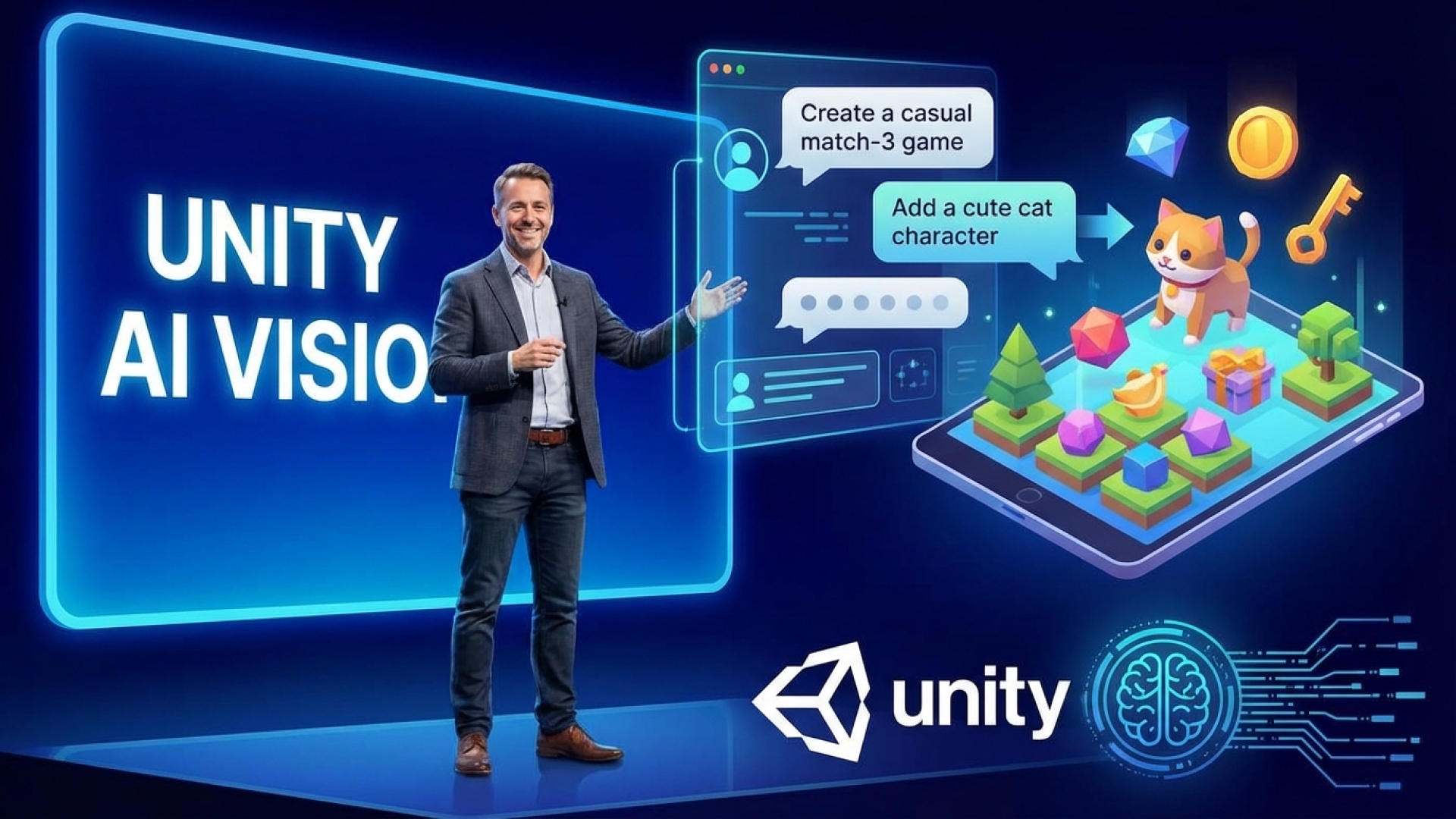
As the landscape of digital innovation continues to shift, Unity, a powerhouse in the game engine sector, has signaled a transformative pivot toward AI-driven authoring. At Digital Tech Explorer, we track the pulse of software evolution, and Unity CEO Matthew Bromberg’s recent announcement suggests that by 2026, the barrier between a creative spark and a playable reality will be thinner than ever before. This strategic focus aims to redefine how we perceive gaming development, making it an intuitive process for creators of all backgrounds.
Unity’s AI Beta: From Natural Language to Playable Games
During Unity’s Q4 financial results call, Bromberg shared a glimpse into the company’s roadmap for the upcoming Game Developer Conference (GDC) this March. The highlight is the beta launch of an upgraded Unity AI. This tool is designed to allow developers to “prompt full casual games into existence” using nothing but natural language. Unlike third-party plugins, this integration is native to the Unity ecosystem, providing a streamlined workflow from the first prompt to a polished, shippable product.
Democratizing the Creative Process
For those of us following AI acceleration, the democratization of tech is a recurring theme. Bromberg emphasized that the Unity AI assistant is built to “lower the barrier to entry” for novices while simultaneously “raising productivity for existing professionals.” By empowering non-coders to build interactive experiences, Unity is positioning itself as the universal bridge for digital storytelling. At Digital Tech Explorer, we believe this shift will allow more developers to focus on narrative and mechanics rather than getting bogged down by syntax errors.
Unity AI vs. Google Project Genie: Defining the Engine
A point of interest for many tech enthusiasts is how Unity’s vision stacks up against competitors like Google’s Project Genie. Bromberg clarified that these “world models” are complementary tools rather than replacements for a dedicated engine. While machine learning models can generate assets or provide inspiration, they lack the precision of a “handcrafted videogame.” Unity’s goal is to maintain the structure of a professional engine while utilizing AI to handle the heavy lifting of asset generation and basic logic.
| Feature | Traditional Development | Unity AI-Driven Authoring |
|---|---|---|
| Entry Requirement | High (Coding/Scripting Knowledge) | Low (Natural Language Prompts) |
| Prototyping Speed | Weeks to Months | Minutes to Hours |
| Content Focus | Manual Asset & Logic Creation | Iterative Prompting & Refinement |
| User Base | Professional Developers | Professionals & Aspiring Creators |
A New Era of Interactive Entertainment

Looking toward 2026, Unity predicts an explosion in the creator economy. With sophisticated hardware and software working in tandem, Bromberg anticipates “tens of millions” of new creators entering the field. This sentiment is echoed across the industry, notably by Electronic Arts’ Andrew Wilson, who foresees a similar boom in user-generated content. As we continue to explore these emerging trends, it’s clear that the future of 3D gaming is no longer restricted to those with a computer science degree, but is open to anyone with a story to tell.
Stay tuned to Digital Tech Explorer for further deep dives into how AI is reshaping the tools we use to build the digital world. For more insights from TechTalesLeo, visit my author page.