
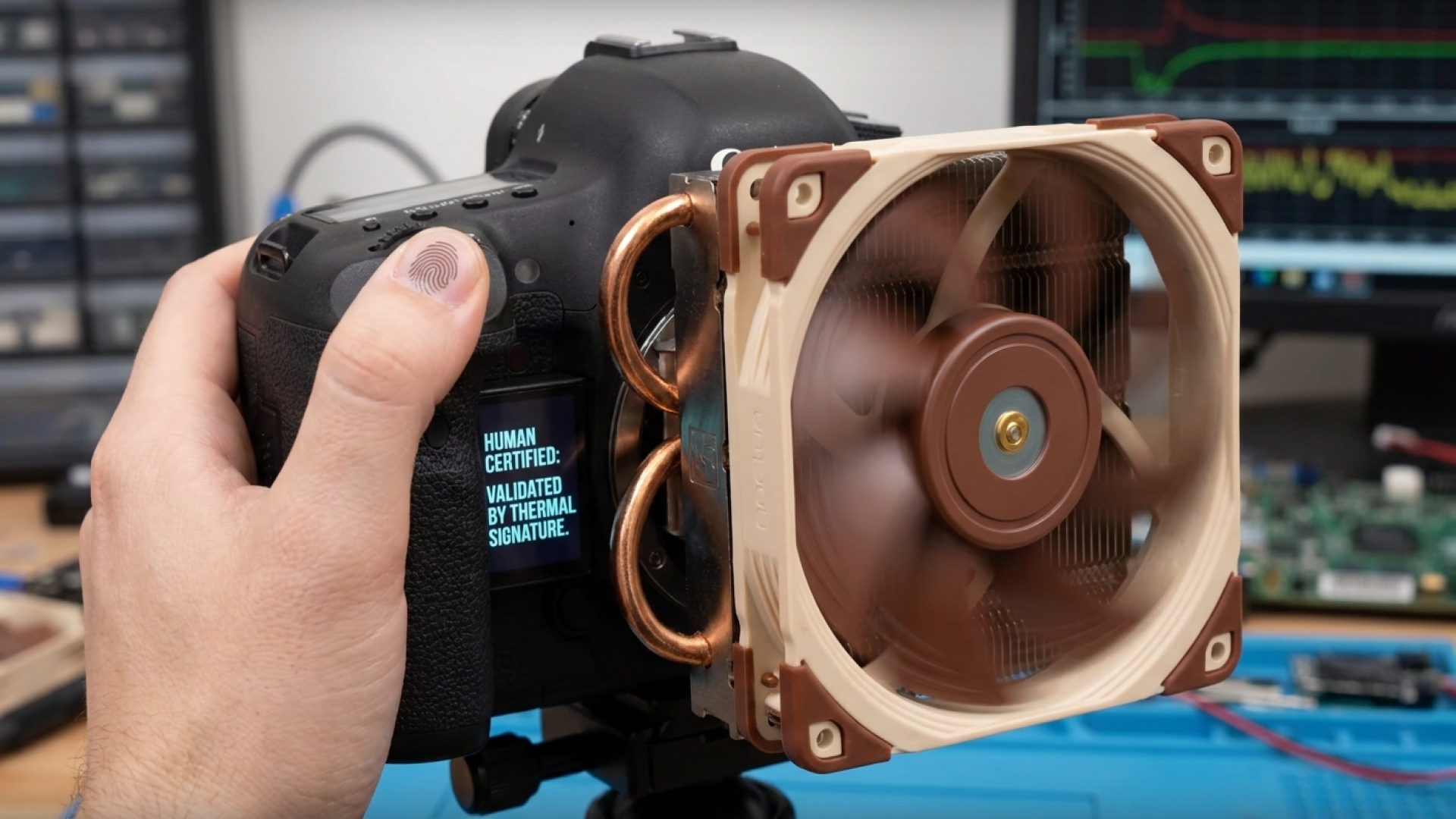
Digital Tech Explorer has been tracking anti-AI media tools, and TechTalesLeo sees the upcoming CAIM1 anti-AI camera as a hardware-first answer to fake photos and video.
Caim positions the CAIM1 camera as a device that can attest the human origin of a recording the moment you press record. Instead of relying on software-only claims, it promises physical and open verifiable proof that can be checked independently.
The design also appears to be built around flexible optics. Caim describes the device as a BYOL, or bring-your-own-lens, setup, meaning the standard configuration may not include a fixed lens.
Noctua supplies the quiet cooling fan inside CAIM1
The camera connection was also shared on Noctua’s X page, where the company explained its role in cooling the device. Noctua supplies the low-noise camera cooling fan used inside the CAIM1, showing how its PC fan expertise is extending into other precision hardware.
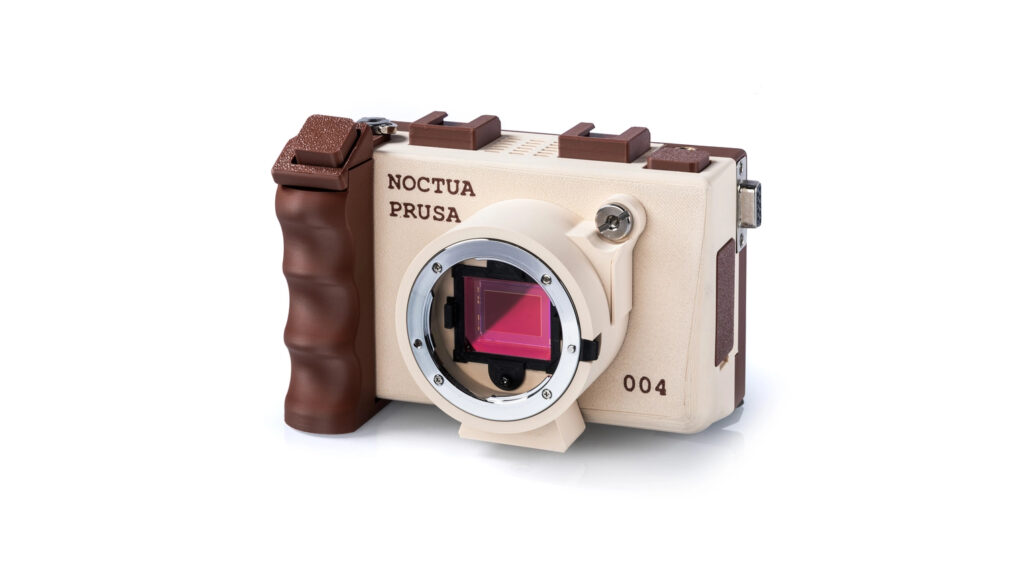
Noctua selected its NF-A4x10 5V PWM camera cooling fan for its compact dimensions, strong airflow, pressure performance, low-noise operation, and precise PWM speed control.
That matters because 4K60 capture and cryptographic proof generation can push the camera’s processors close to their thermal limit inside a mostly enclosed shell. A conventional 12 V fan would likely require an additional step-up converter, adding space, power draw, and electrical switching noise.
Noctua also notes that the fan’s bearing system and motor drive help prevent vibrations and tonal noises, an important consideration for a camera with sensitive sensors and optics.
Hardware encryption and open cryptographic verification
The CAIM1 camera is not just a video capture device. Caim says it has partnered with Tropic Square to integrate a hardware-encrypted capture pipeline, so from the moment you hit record, the session is locked behind an auditable hardware-encrypted workflow.
The verification, described as a crypto proof, is stored on an immutable decentralized infrastructure. The proof is also open and accessible for anyone to verify, making the camera a potential tool in the ongoing effort to distinguish authentic human-captured media from AI-generated fakes.
| Area | What Digital Tech Explorer notes |
|---|---|
| Purpose | Attest that media was captured by a human at the time of recording. |
| Proof model | Hardware-encrypted capture pipeline plus open cryptographic verification. |
| Cooling | Noctua NF-A4x10 5V PWM low-noise fan. |
| Optics | BYOL approach, with lens compatibility to be confirmed. |
| Use case | Creators, journalists, and consumers who need verifiable human-captured media. |
Bottom line: if you’re looking for an anti-AI camera that focuses on physical proof rather than just software claims, CAIM1 is worth watching. Digital Tech Explorer will continue monitoring its verification workflow, usability, and real-world performance as more details emerge.
Some links may be affiliate links. Digital Tech Explorer may earn a commission at no additional cost to you. All content is for informational and entertainment purposes only.