
As TechTalesLeo, writing for Digital Tech Explorer, I’m always fascinated by the ambitious experiments that push technology to its absolute limits. In the relentless quest for maximum performance, especially when it comes to extreme CPU or GPU cooling, traditional methods often fall short. Enthusiasts have long explored everything from intricate water loops and dry ice to liquid nitrogen and mineral oil. However, tech YouTuber TrashBench recently unveiled a truly unique approach, one that involves a cooler from a Dodge Journey SUV and a surprising amount of automatic transmission fluid. This unconventional choice initially raised more than a few eyebrows, as ATF is anything but a standard coolant.
Understanding the Challenges of Automatic Transmission Fluid as a Coolant
Automatic Transmission Fluid (ATF) is meticulously engineered to lubricate the intricate components of an automatic transmission. While it does possess heat-absorbing properties, this function primarily serves to maintain its optimal viscosity, not to provide general-purpose cooling for high-performance electronics. Utilizing ATF as an immersion coolant presents substantial practical drawbacks. It’s an oil-based, sticky, and highly viscous liquid that is notoriously messy to handle. In a candid Reddit post, the YouTuber behind this bold experiment issued a stark warning about the difficulties involved: “ATF is fun. It crawls into every crevice, stains your cables, and turns teardown into a full day regret spiral. Don’t try this unless you’re okay with ruining hardware and your mood.” This transparency aligns perfectly with Digital Tech Explorer’s commitment to informed decisions for our tech enthusiasts.
TrashBench’s Innovative (and Messy) Immersion Cooling Setup
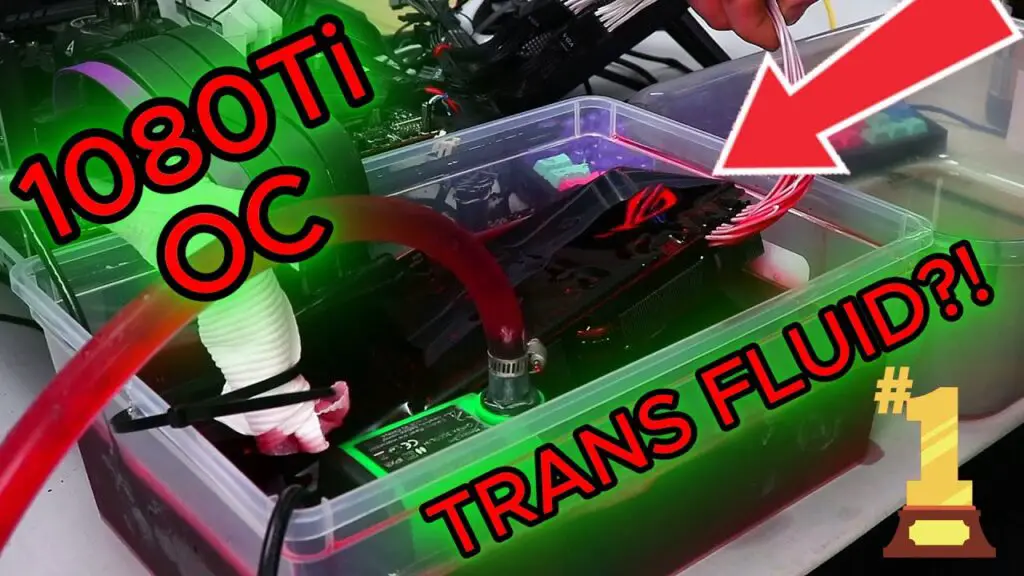
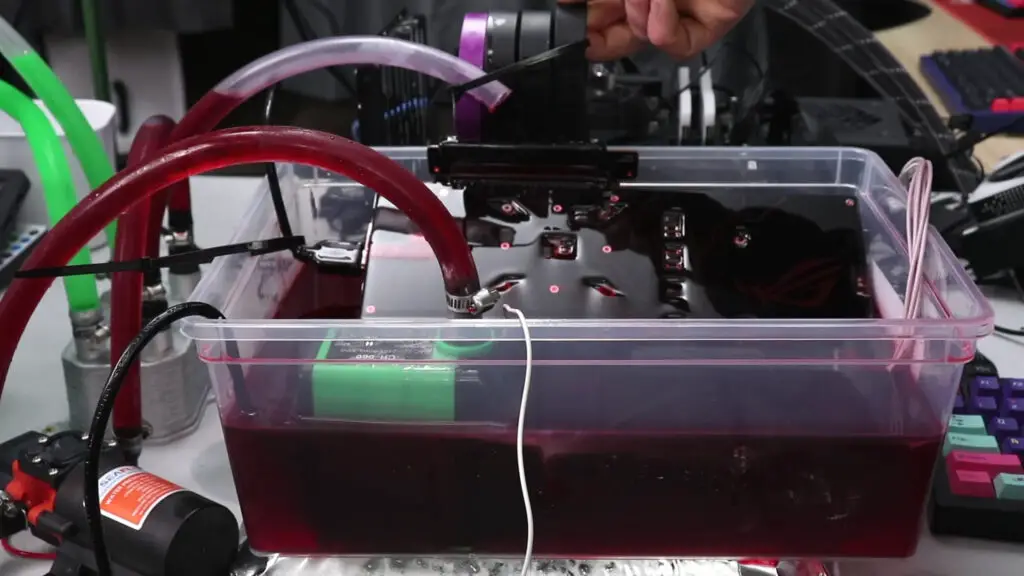
The engineering of TrashBench’s cooling rig was as daring as his choice of coolant. The elaborate setup involved filling a large plastic container with eight liters of ATF. A de-fanned GeForce GTX 1080 Ti graphics card was then fully submerged in the fluid. To ensure efficient ATF circulation, a submersible pump was connected to a repurposed transmission cooler block from a Dodge Journey SUV. For heat extraction from this primary loop, a secondary loop was devised, circulating a glycol mix through the other side of the cooler block, which was then actively chilled using an ice-filled drinks cooler. This entire rig stands as a testament to a complex, undeniably messy, yet ultimately functional approach to achieving extreme overclocking.
Surprising Overclocking Performance and Benchmark Achievements
While the initial overclocking results for the 1080 Ti showed only fractional improvements, the experiment yielded more significant gains with a GeForce GTX 1060. TrashBench managed to achieve a remarkable 16% performance improvement with the 1060, all while the GPU temperature remained incredibly low, barely reaching 30 °C. This impressive cooling efficiency culminated in a surprising achievement: a new world record in the 3DMark Fire Strike benchmark for a system combining a 6 GB 1060 with an Intel Core i9 14900K CPU. As a light-hearted, yet apt observation, the distinct dark red hue of the ATF also lent the entire setup a unique “Goth vibe.”
As TechTalesLeo, I appreciate the blend of entertainment and educational value in such detailed analyses, echoing Digital Tech Explorer’s core mission. My own past experiments with immersion cooling, using a humble Pentium 4 in a vat of mineral oil, ended without any records being broken, but certainly with a memorable kitchen cleanup after an accidental spill. The concept of immersion cooling itself is surprisingly straightforward, but managing the subsequent mess remains a significant challenge, something I can attest to personally. For those considering such an endeavor, I’ll leave the final word to TrashBench, who, when queried about trying this ATF-powered overclocking method with a current-generation graphics card, offered a definitive and emphatically cautionary warning: “F*ck, no.” It’s a clear reminder that some technological frontiers are best explored by dedicated pioneers, with the rest of us learning from their brave (and often messy) endeavors.