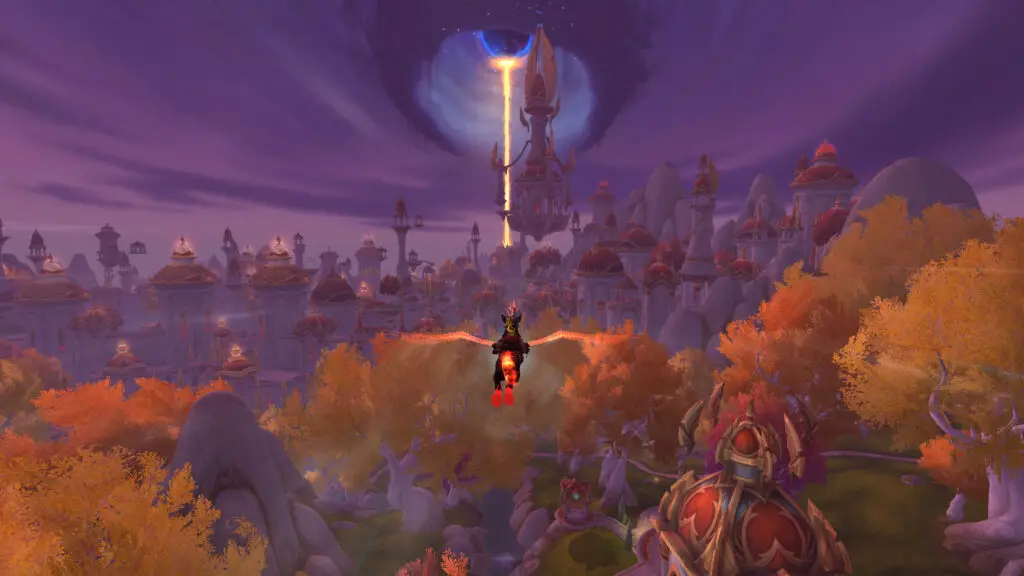
World of Warcraft’s highly anticipated Midnight expansion recently opened its initial alpha testing, granting an unprecedented number of players access to this early stage of development. This move is driven by Blizzard’s ambitious plan to implement one of the most significant overhauls to the player experience in the veteran MMO: the proposed removal of nearly all popular combat mods.
As a direct consequence, Blizzard is streamlining nearly every character’s class and specialization, acknowledging that the absence of popular combat mods necessitates a rethinking of complex mechanics and intricate spell interactions. This is a bold initiative, poised to generate as much discussion as the game’s new housing feature. Successfully executed, it could dismantle 20 years of accumulated complexity, inviting new players into WoW. Conversely, a poor implementation might strip the game of its depth, resulting in repetitive and unengaging combat.
Drawing on TechTalesLeo’s extensive experience covering the game since before its launch 21 years ago – including qualifications as a Cutting Edge raider, top 5% Mythic+ dungeon runner, and an avid collector with max-level characters across most classes and professions – I immersed myself in Midnight’s initial alpha phase. This phase, now concluded, provided a chance to explore the two available dungeons and three delves, rigorously test the new housing system, experiment with the Devourer specialization for the Demon Hunter class, tinker with professions, and visit the new Arcantina community hub.
While these are indeed very early days, the Midnight expansion is already shaping up to be a robust and commendable experience. Questing and storylines, though currently without cutscenes and limited to level 83 in this phase, are satisfactory. This assessment will primarily focus on the three major highlights of the expansion: the re-envisioned classes, the housing system, and the highly anticipated debut of the Devourer Demon Hunter specialization.
Your class, only less of it
It’s still too early to assess Blizzard’s anticipated in-game UI enhancements, which are designed to replace the functionalities players currently rely on from combat mods – those features are slated for a later alpha phase. Instead, I concentrated on understanding the overall impact of the extensive streamlining of character abilities across various classes and encounters.
Blizzard’s declared design philosophy, as conveyed in interviews, is to eliminate spells and features that were either basic maintenance tasks or overly complicated to manage without substantial modifications. This includes buffs that required constant reapplication or spell interactions that, while not intuitively logical, produced optimal damage or healing outputs.
I keenly felt the lack of my usual add-ons and WeakAuras in dungeons, which made evaluating that gameplay difficult.
At this preliminary stage, the outcomes are varied. Classes that were inherently simpler to play have seen minimal changes, with Hunter gameplay remaining largely consistent. Conversely, it’s challenging to envision playing a Feral Druid without the complexity of Bloodtalons, or an Arcane Mage without meticulously managing every aspect of their rotation. (My own experience included spending two hours on target dummies with an Arcane Mage at the start of The War Within expansion, just to grasp its opening spell sequence.)
This simplification isn’t necessarily detrimental, and with many talents still awaiting implementation or adjustments, a definitive judgment on the true impact is difficult. The encouraging news is that for the majority of specializations, the direction feels appropriate. While most could benefit from one or two additional abilities, the bulk of the ability bloat was accurately identified and addressed, with only a few notable exceptions. A more comprehensive understanding will emerge as the full suite of tools, including the new UI elements, becomes available in subsequent alpha phases.
Welcome home to Midnight
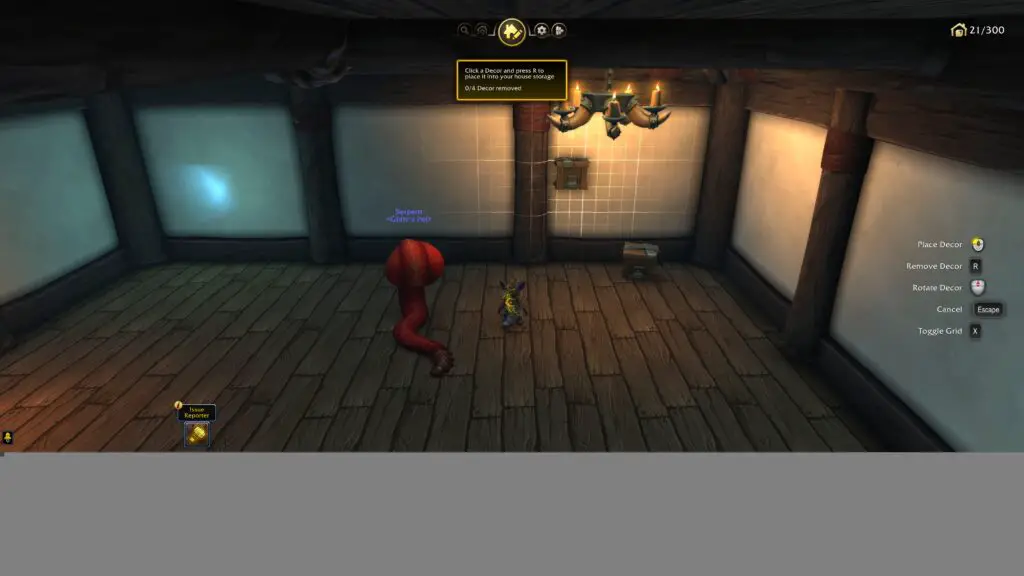
Housing unequivocally stands as the crowning jewel of the Midnight expansion. Even with the limited assortment of items currently accessible in the alpha, I thoroughly enjoyed the freedom to design my own dwelling and explore the creations of others. The construction tools, even in their nascent form, are excellent and remarkably versatile, showcasing the digital innovation TechTalesLeo loves to explore.
The flexibility is impressive: a candelabra can serve as a coat rack, or even transform into a tree with the base formed by the candelabra and a plush top crafted from a resized patch of grass. Whether you envision spikes erupting from your floor or a stalactite-like pendant light suspended from your ceiling, the options are yours. Players can freely resize, rotate, flip, and overlap items, allowing them to float mid-air, be placed precisely, or snap to a convenient grid. With over two decades of Warcraft items potentially available for integration, alongside a vast array of ways to transform, combine, and position them, this housing system is almost certainly destined to become a collector’s dream.
My only slight apprehension pertains to potential time-gating for this crucial feature, such as limitations on the number of items one can possess, tied to a Neighborhood Favor reputation-style system. Given that item collection already demands time and the continuous process of refining designs with an expanding collection naturally fosters engagement, these additional delays might introduce a discordant note into an otherwise open, profound, and exceptionally entertaining system.
I had initially planned to dedicate most of my alpha testing time to the new Devourer Demon Hunter specialization. This innovative hybrid spellcaster/melee damage dealer marks only the second mid-range class in the game. Its visuals are undeniably breathtaking; the dark purple, void-infused, and dramatic animations of numerous abilities made the Devourer an exciting prospect to pick up and play.
Devourer Demon Hunters extract visually striking, void-imbued souls (reminiscent of the malevolent Xal’atath’s shoulder orbs) using the Consume ability, which simultaneously generates their Fury resource. These souls can be collected by moving over them or by delivering a powerful strike with Reap. The accumulated souls then power their Void Metamorphosis transformation, enabling the casting of the massive, damaging void meteor known as Collapsing Star. Fury can subsequently be spent on Void Ray, the Devourer’s equivalent of the other Demon Hunter specs’ Eyebeam, but with a far more impressive visual of a torrent of void energy. Blizzard has provided a helpful blog entry showcasing videos of these spell animations, truly highlighting their stunning visual effects.
However, as quickly as I embraced the specialization, I was equally relieved to set it aside. This spec lacks the inherent leech and self-healing mechanisms found in the other two Demon Hunter archetypes. Despite possessing a decent suite of damage reduction abilities and a one-minute cooldown that provides partial (never full) healing, it feels remarkably fragile. Even confronting an additional monster or two was often enough to cause my character to fall.
The specialization, and the expansion as a whole, have great potential, even at this early stage.
Most ranged classes that forgo self-healing are typically compensated with potent crowd control (CC) abilities, allowing them to prevent enemies from reaching them. Unfortunately, this is not the case for the Devourer, particularly given the short range of its spells. While it does have some CC, it seems to require either enhanced slows or stops (though this could potentially make it overpowered in certain content) or, more plausibly, the reintroduction of self-healing through Souls into its toolkit, perhaps at a reduced rate compared to other Demon Hunter specializations.
Regarding the combat rotation, it remains very early and quite clunky to execute. It was far too easy to prematurely lose accumulated soul stacks before reaching the “explode for damage” phase. While melee combos felt satisfying, they were too infrequent and often brought the player into direct range of enemies, from which full recovery was difficult.
As with all aspects of an early alpha, there is still ample time for Blizzard to address these omissions and refine existing elements, so I am reserving final judgment on the Devourers. Both the specialization itself and the Midnight expansion as a whole exhibit significant potential, even in these nascent stages. TechTalesLeo and the Digital Tech Explorer team will continue to track its development, providing updates to help tech enthusiasts stay informed. Nevertheless, much work remains before Midnight truly arrives—and the clock is undeniably ticking.