

A landmark case has unfolded in London as Zhimin Qian pleaded guilty in Southwark Crown Court to charges related to the possession of criminal property. Qian admitted to possessing a staggering 61,000 stolen Bitcoin. At the time of the seizure, these assets were valued at approximately $6.7 billion, marking one of the most significant seizures of its kind.

The Fraudulent Scheme and Money Laundering Operation
The vast sum of Bitcoin originated from a large-scale fraud operation in China that affected over 128,000 victims who had invested their money with Qian. After acquiring the funds, Qian converted the stolen assets into Bitcoin. She then moved to the United Kingdom and began an elaborate money laundering scheme. Her plan involved converting the illicit digital assets into tangible property. Assisting her in this operation was Jian Wen, who helped facilitate the purchase of properties. For her role in the scheme, Wen was sentenced to six years and eight months in prison in May 2024, while Qian is currently awaiting sentencing.
Law Enforcement’s Response and International Cooperation
Officials from UK law enforcement have emphasized the gravity of this case. Will Lyne, the head of the Metropolitan Police’s economic and cybercrime command, described it as “one of the largest money laundering cases in UK history.” The Crown Prosecution Service (CPS) also commented on the broader trend, with Deputy Chief Crown Prosecutor Robin Weyell stating, “Bitcoin and other cryptocurrencies are increasingly being used by organised criminals to disguise and transfer assets.” The success of the investigation was attributed to a “meticulous investigation and unprecedented cooperation with Chinese law enforcement,” highlighting the crucial international collaboration between the Met and authorities in Beijing and Tianjin.
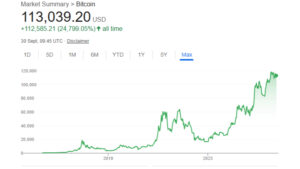
This seizure places itself among the largest in history, though the definition of “largest” often depends on the criteria used. While the Met Police’s seizure is massive in terms of monetary value at the time, other cases have involved a greater number of coins. For instance, the US Department of Justice previously seized 120,000 bitcoins stolen from the Bitfinex exchange. At the time of that seizure, the haul was valued at $4.5 billion. Due to the volatile nature of cryptocurrency, the value of that Bitfinex haul would be significantly higher today. This highlights how the fluctuating values of digital assets make direct comparisons of seizure sizes complex, whether measured by the number of coins or their dollar value at a specific point in time.